The Heroine

21.01 –19. 03.2017

Hafnarborg Centre of Culture and Fine Art

The Heroine?

Then, when day rises out of the darkness,
she is found dead on deep blue ice;
a snow-white ice veil laid over her corpse
a healing winter – but full of pity
the sun turns towards the boy.

For he lives and smiles and resides
saving his mother warm in the shelter,
swaddled in a bride’s dress – who gave
the child tranquillity, and deep under the snow
sleeps sallow in the frost.

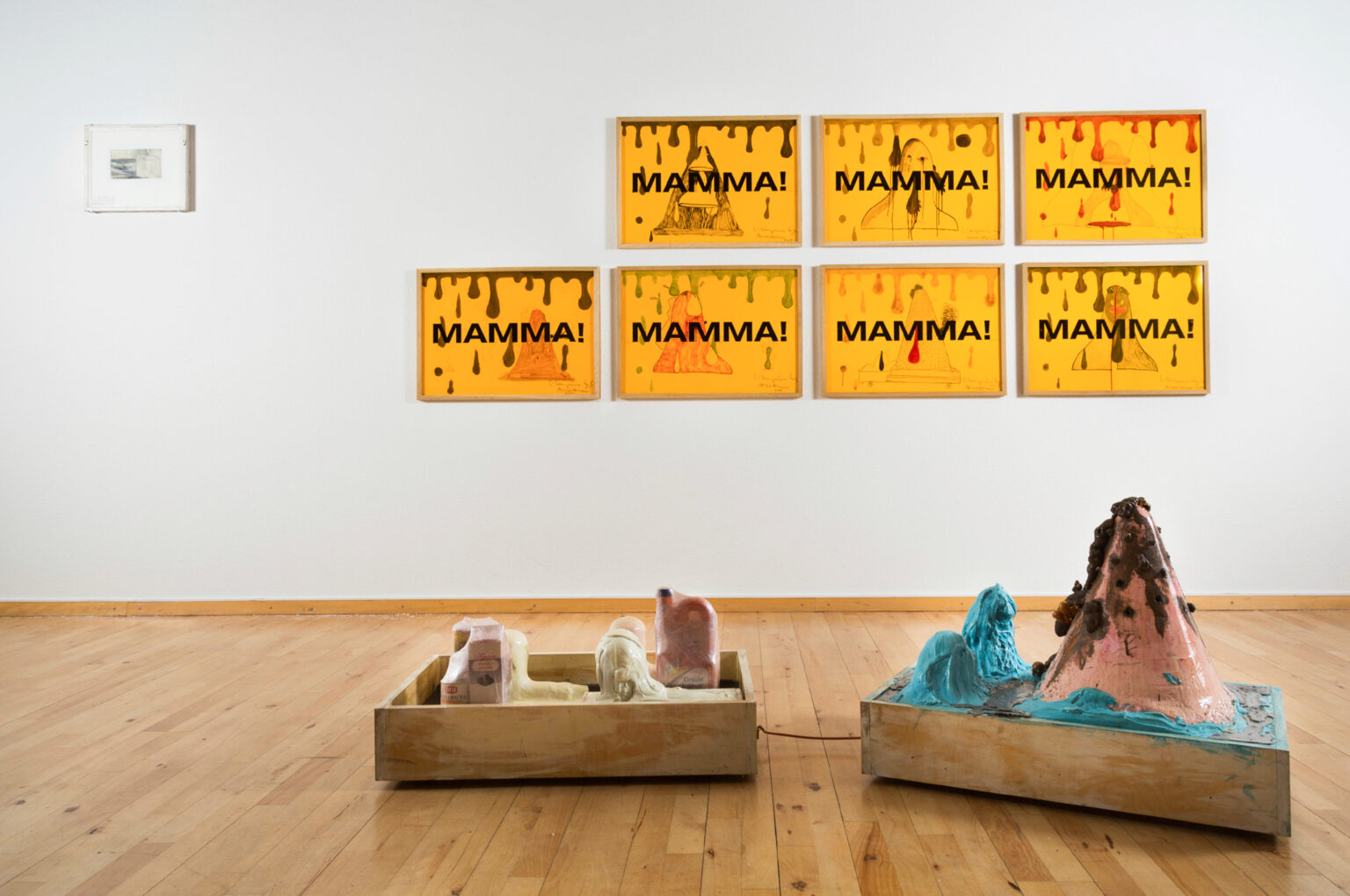
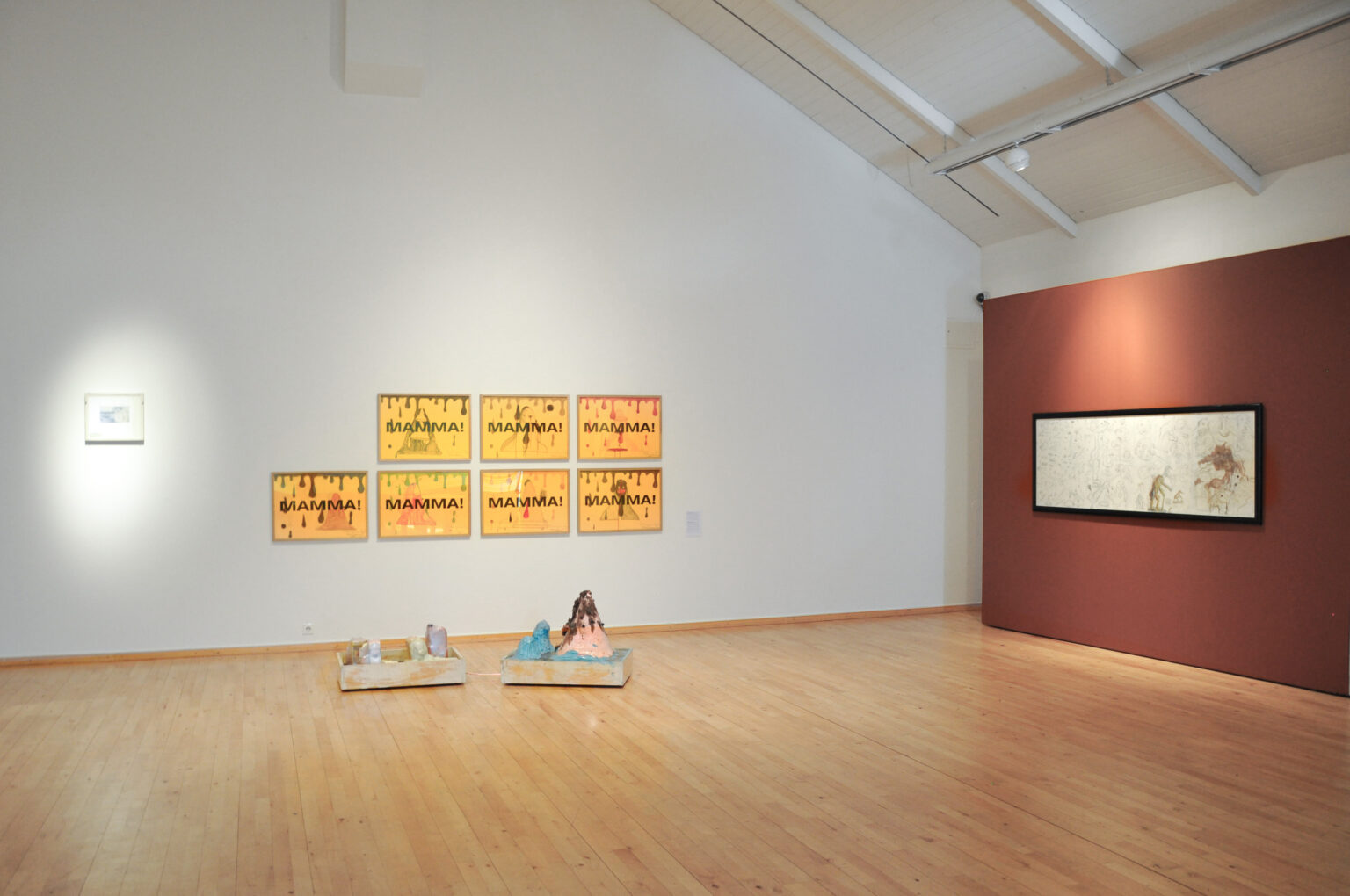
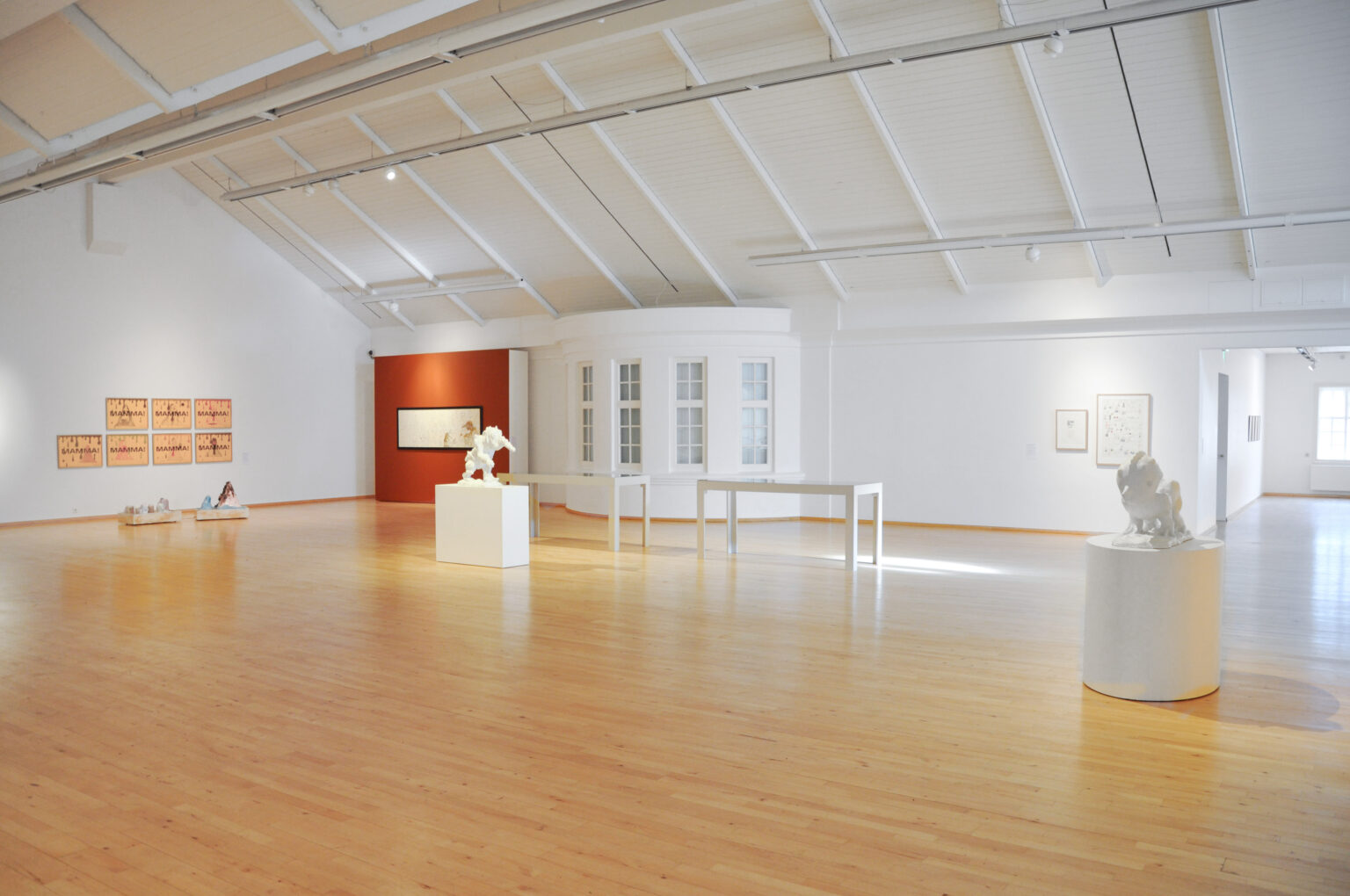
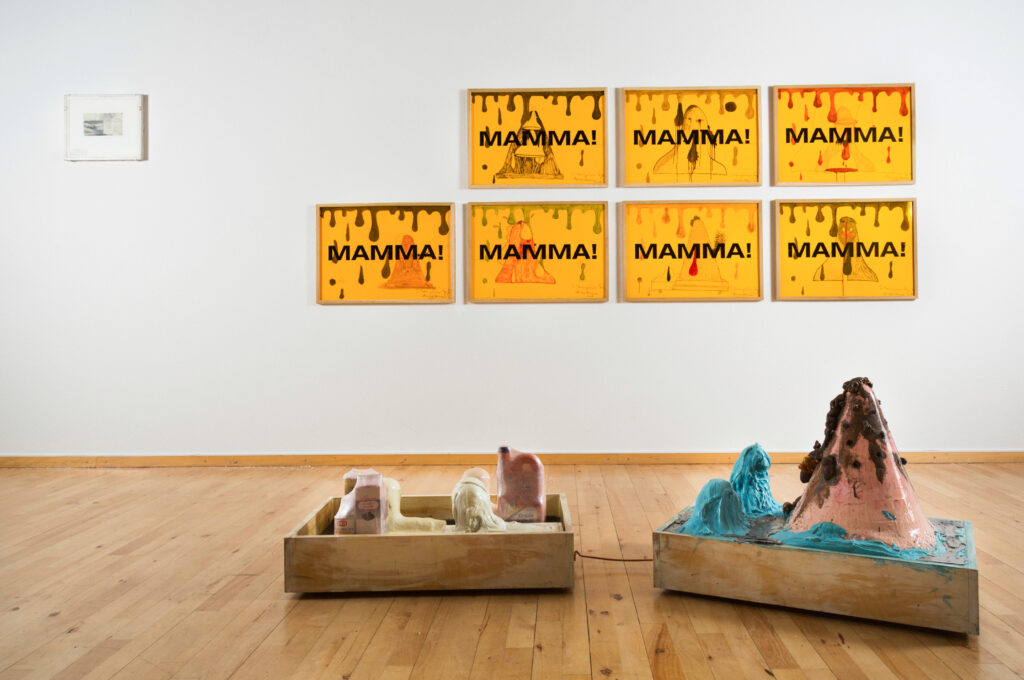
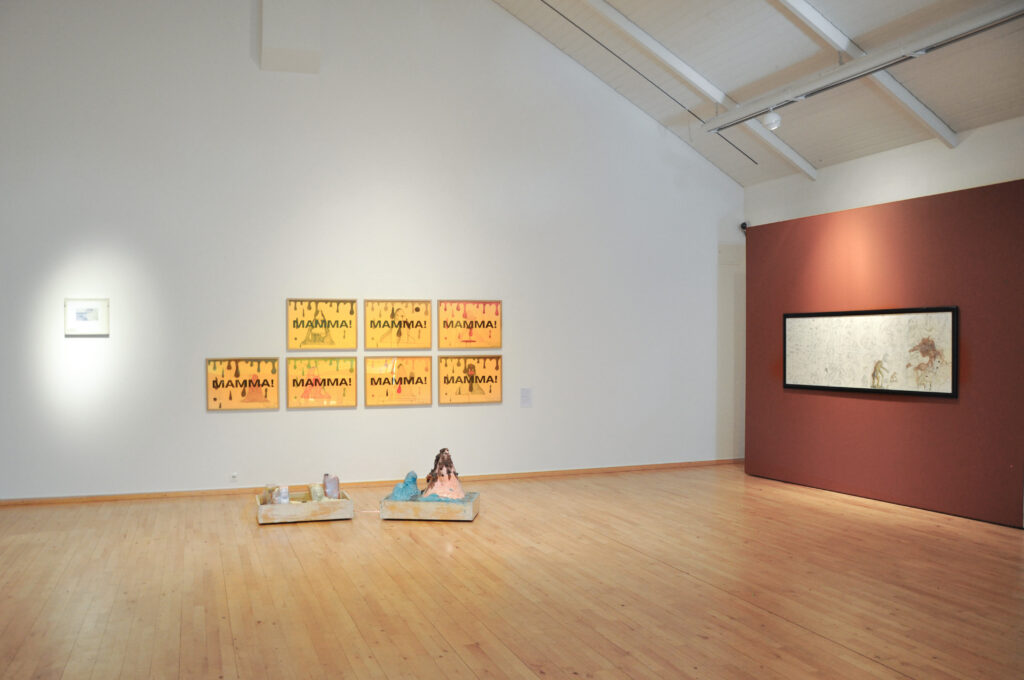
These lines of Jónas Hallgrímsson’s from the latter part of his poem Motherly Love (Móðurást), composed in 1837, are illuminated in a small drawing by artist Ásgrímur Jónsson approximately seventy years later. Ásgrímur chose the first line of the poem, Wuthering Heights (Fýkur yfir hæðir), as the title. His work is owned by the National Gallery of Iceland, and inspired visual artist Steingrímur Eyfjörð’s eponymous work, an installation, of which Ásgrímur’s original drawing also forms a part.

Steingrímur envisions his work as a modernisation of Ásgrímur’s drawing as well as a connection with earlier times, putting a classic memory in a contemporary context, whilst endeavouring to understand the premise for Ásgrímur’s role as a formative participant in the creation of a national aesthetic in Iceland. The core of the poem and visual works is the altruism of unconditional motherly love, and in the works, a familiar archetype emerges, an image of a woman; the altruistic mother, the woman who is lifeblood and strength in the face of death itself. In Steingrímur’s work, we read the repeated cry of the child: mum, mum, mum, mum! The child’s cry to its mother is, in Steingrímur’s modernisation, conceived as some kind of art therapy, like a drawing that a child with post-traumatic stress would be encouraged to draw, or a primal scream as identified in theory and practice from the seventies on spiritual cleansing through reliving trauma.

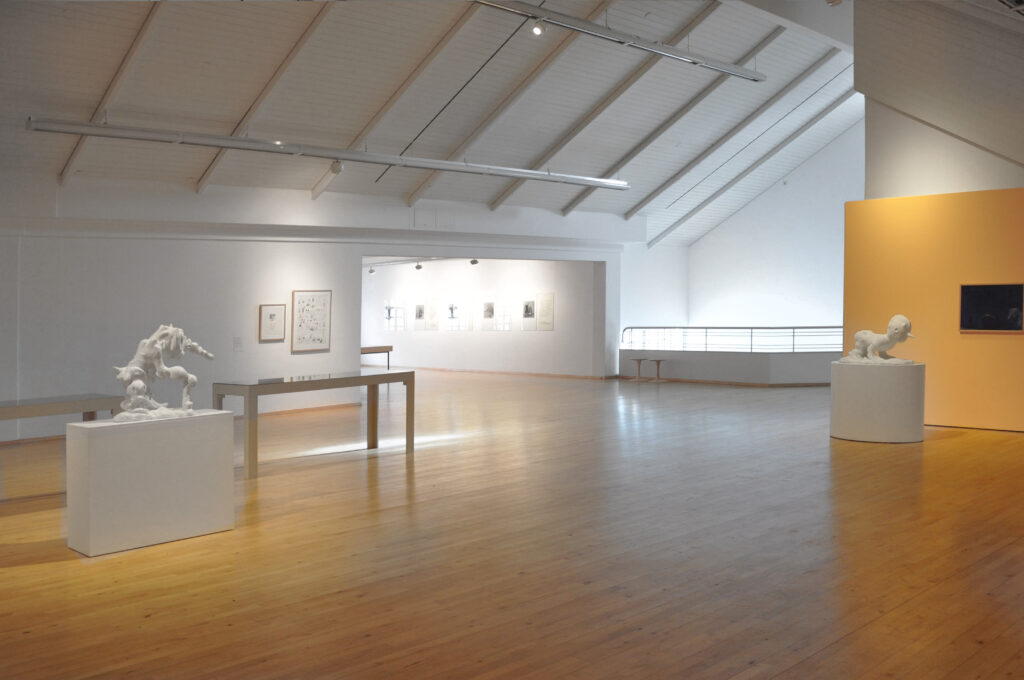
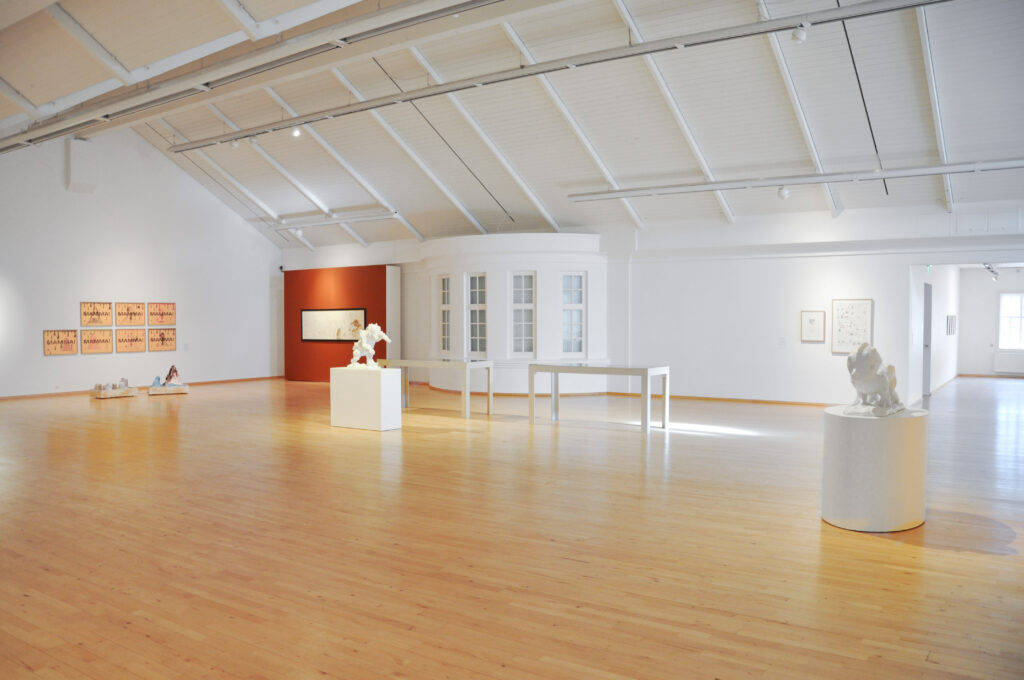
The work, from 2004, is one of seven of Steingrímur Eyfjörð’s to be exhibited in “The Heroine” at Hafnarborg – The Hafnarfjörður Center of Culture and Fine Art in 2017. All of the works have previously been displayed at other venues and are made in the span of 26 years, from 1978 to 2004, with an addition for this exhibition. The seven works are different, but all share the common theme revolving around female images, and are a reflection on the situation, status and objectification of the woman. The project includes an exhibition, a publication and a symposium, all based on a re-examining of the seven selected works by Steingrímur, and intended to be a platform for further discussions around contemporary female images.

Ásgrímur Jónsson was the first Icelandic visual artist to seek inspiration in the nation’s literary heritage, and was the first to create images of diverse supernatural beings from Icelandic folk tales in his visual works, for example of the hidden people and trolls, who live on in Icelandic culture. As a result, Ásgrímur played a big part in creating Icelandic cultural identity during the fight for independence. A century later, Steingrímur Eyfjörð, who also searches for ideas in the literary legacies of various regions of the world, is reminded of Ásgrímur’s giantesses as icons, and pairs ideas of them together with contemporary female images.

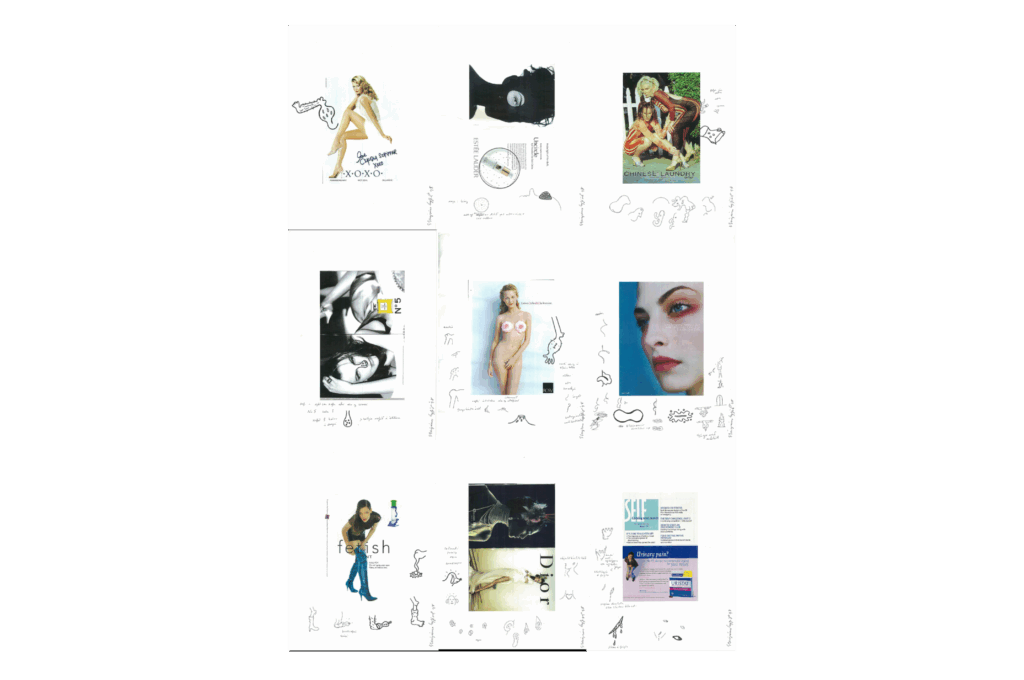
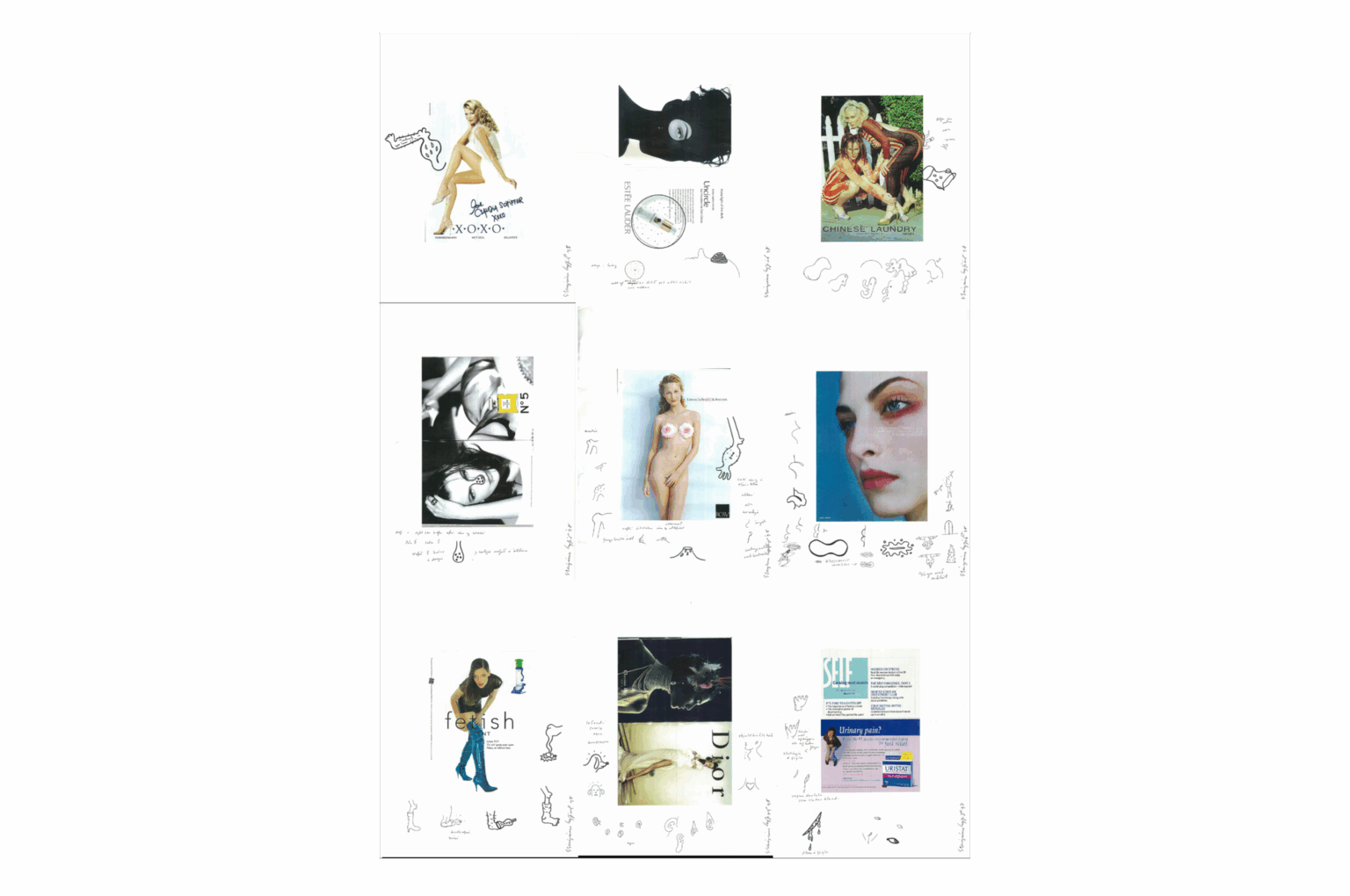
In Steingrímur’s 1998 work Grýla/Venus, which comprises a plaster statue of the ogress Grýla with a giant nose and collages from fashion magazines, as well as handwritten texts and drawings, he pits two female personalities against one another: Grýla, who is considered the ugliest of all women, and Venus, who is the most beautiful. The contrasts, ugliness and beauty, are nourished by each other, and on his work Steingrímur comments that the beautiful women of glossy magazines play the role of Grýla in the formation of women’s identities today. Grýla, the hideous giantess, mother to the Icelandic yule lads, first appears in the early 13th-century prose Snorra-Edda, and is one of the strongest folk images to survive in the Icelandic national psyche. She is a symbol of the personification of fear, as she sniffs out children, boils them in a cauldron and eats them. The glossy images are supposed to encourage women to buy products to make themselves prettier and therefore happier, but the images also have a destructive effect on their self-esteem, as the beauty ideals they set are far from women’s own lived experiences and ultimately lead to classic vanity complexes.

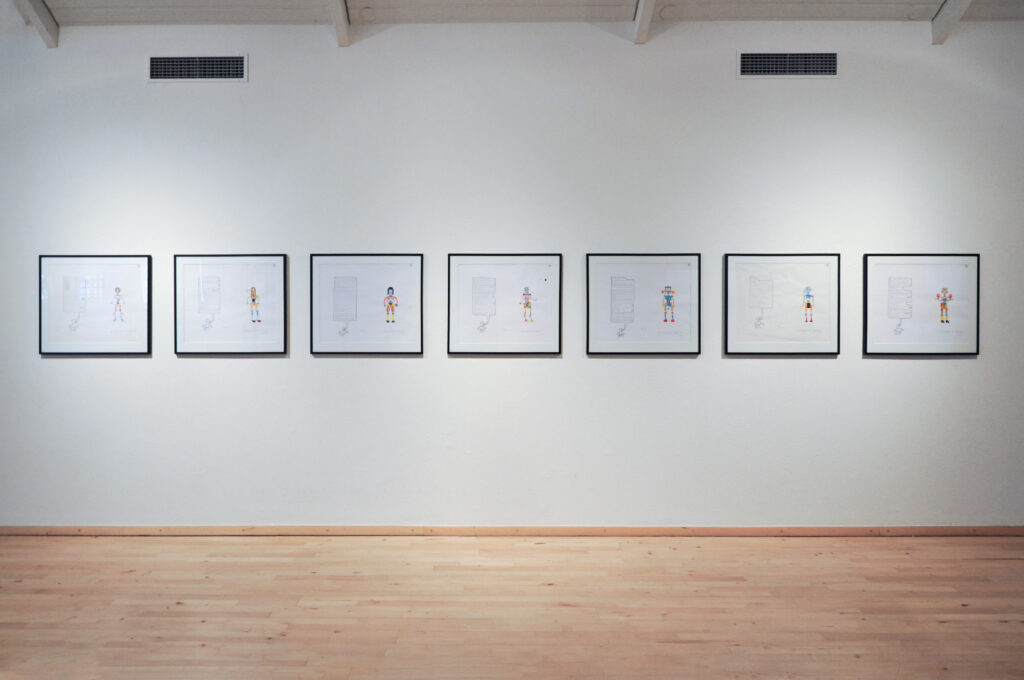
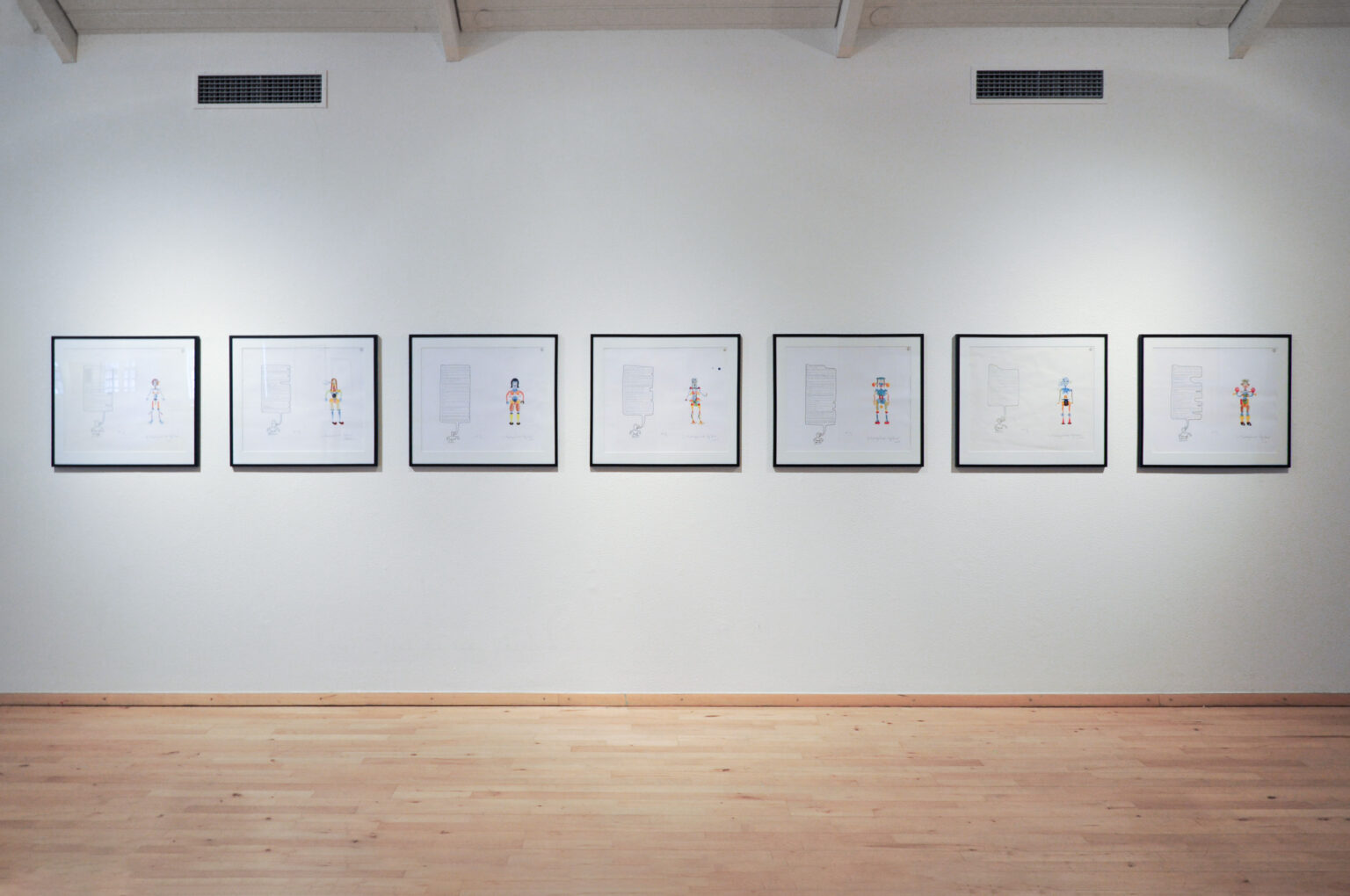
Steingrímur’s 2001 work The Song of Songs on Miklabraut (Ljóðaljóðin á Miklubrautinni) also deals with female beauty ideals. Steingrímur set five heterosexual men the task of describing the perfect woman in a methodical way, using metaphors to describe each body part in turn. The work comprises drawings of female bodies and handwritten texts, the speech bubbles of men who were all heartbroken and thought a romantic relationship with a woman was their only key to happiness in life. The title of the work refers to the Song of Songs of the Old Testament, wonderful, sensual love poems, where imagery takes precedent and the lovers objectify each other in great magniloquence.

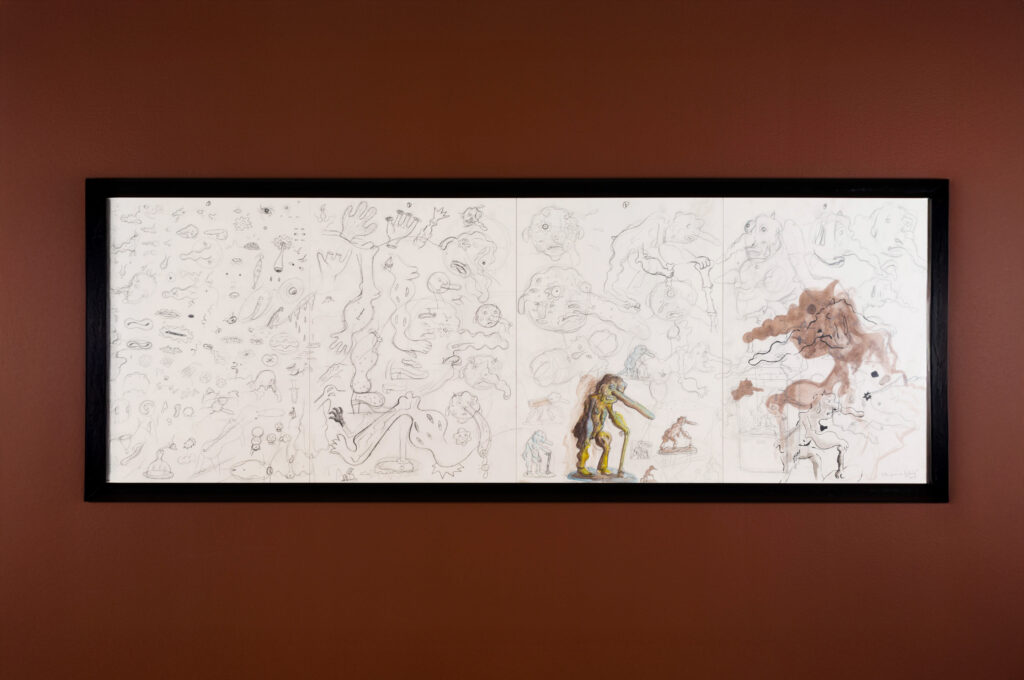
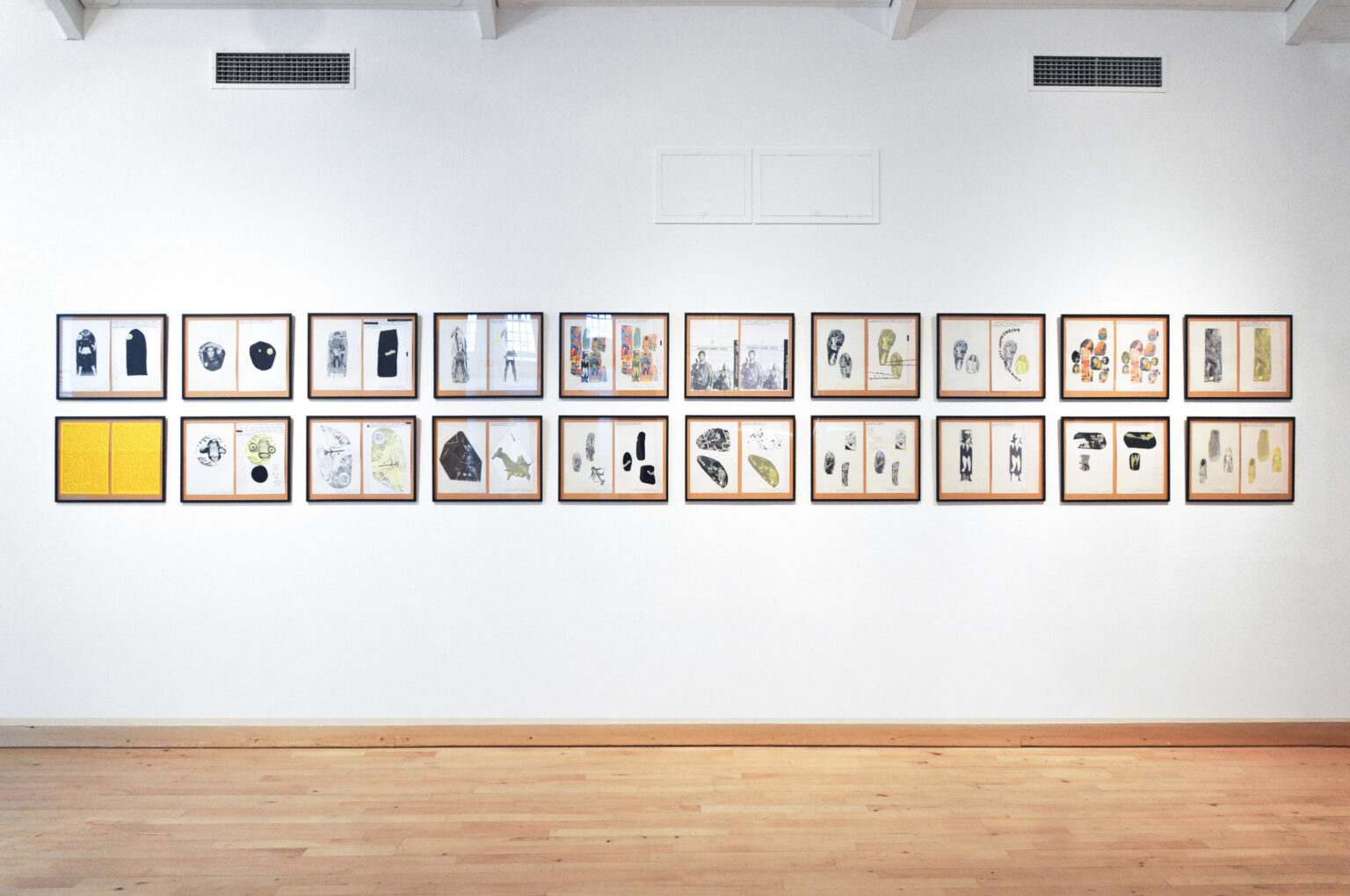
The exhibition includes another work where Steingrímur elicits his friends’ participation, doing so really out of longing for discussion and allowing the air of creative freedom and spontaneity to whirl around his curiosities. The exhibition project The Heroine draws its name from the eponymous 1992 work that Steingrímur produced in collaboration with designer Linda Björg Árnadóttir. Steingrímur asked Linda to create an image of a world where the heroine would exist, and base the image on material sourced from popular culture. To do this, Linda used cut-outs of portrayals of the heroine in comic books and magazines stuck onto sheets of paper. Steingrímur recently added handwritten text to the work—quotes from philosophers and academics—which he links to the work after its genesis 24 years ago. The catalyst of the work is Steingrímur’s criticism of the message given to jobseekers by advice adverts to try and increase their chances of a successful interview and subsequently getting the job. From the beginning of the 90s, we notice an increasing trend whereby service workers are encouraged to play a particular role and adopt personality traits and body language considered desirable in customer service jobs. The work poses questions about the boundaries between one’s own personality and the role-playing required in the workplace.

In his installation Projection (Vörpun) from 2001, Steingrímur attempted to put himself in the shoes of an imagined woman in an imagined scenario, which he drew out of stained underwear found in an old wardrobe in the home of his friend, visual artist Erla Þórarinsdóttir. The wardrobe hadn’t been opened for decades, and Erla had long suspected that something strange was hidden there. Steingrímur presented the underwear to four mediums and asked them to channel themselves through them and describe what had happened. The title of the work, Projection, refers to the technique of mediums, who project their perceptions and sensations onto objects and project forth suppositions and possibilities that others can interpret and project their own perceptions and images onto. In the photographs in the work, Steingrímur puts on the underwear himself and positions the work as some sort of remaking or historical connection to the found clothes. One could say that he puts all of his works out for open interpretation and perception of the onlooker, in a comparable way to mediums—that is to say, the recipient plays a large part in filling in the gaps and shaping the outcome, the work itself.

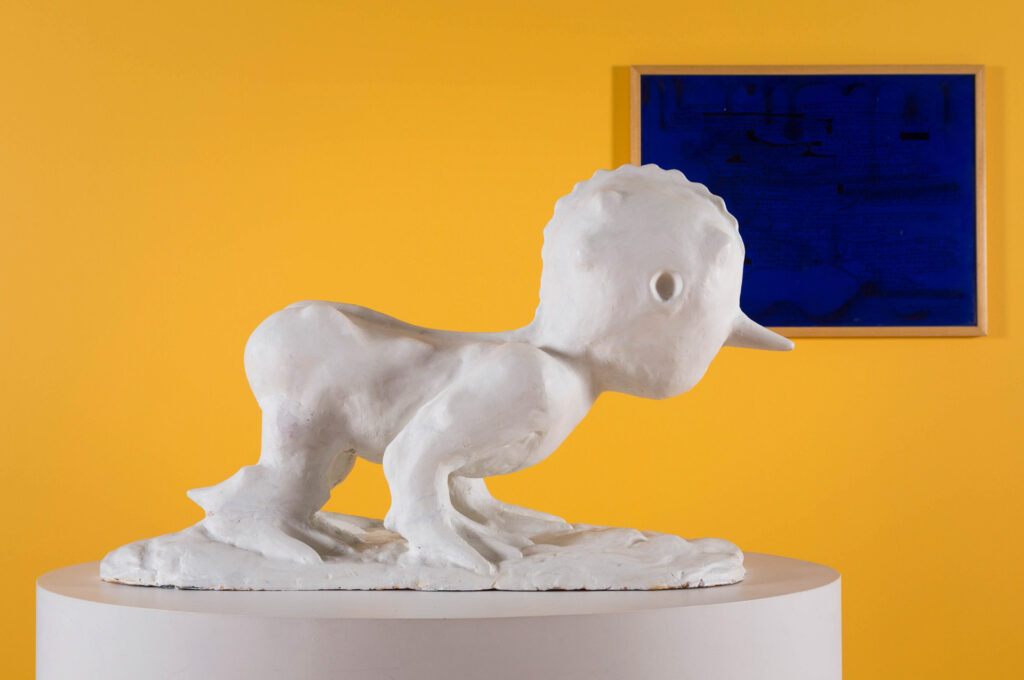
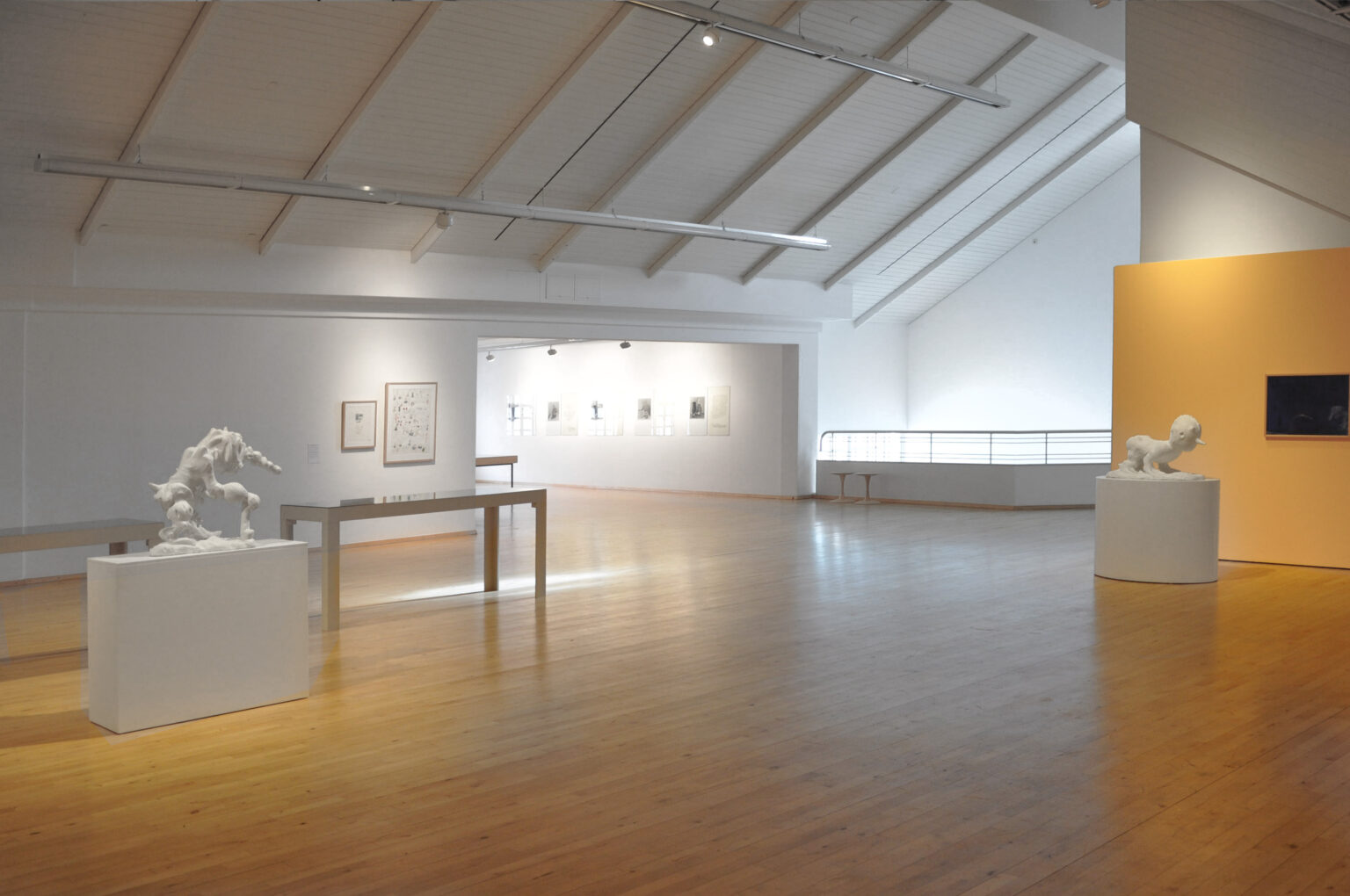
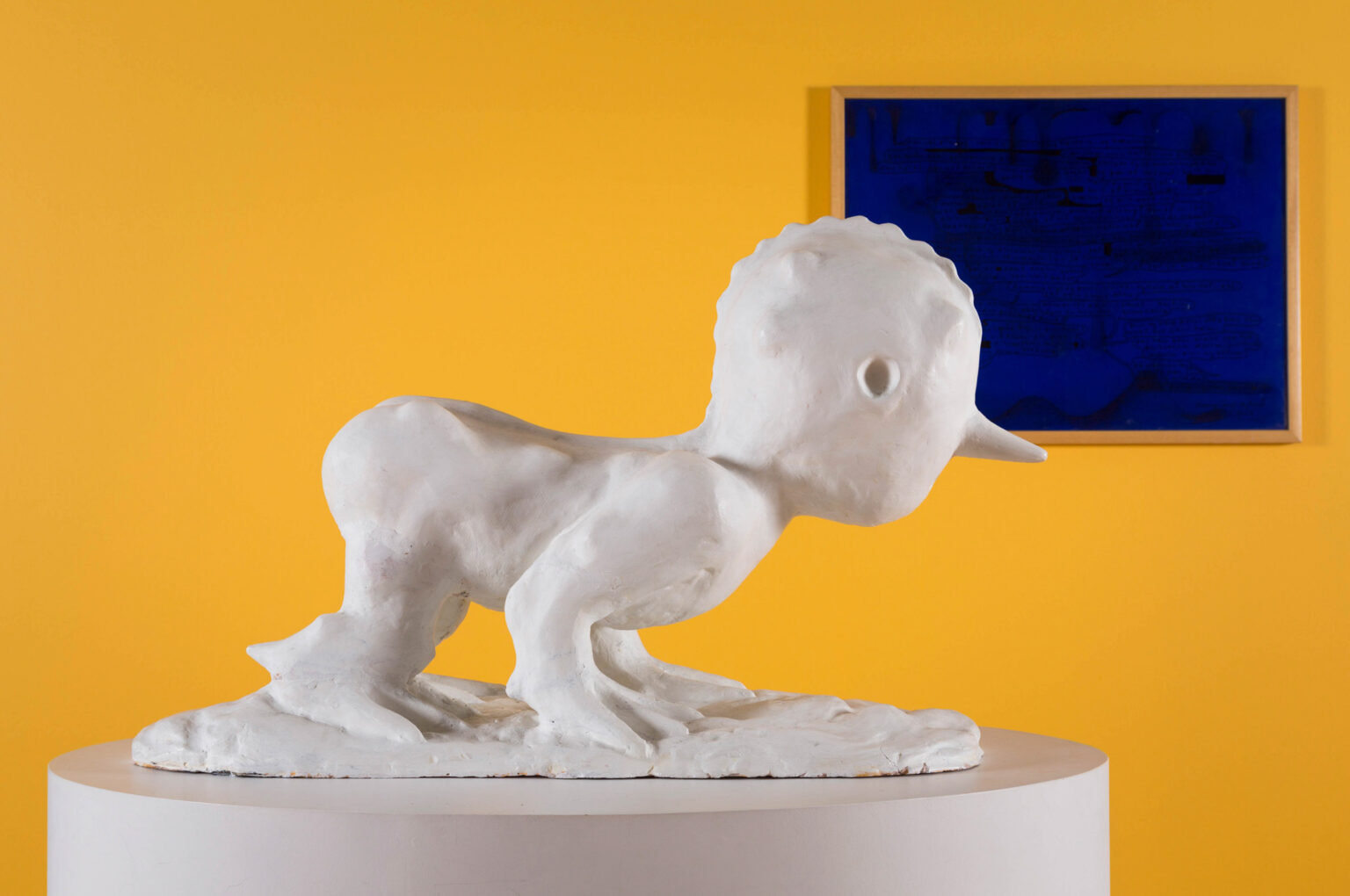
From the work Projection, we can read an undertone that could refer to sexual abuse that has occurred or could have an effect. Such an undertone could also be read out of the work Poultry ways she developed and means (Of nam af fiðurfé og van) from 2003. Steingrímur bases the work on an account in a doctor’s report from the fifties, of an Icelandic girl who grew up in a poultry shed and believed she was a bird. The work is composed of a plaster statue of the child body of an undefined and sexless being, which the girl thinks she inhabits, as well as an eponymous poem by Icelandic poet Megas, which he composed especially for this work. The work brings up questions about our sense of identity, perceptions of socialisation, genetic engineering and gender that accompany us from childhood.

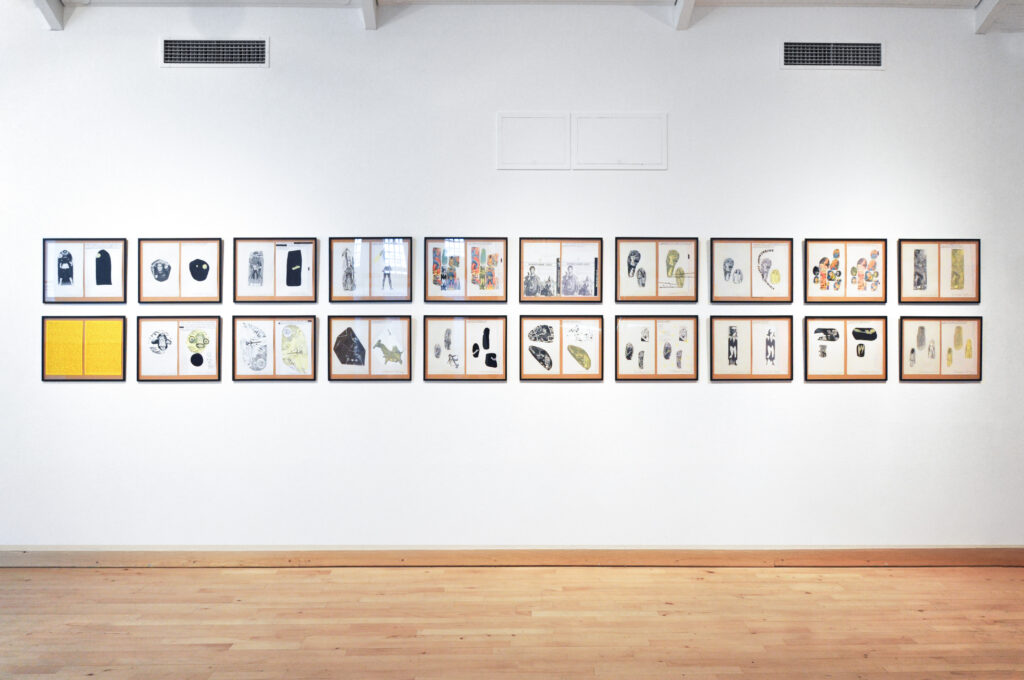
The exhibition’s seventh work, Heaven / the fall / Hell / remorse (Himnaríki / fallið / Helvíti / iðrun), from 1978, is an installation in two opposing parts: two sets of found photos from magazines. One set of pictures shows women in so-called women’s jobs, such as secretarial work and modelling. The other set shows the terrorist Ulrike Meinhof, a member of the German RAF/Baader–Meinhof terrorist group, on a stretcher after the group’s air raid on Mogadishu, as well as a picture of a devotee of the group at her funeral. Meinhof committed suicide whilst imprisoned, and was made a martyr and heroine by the RAF/Baader–Meinhof devotees.
Photographer: Laufey Elíasdóttir

The Heroine

21.01 –19. 03.2017

Hafnarborg Centre of Culture and Fine Art

The Heroine?

Then, when day rises out of the darkness,
she is found dead on deep blue ice;
a snow-white ice veil laid over her corpse
a healing winter – but full of pity
the sun turns towards the boy.

For he lives and smiles and resides
saving his mother warm in the shelter,
swaddled in a bride’s dress – who gave
the child tranquillity, and deep under the snow
sleeps sallow in the frost.

These lines of Jónas Hallgrímsson’s from the latter part of his poem Motherly Love (Móðurást), composed in 1837, are illuminated in a small drawing by artist Ásgrímur Jónsson approximately seventy years later. Ásgrímur chose the first line of the poem, Wuthering Heights (Fýkur yfir hæðir), as the title. His work is owned by the National Gallery of Iceland, and inspired visual artist Steingrímur Eyfjörð’s eponymous work, an installation, of which Ásgrímur’s original drawing also forms a part.

Steingrímur envisions his work as a modernisation of Ásgrímur’s drawing as well as a connection with earlier times, putting a classic memory in a contemporary context, whilst endeavouring to understand the premise for Ásgrímur’s role as a formative participant in the creation of a national aesthetic in Iceland. The core of the poem and visual works is the altruism of unconditional motherly love, and in the works, a familiar archetype emerges, an image of a woman; the altruistic mother, the woman who is lifeblood and strength in the face of death itself. In Steingrímur’s work, we read the repeated cry of the child: mum, mum, mum, mum! The child’s cry to its mother is, in Steingrímur’s modernisation, conceived as some kind of art therapy, like a drawing that a child with post-traumatic stress would be encouraged to draw, or a primal scream as identified in theory and practice from the seventies on spiritual cleansing through reliving trauma.

The work, from 2004, is one of seven of Steingrímur Eyfjörð’s to be exhibited in “The Heroine” at Hafnarborg – The Hafnarfjörður Center of Culture and Fine Art in 2017. All of the works have previously been displayed at other venues and are made in the span of 26 years, from 1978 to 2004, with an addition for this exhibition. The seven works are different, but all share the common theme revolving around female images, and are a reflection on the situation, status and objectification of the woman. The project includes an exhibition, a publication and a symposium, all based on a re-examining of the seven selected works by Steingrímur, and intended to be a platform for further discussions around contemporary female images.

Ásgrímur Jónsson was the first Icelandic visual artist to seek inspiration in the nation’s literary heritage, and was the first to create images of diverse supernatural beings from Icelandic folk tales in his visual works, for example of the hidden people and trolls, who live on in Icelandic culture. As a result, Ásgrímur played a big part in creating Icelandic cultural identity during the fight for independence. A century later, Steingrímur Eyfjörð, who also searches for ideas in the literary legacies of various regions of the world, is reminded of Ásgrímur’s giantesses as icons, and pairs ideas of them together with contemporary female images.

In Steingrímur’s 1998 work Grýla/Venus, which comprises a plaster statue of the ogress Grýla with a giant nose and collages from fashion magazines, as well as handwritten texts and drawings, he pits two female personalities against one another: Grýla, who is considered the ugliest of all women, and Venus, who is the most beautiful. The contrasts, ugliness and beauty, are nourished by each other, and on his work Steingrímur comments that the beautiful women of glossy magazines play the role of Grýla in the formation of women’s identities today. Grýla, the hideous giantess, mother to the Icelandic yule lads, first appears in the early 13th-century prose Snorra-Edda, and is one of the strongest folk images to survive in the Icelandic national psyche. She is a symbol of the personification of fear, as she sniffs out children, boils them in a cauldron and eats them. The glossy images are supposed to encourage women to buy products to make themselves prettier and therefore happier, but the images also have a destructive effect on their self-esteem, as the beauty ideals they set are far from women’s own lived experiences and ultimately lead to classic vanity complexes.

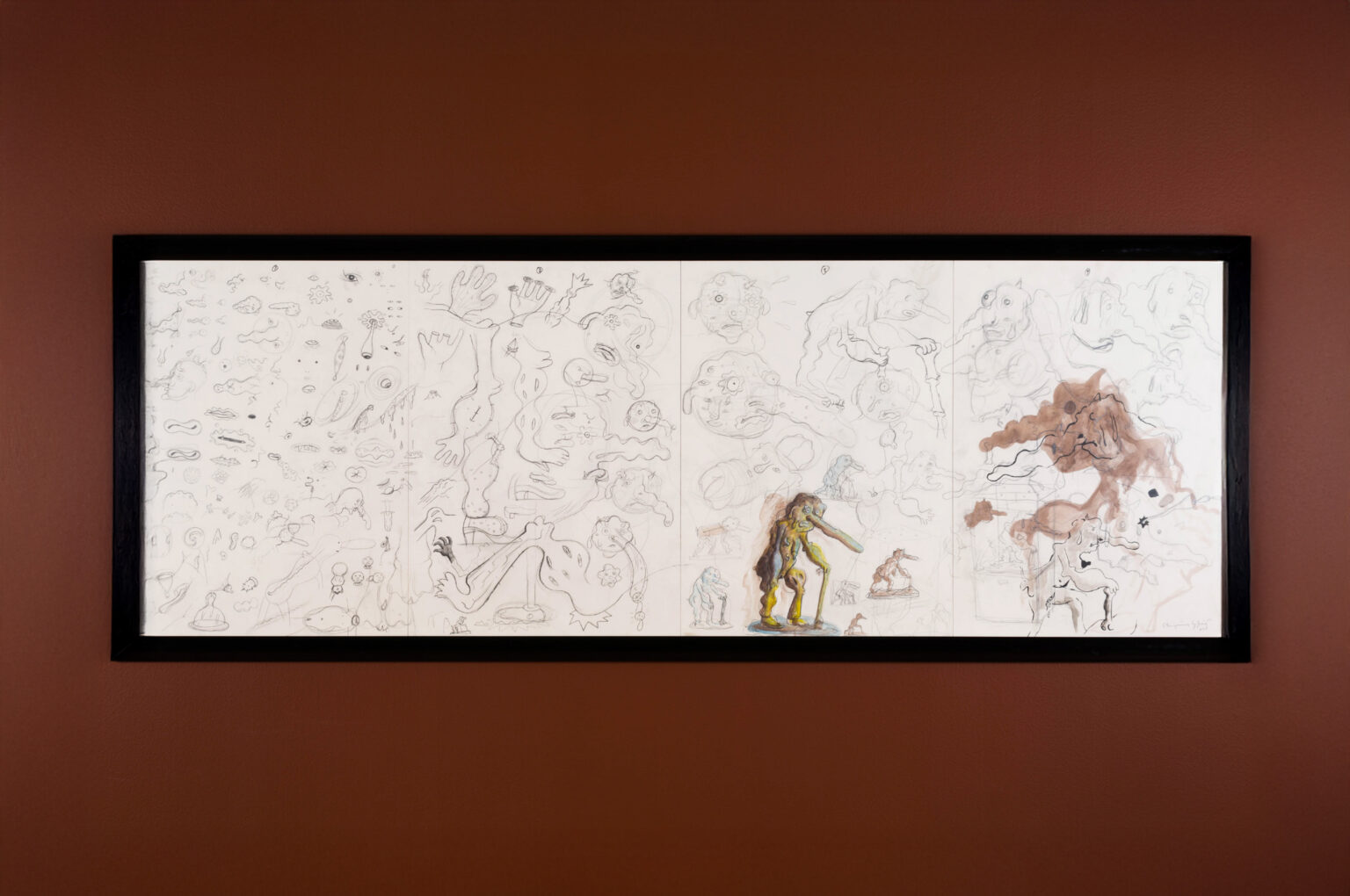
Steingrímur’s 2001 work The Song of Songs on Miklabraut (Ljóðaljóðin á Miklubrautinni) also deals with female beauty ideals. Steingrímur set five heterosexual men the task of describing the perfect woman in a methodical way, using metaphors to describe each body part in turn. The work comprises drawings of female bodies and handwritten texts, the speech bubbles of men who were all heartbroken and thought a romantic relationship with a woman was their only key to happiness in life. The title of the work refers to the Song of Songs of the Old Testament, wonderful, sensual love poems, where imagery takes precedent and the lovers objectify each other in great magniloquence.

The exhibition includes another work where Steingrímur elicits his friends’ participation, doing so really out of longing for discussion and allowing the air of creative freedom and spontaneity to whirl around his curiosities. The exhibition project The Heroine draws its name from the eponymous 1992 work that Steingrímur produced in collaboration with designer Linda Björg Árnadóttir. Steingrímur asked Linda to create an image of a world where the heroine would exist, and base the image on material sourced from popular culture. To do this, Linda used cut-outs of portrayals of the heroine in comic books and magazines stuck onto sheets of paper. Steingrímur recently added handwritten text to the work—quotes from philosophers and academics—which he links to the work after its genesis 24 years ago. The catalyst of the work is Steingrímur’s criticism of the message given to jobseekers by advice adverts to try and increase their chances of a successful interview and subsequently getting the job. From the beginning of the 90s, we notice an increasing trend whereby service workers are encouraged to play a particular role and adopt personality traits and body language considered desirable in customer service jobs. The work poses questions about the boundaries between one’s own personality and the role-playing required in the workplace.

In his installation Projection (Vörpun) from 2001, Steingrímur attempted to put himself in the shoes of an imagined woman in an imagined scenario, which he drew out of stained underwear found in an old wardrobe in the home of his friend, visual artist Erla Þórarinsdóttir. The wardrobe hadn’t been opened for decades, and Erla had long suspected that something strange was hidden there. Steingrímur presented the underwear to four mediums and asked them to channel themselves through them and describe what had happened. The title of the work, Projection, refers to the technique of mediums, who project their perceptions and sensations onto objects and project forth suppositions and possibilities that others can interpret and project their own perceptions and images onto. In the photographs in the work, Steingrímur puts on the underwear himself and positions the work as some sort of remaking or historical connection to the found clothes. One could say that he puts all of his works out for open interpretation and perception of the onlooker, in a comparable way to mediums—that is to say, the recipient plays a large part in filling in the gaps and shaping the outcome, the work itself.

From the work Projection, we can read an undertone that could refer to sexual abuse that has occurred or could have an effect. Such an undertone could also be read out of the work Poultry ways she developed and means (Of nam af fiðurfé og van) from 2003. Steingrímur bases the work on an account in a doctor’s report from the fifties, of an Icelandic girl who grew up in a poultry shed and believed she was a bird. The work is composed of a plaster statue of the child body of an undefined and sexless being, which the girl thinks she inhabits, as well as an eponymous poem by Icelandic poet Megas, which he composed especially for this work. The work brings up questions about our sense of identity, perceptions of socialisation, genetic engineering and gender that accompany us from childhood.

The exhibition’s seventh work, Heaven / the fall / Hell / remorse (Himnaríki / fallið / Helvíti / iðrun), from 1978, is an installation in two opposing parts: two sets of found photos from magazines. One set of pictures shows women in so-called women’s jobs, such as secretarial work and modelling. The other set shows the terrorist Ulrike Meinhof, a member of the German RAF/Baader–Meinhof terrorist group, on a stretcher after the group’s air raid on Mogadishu, as well as a picture of a devotee of the group at her funeral. Meinhof committed suicide whilst imprisoned, and was made a martyr and heroine by the RAF/Baader–Meinhof devotees.