Wittgenstein? & The Association of Living Folklore

17.09.2022 - 29.10.2022

Hverfisgallerí

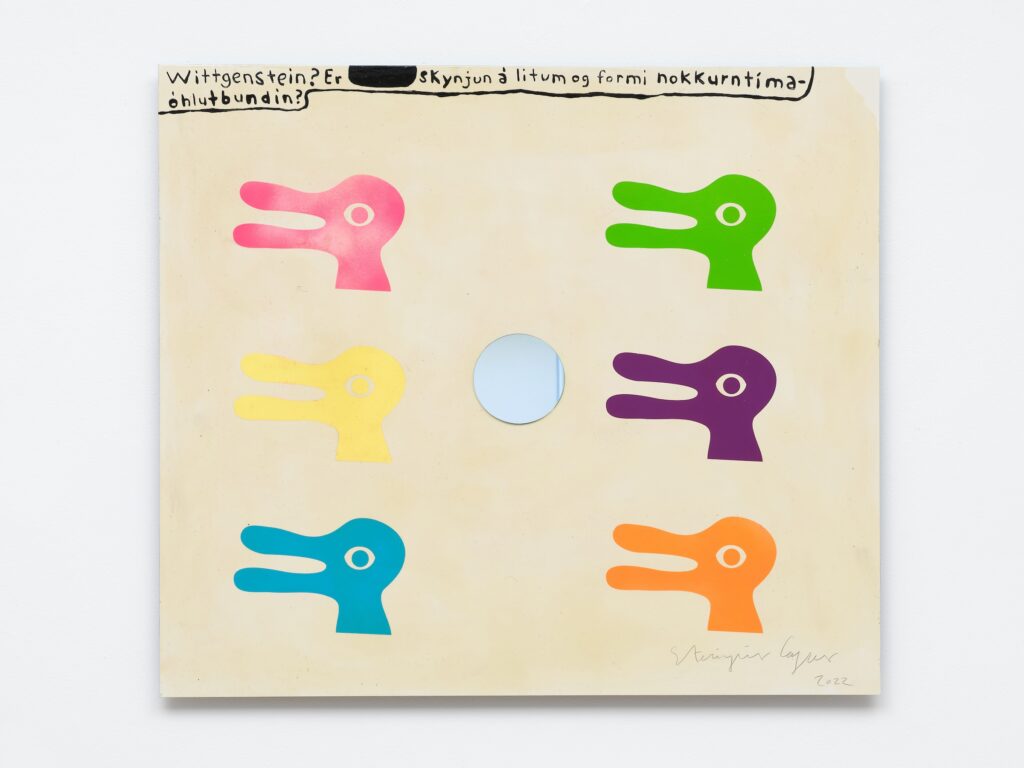
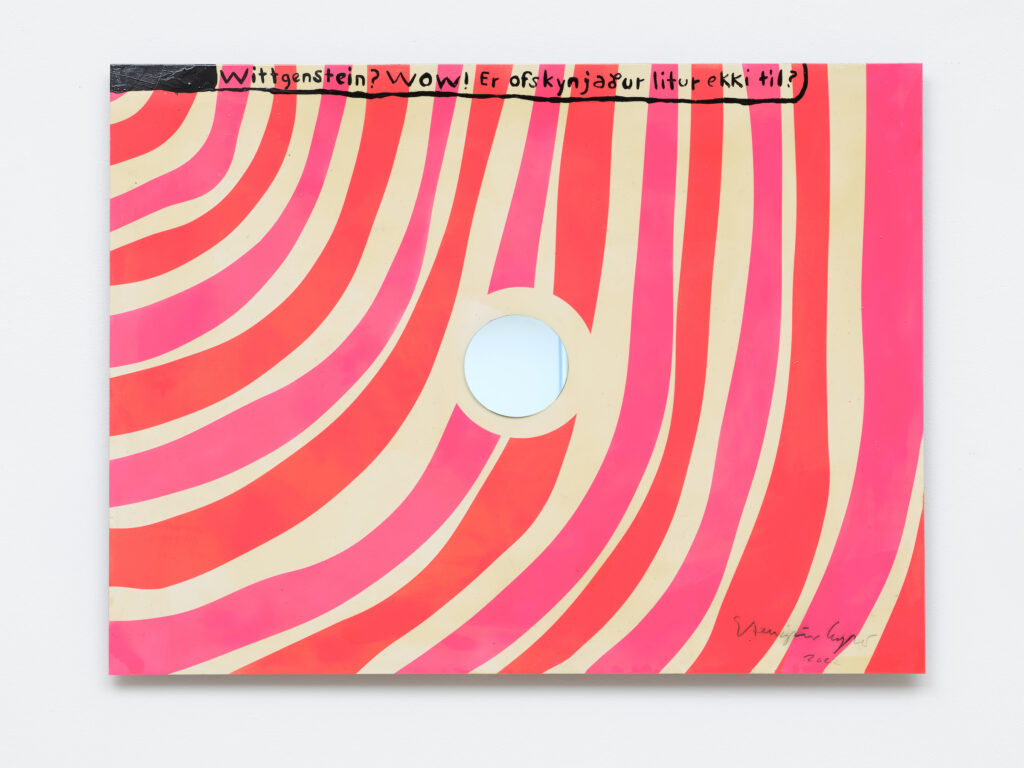
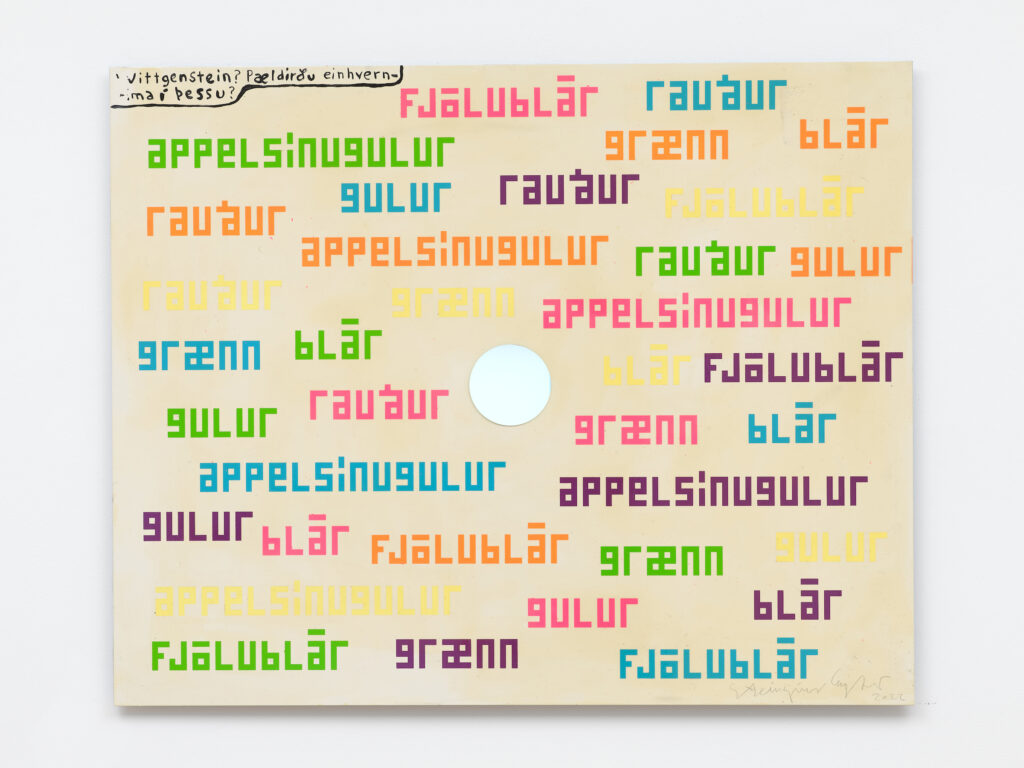
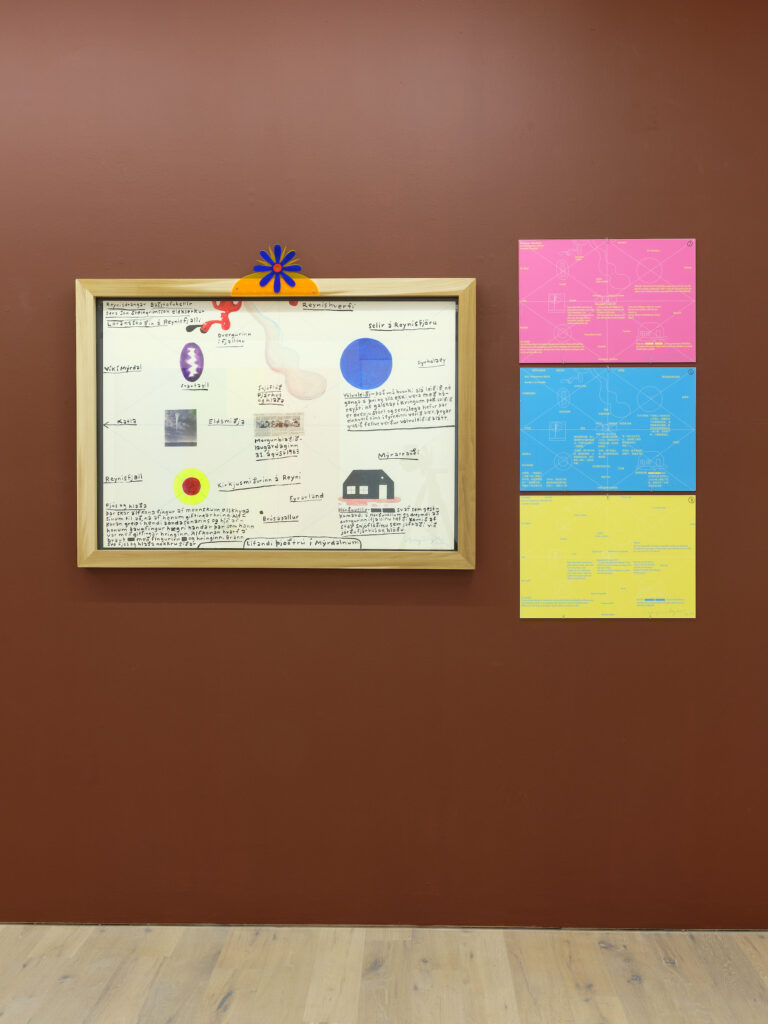
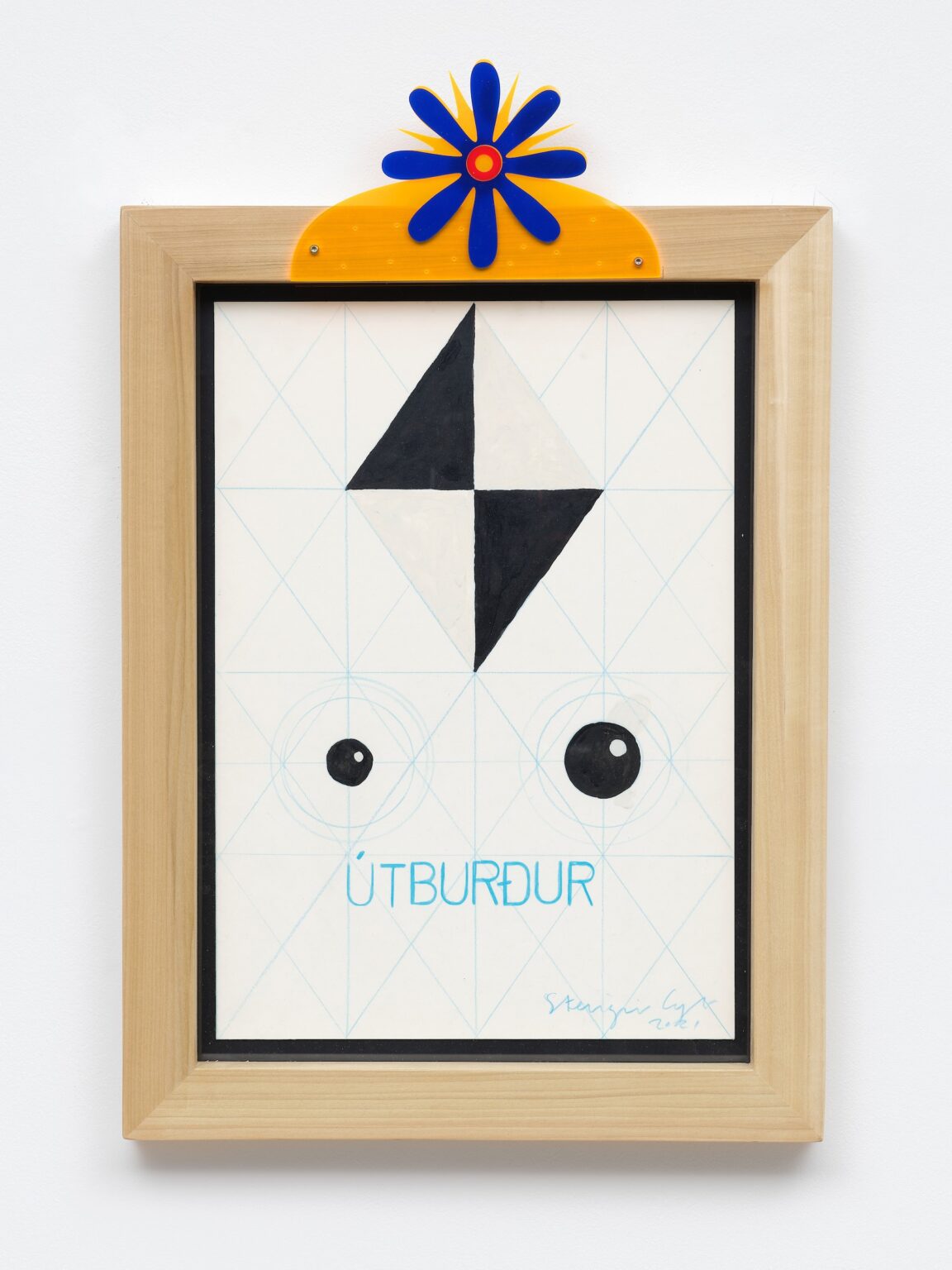
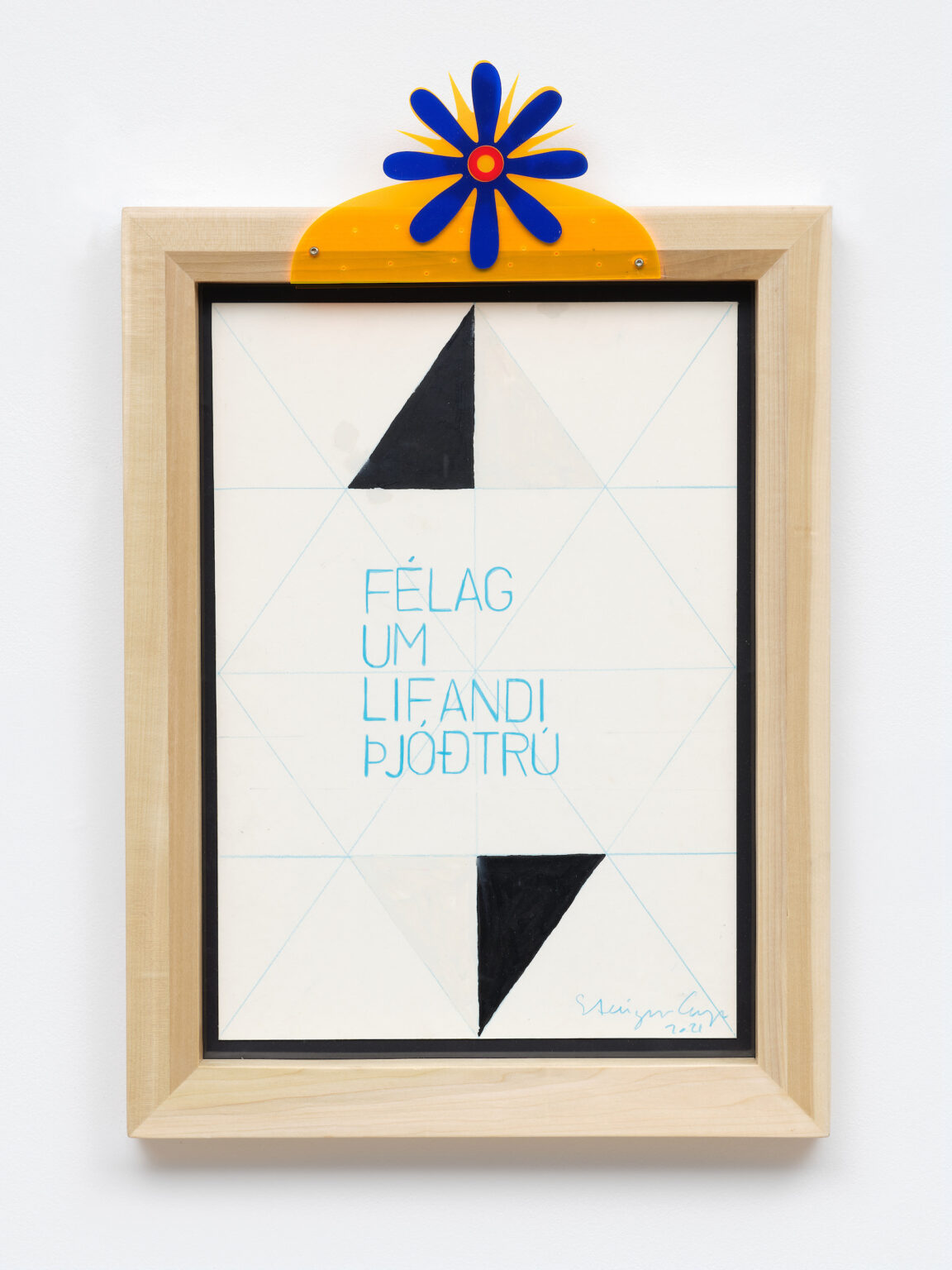
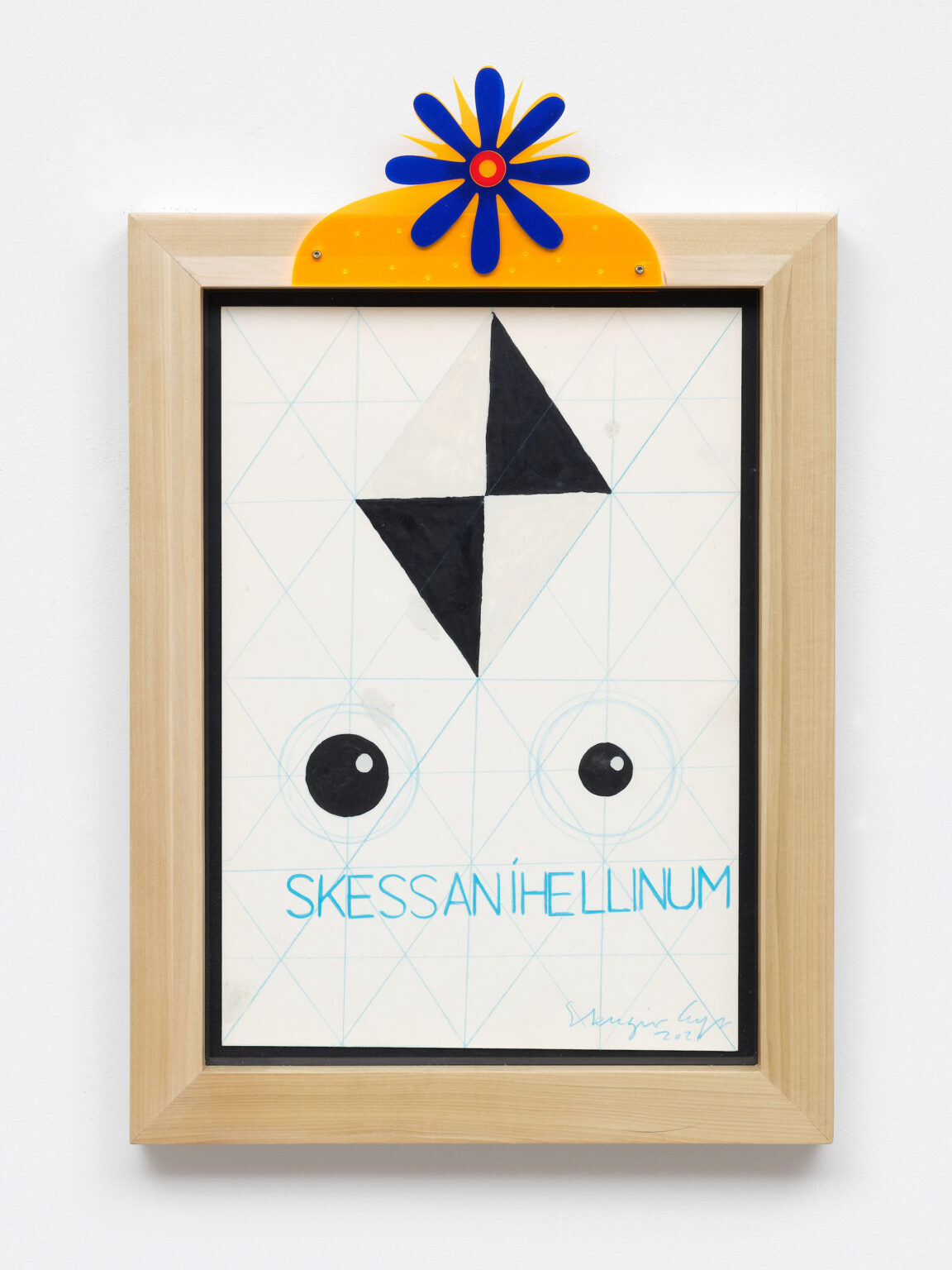
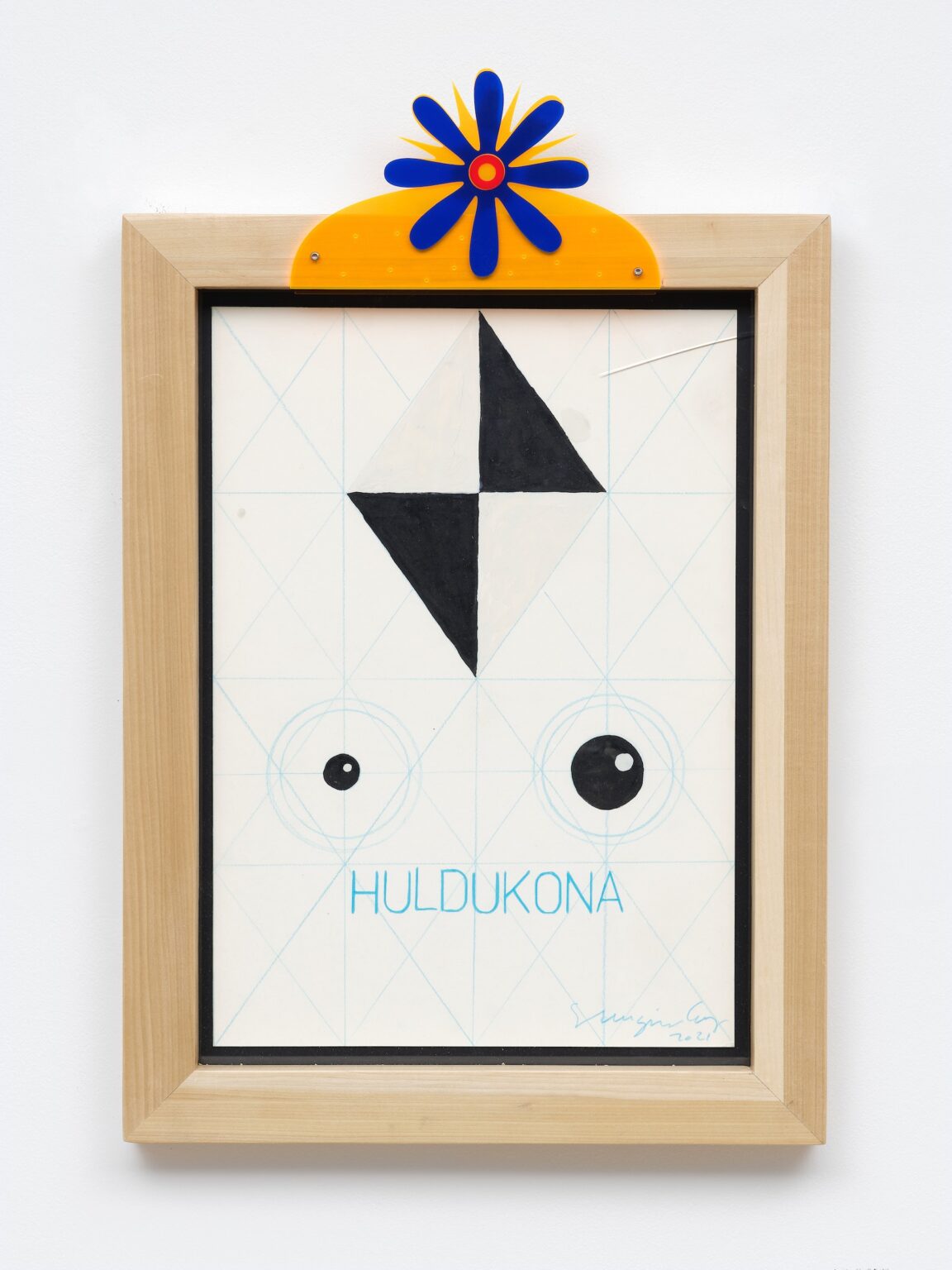
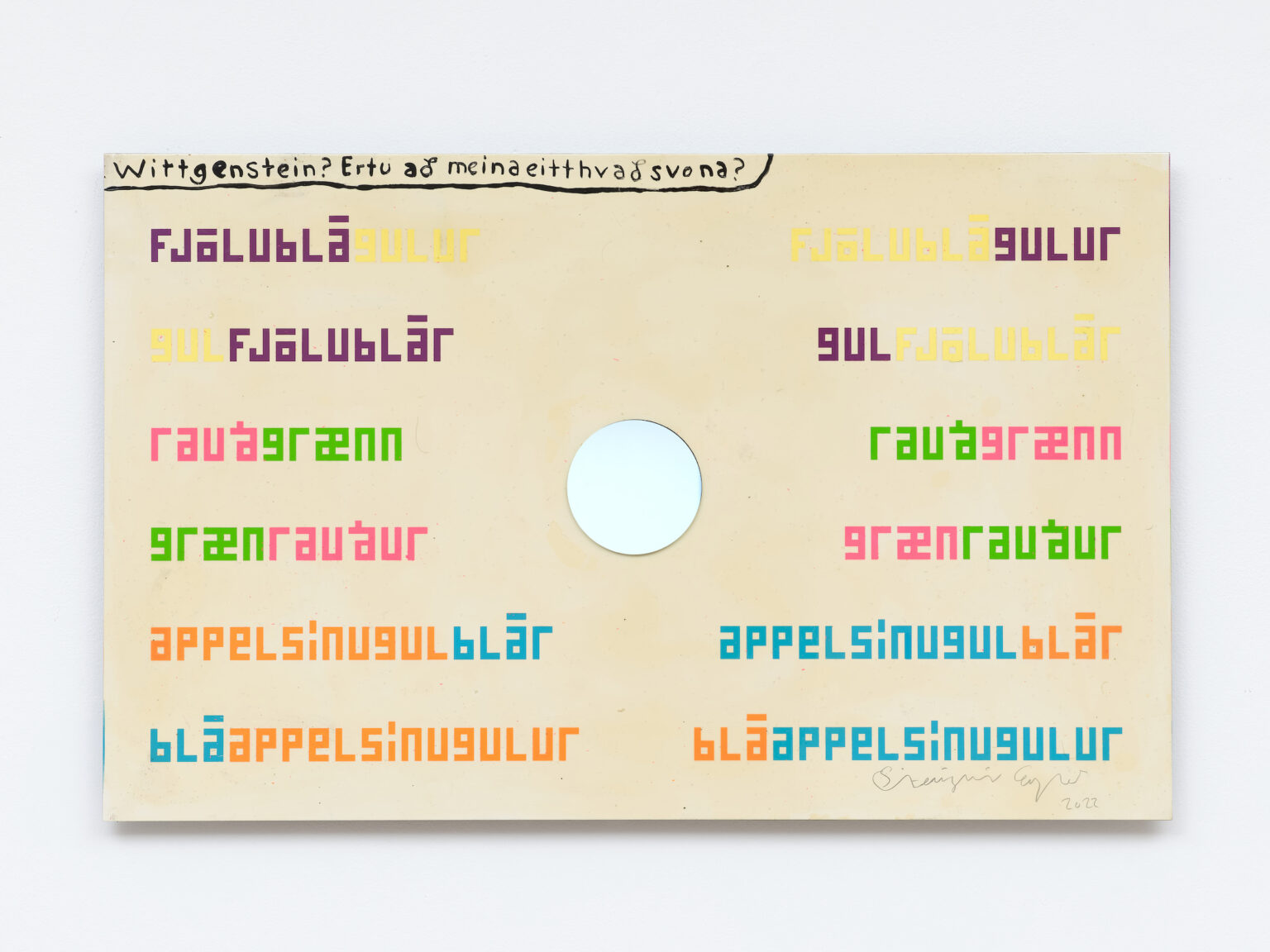
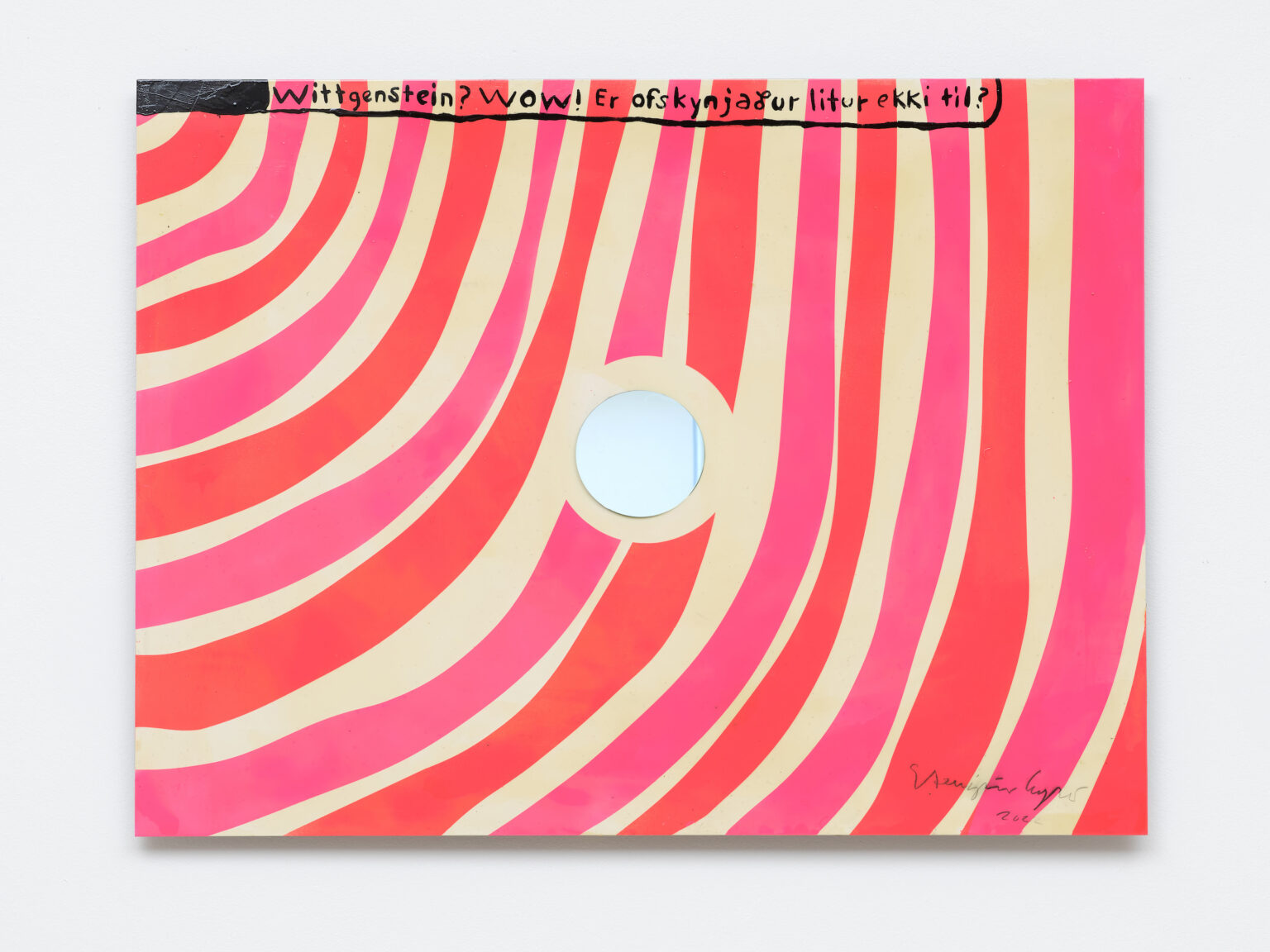
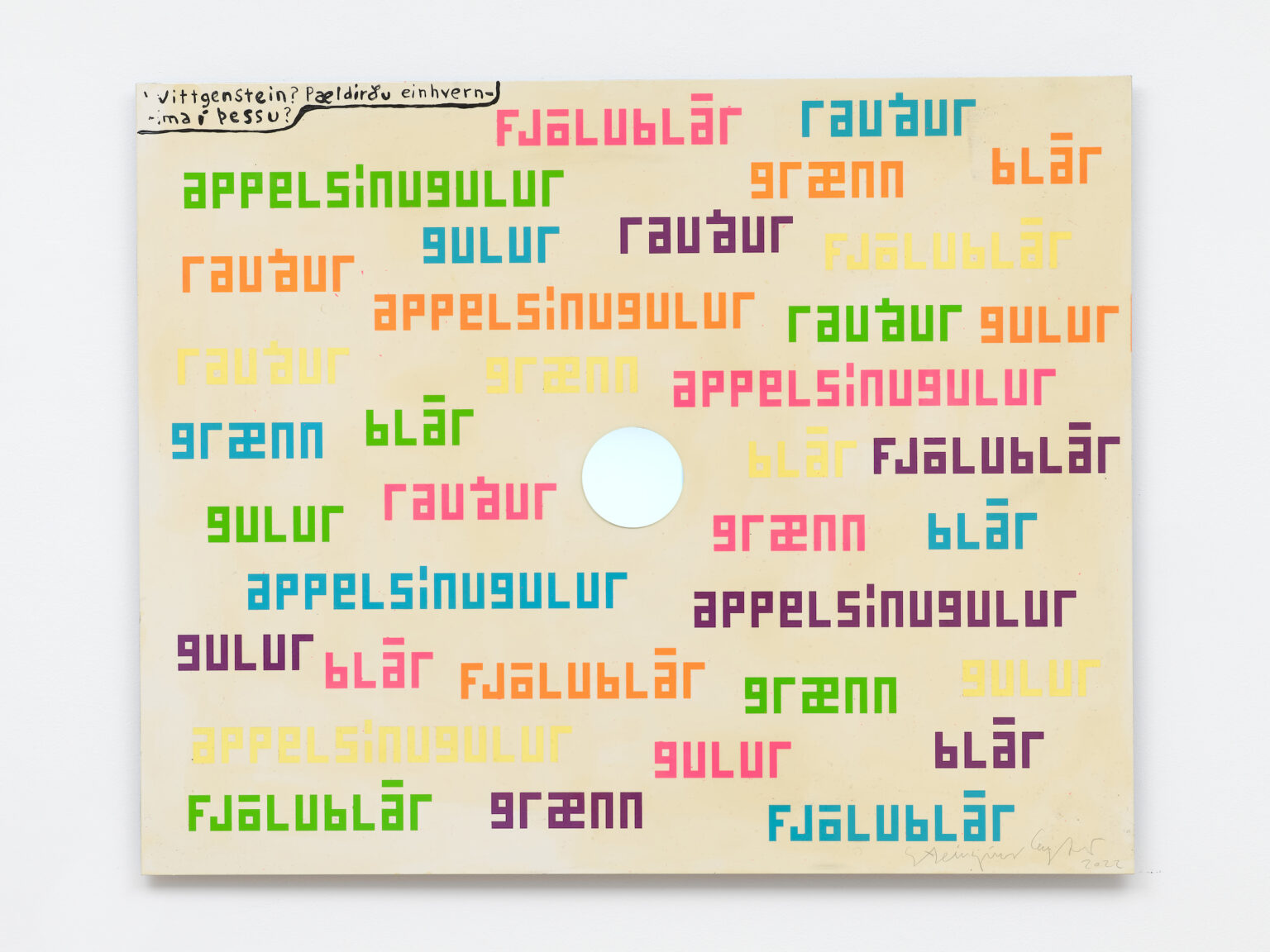
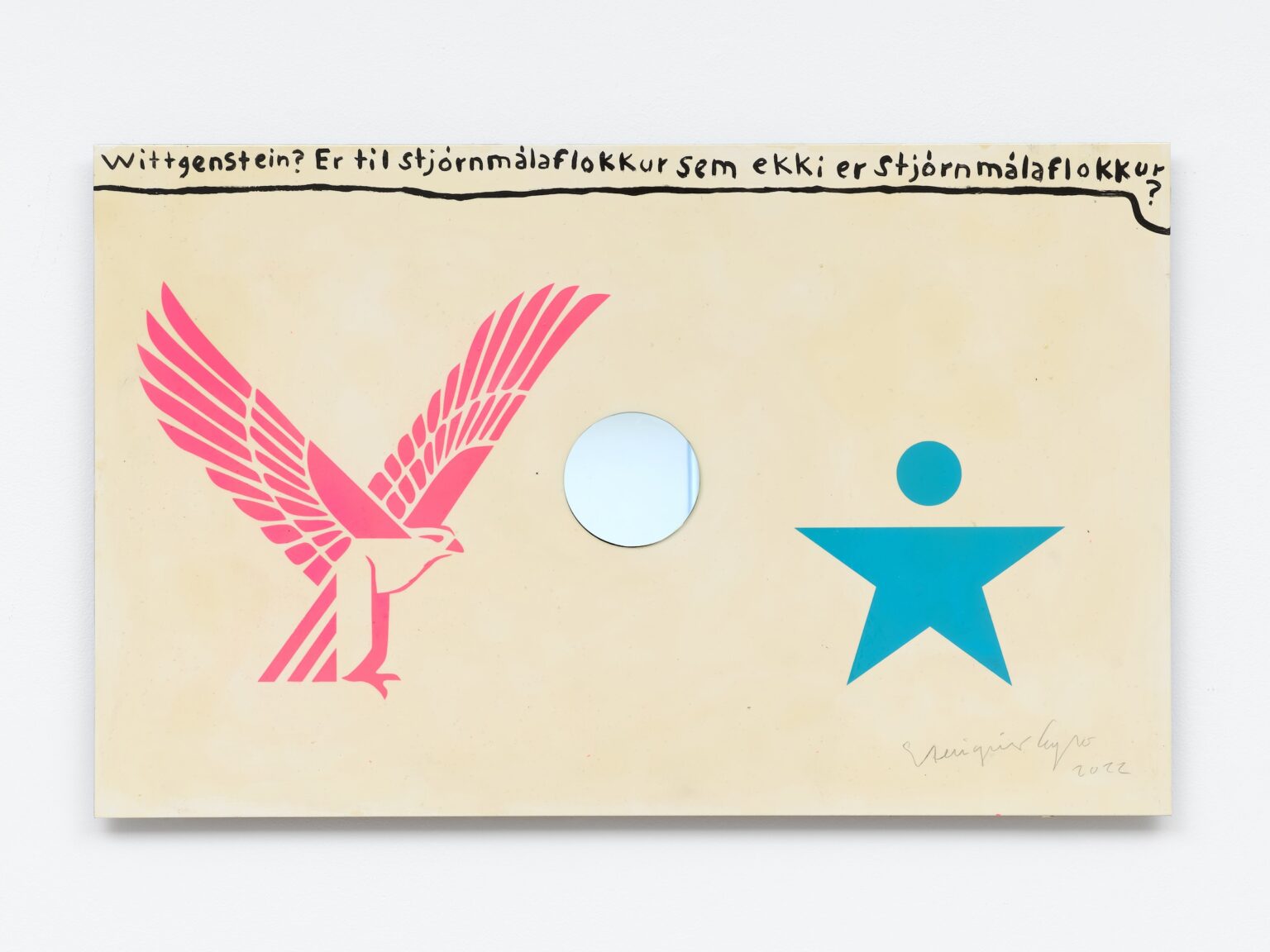
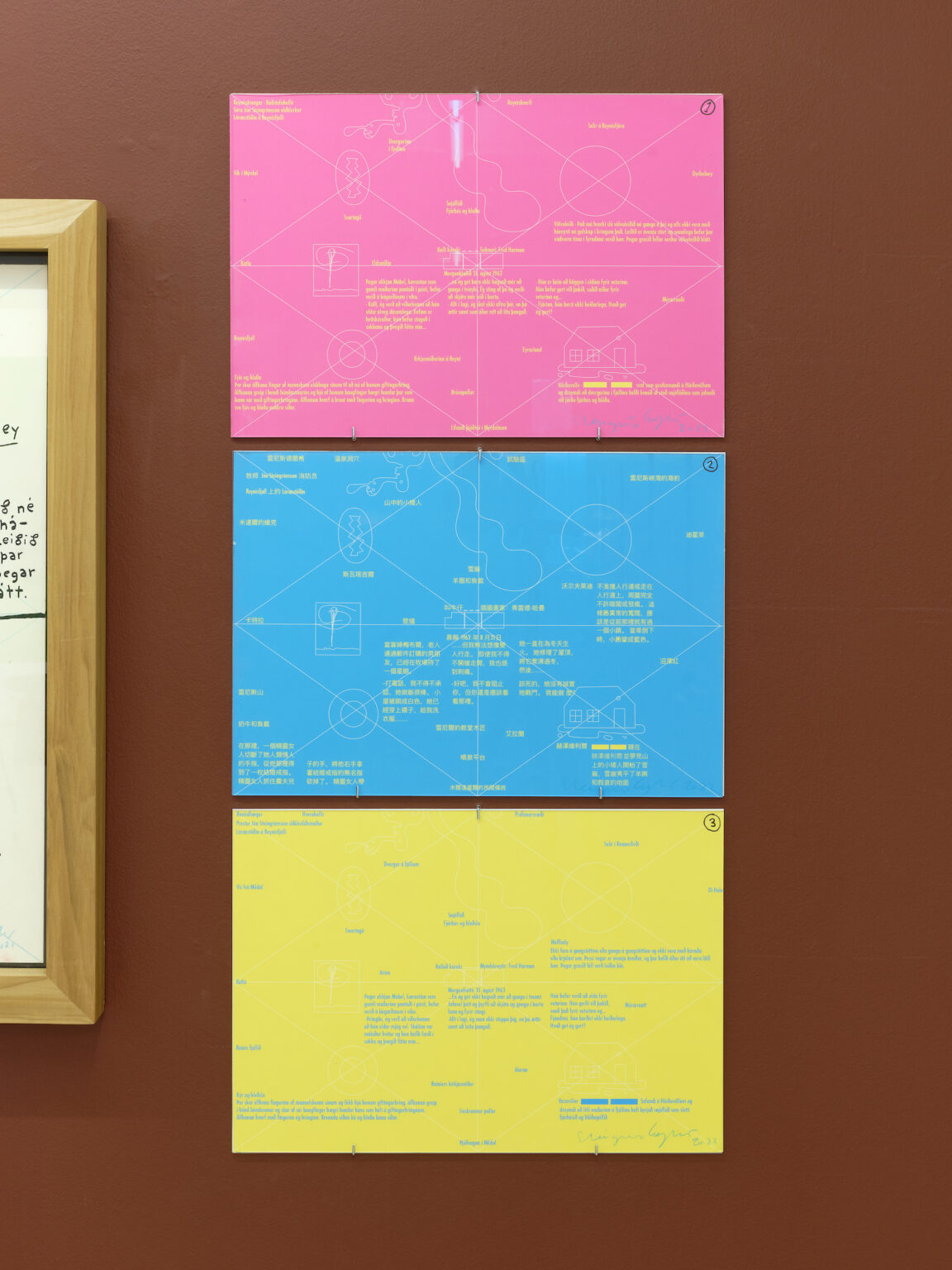
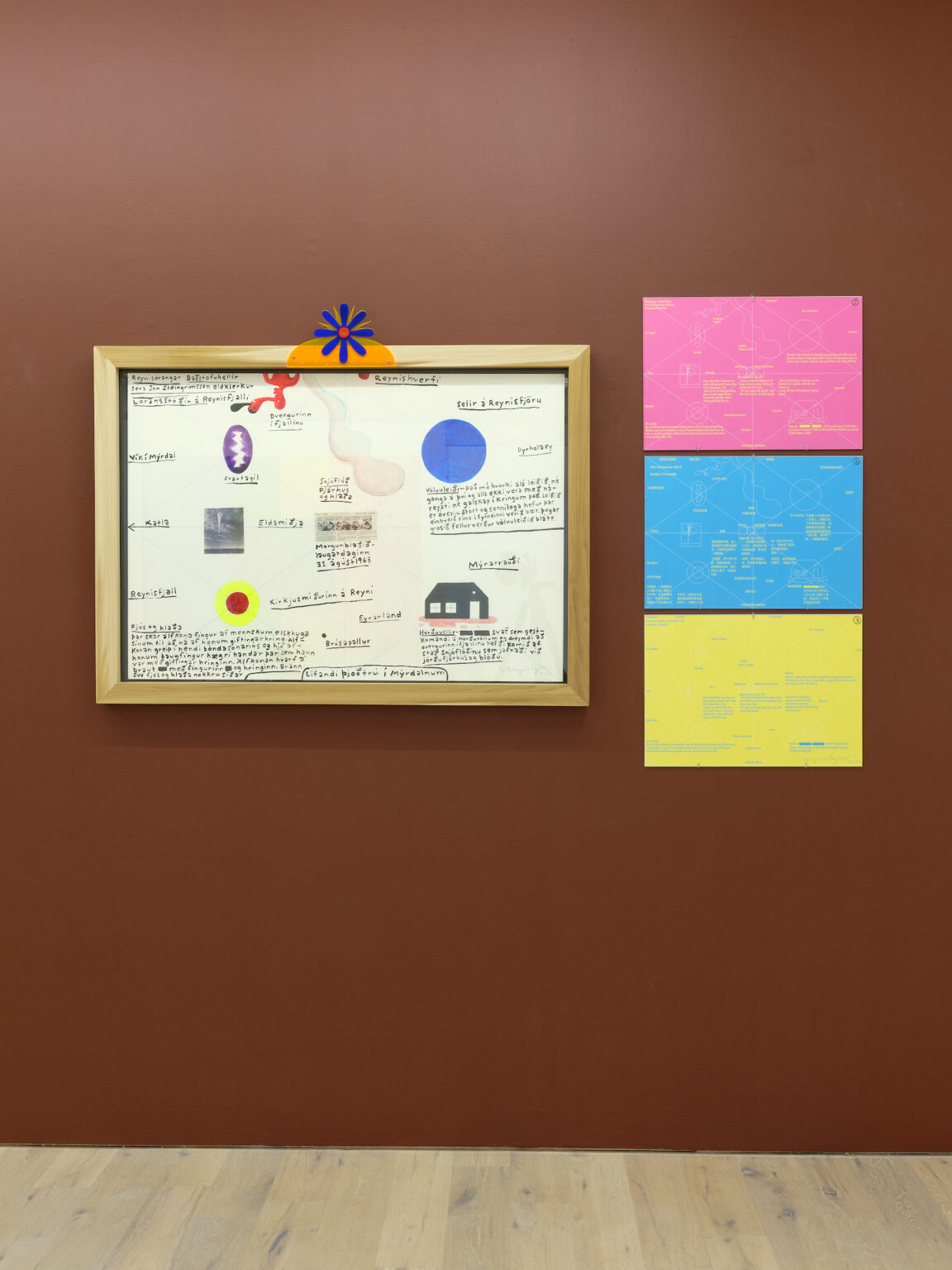
In his art, artist Steingrímur Eyfjörð is in constant dialogue with people, living and passed, with himself and with his own artworks. He speaks to his artworks in the form of text within the frame while creating them and sometimes directs questions to or refers to conversations with his friends through text. The works respond to him and are even self-critical and sometimes self-deprecating. The reverberations of these dialogues then often continue in the unfinished works of this inquisitive artist. The source of this internal conversation is his belief in the unexplored possibilities of creating connections between various contributions to the knowledge society.

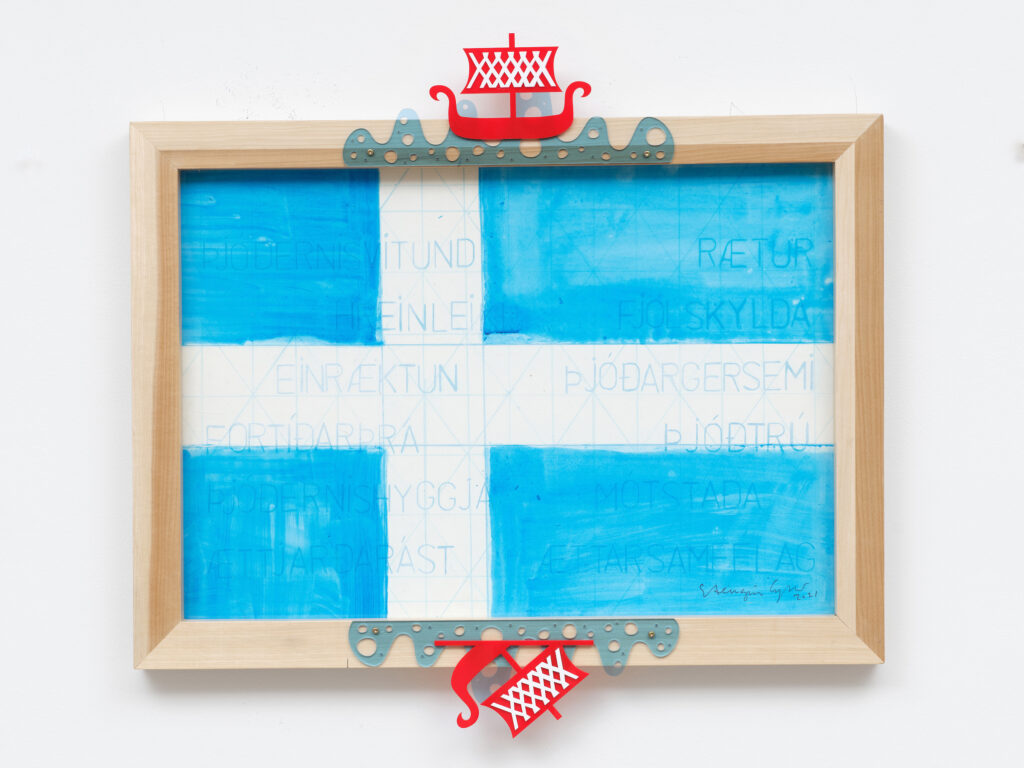
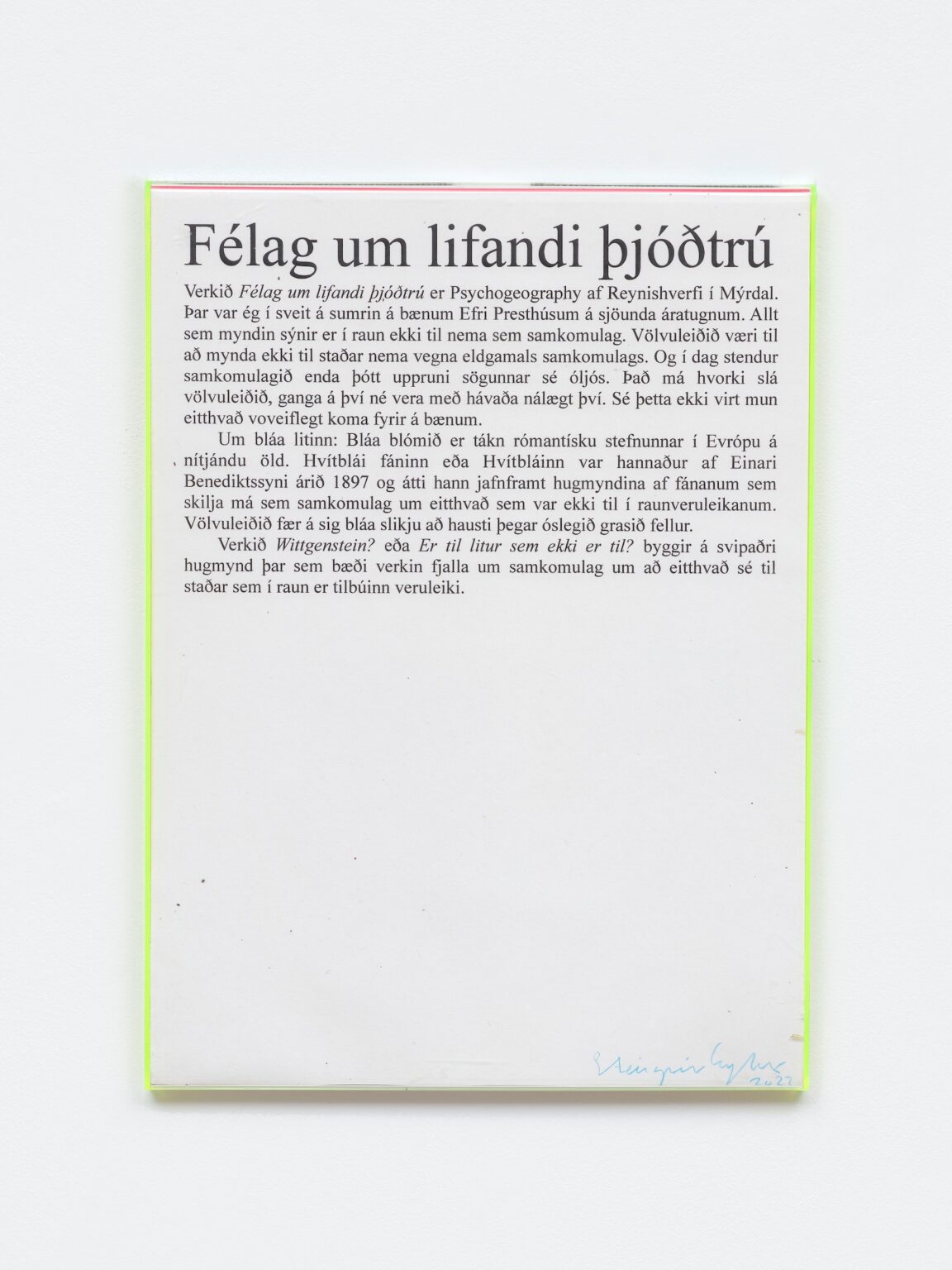
In all these conversations, the artist himself sets the tone and contributes vast knowledge, which he has gathered in an exceptionally unbiased spirit, free from all hierarchy and linear formality. In his search for knowledge and with sharp processing of the epistemology of complex systems, Eyfjörð regularly sheds his skin, metamorphoses and leaves behind the weight of preconceived ideas, accepted values and his own expectations and those of others. He simply looks at a blue-coloured object and gives himself permission to think “blue”, then possibly connects the concept to the Indigo of Indian symbolism or the blue-hued distance in Arabic poetry, so that the blue object becomes the Third Eye – universal consciousness, the goddess Kali, The Song of Songs, Parsifal and the the Holy Grail, the Sea and the Cod War, cowboy hats and the green cake, the ogre Grýla, Venus or an invisible sheep.

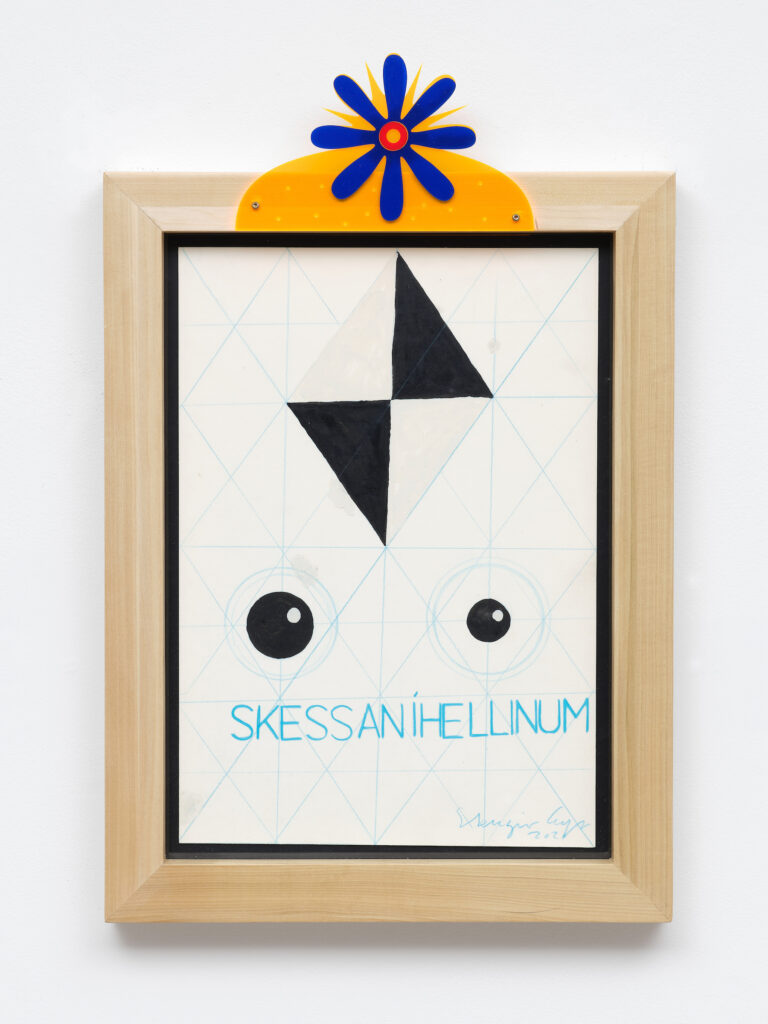
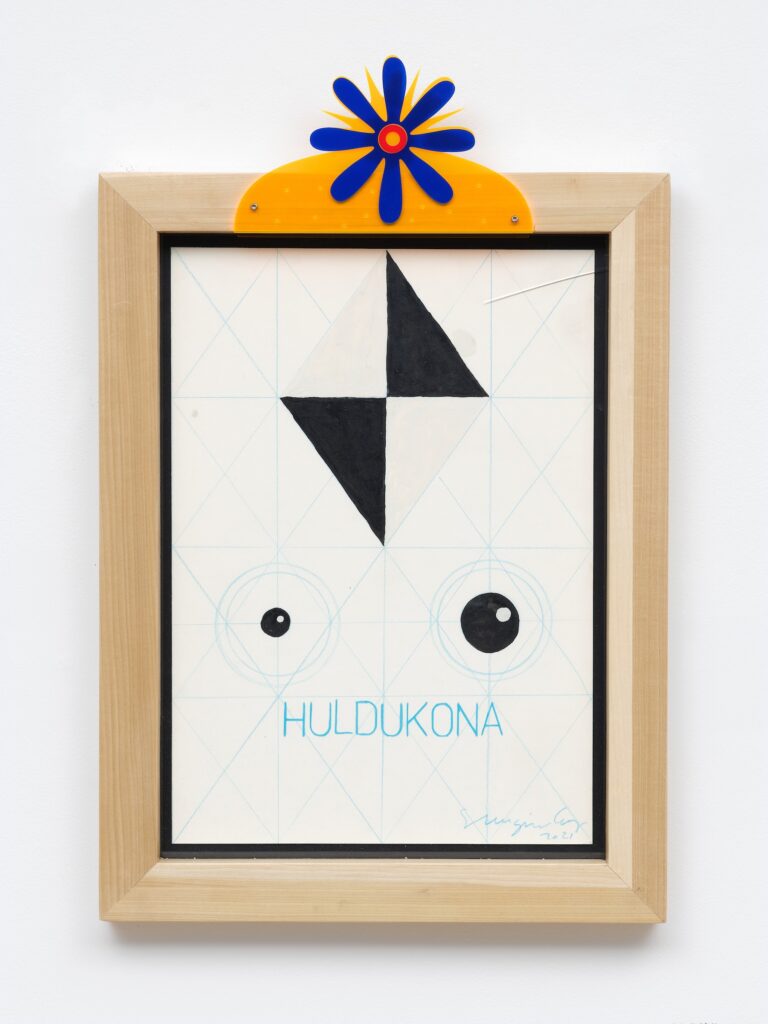
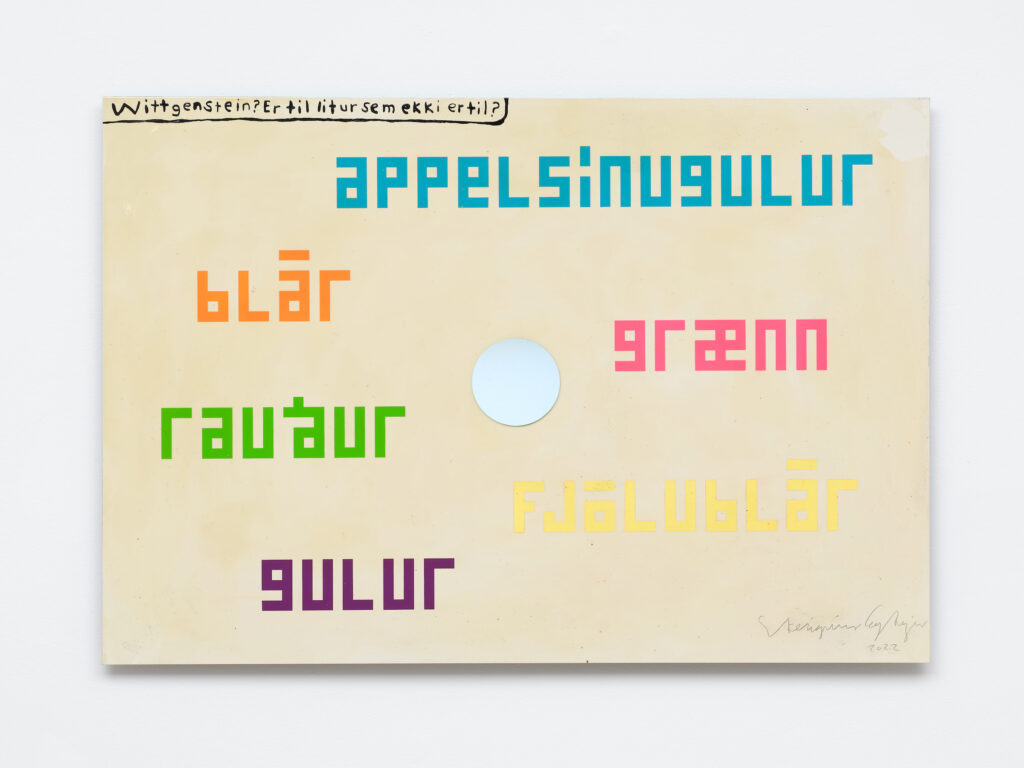
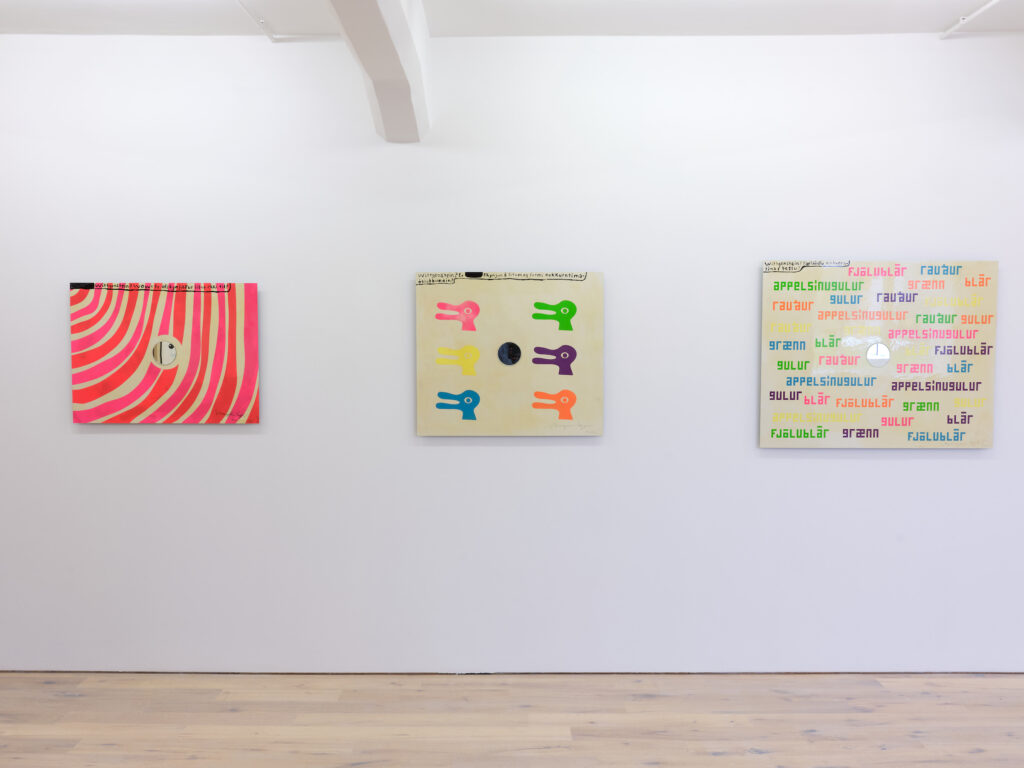
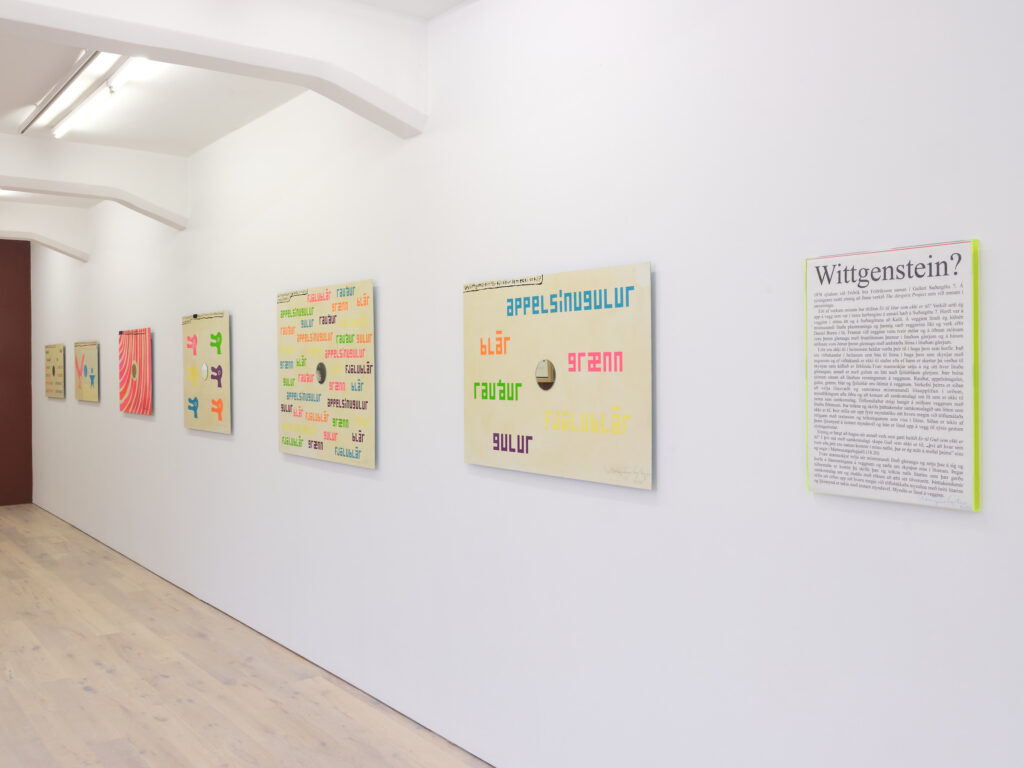
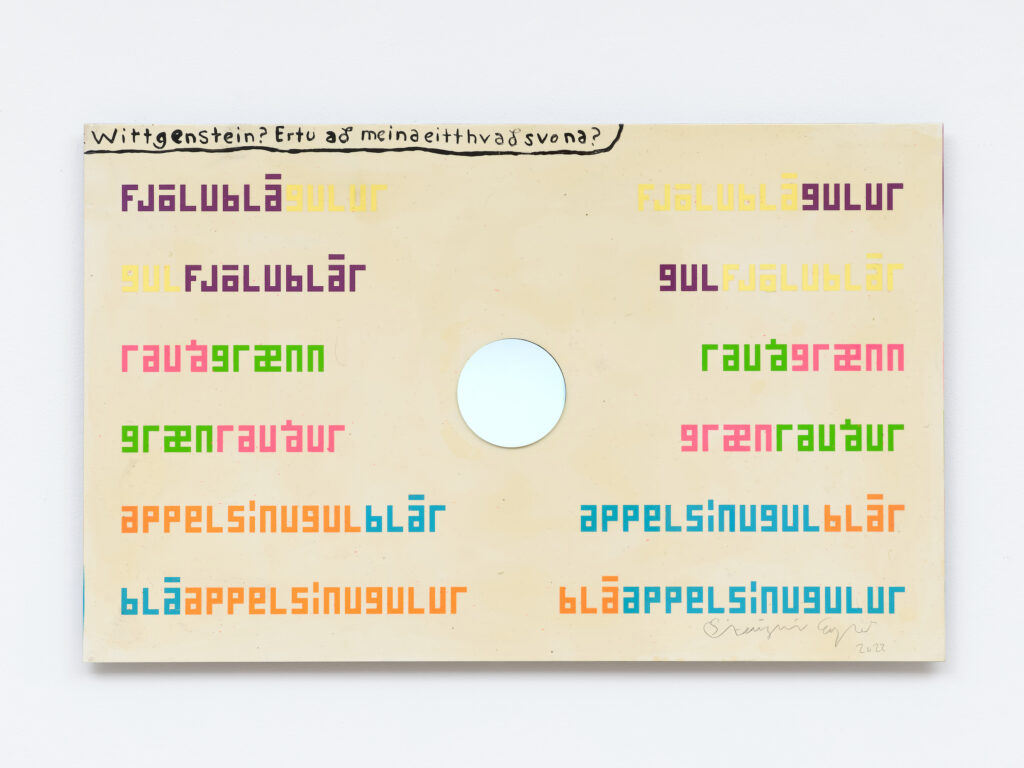
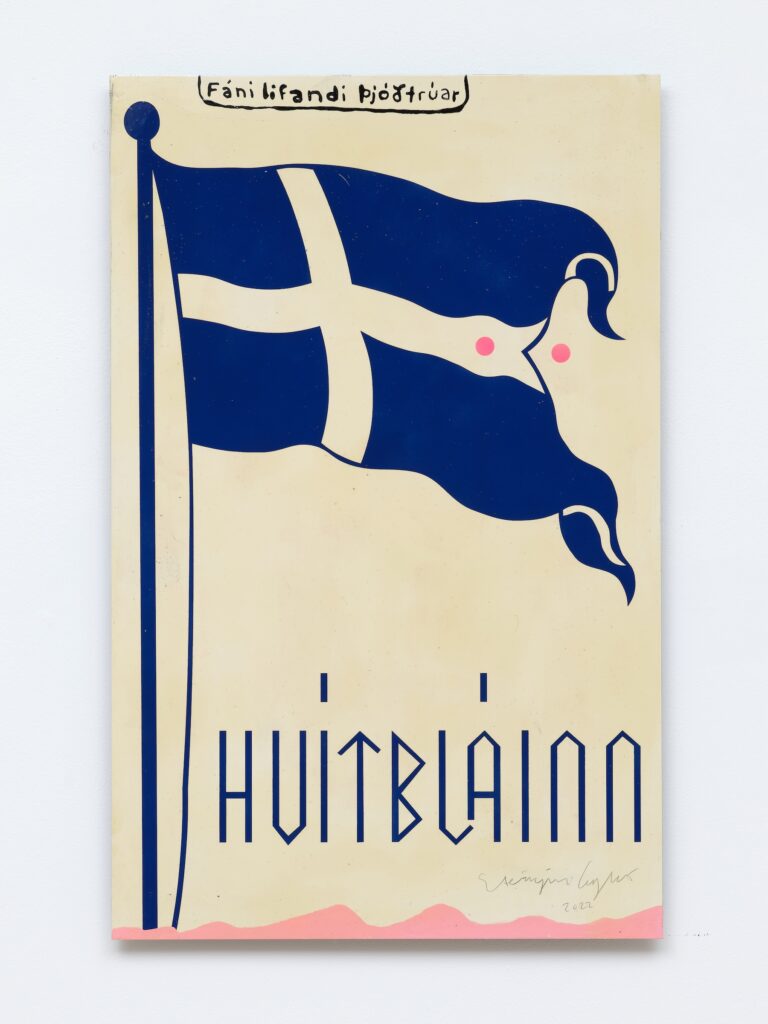
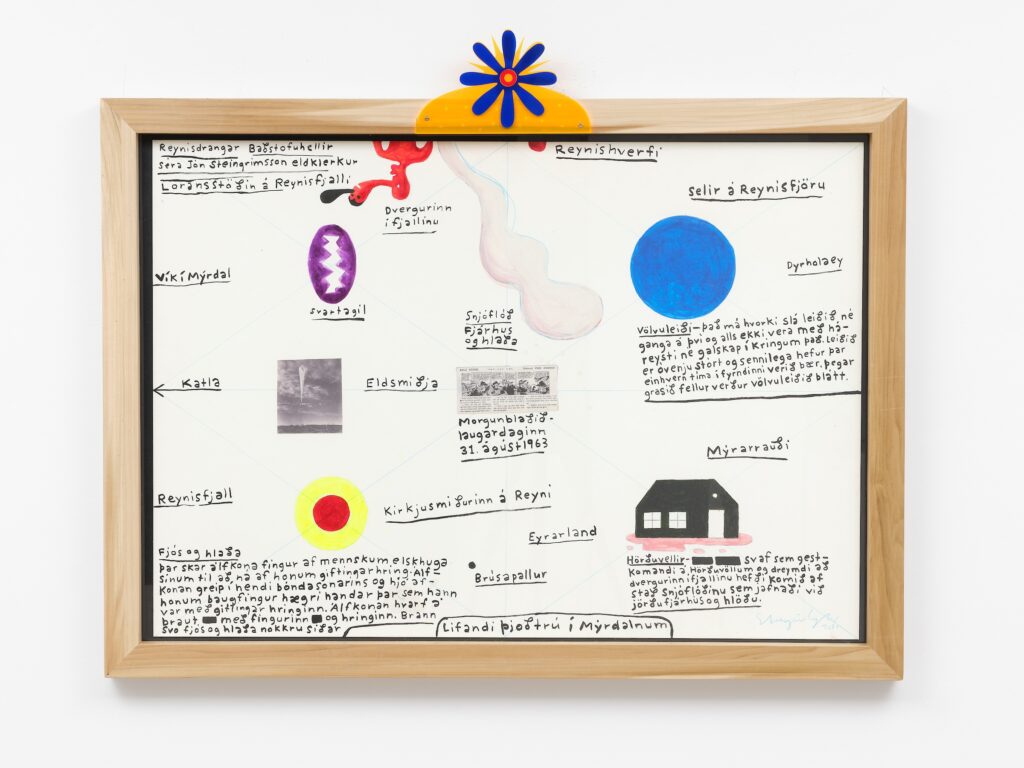
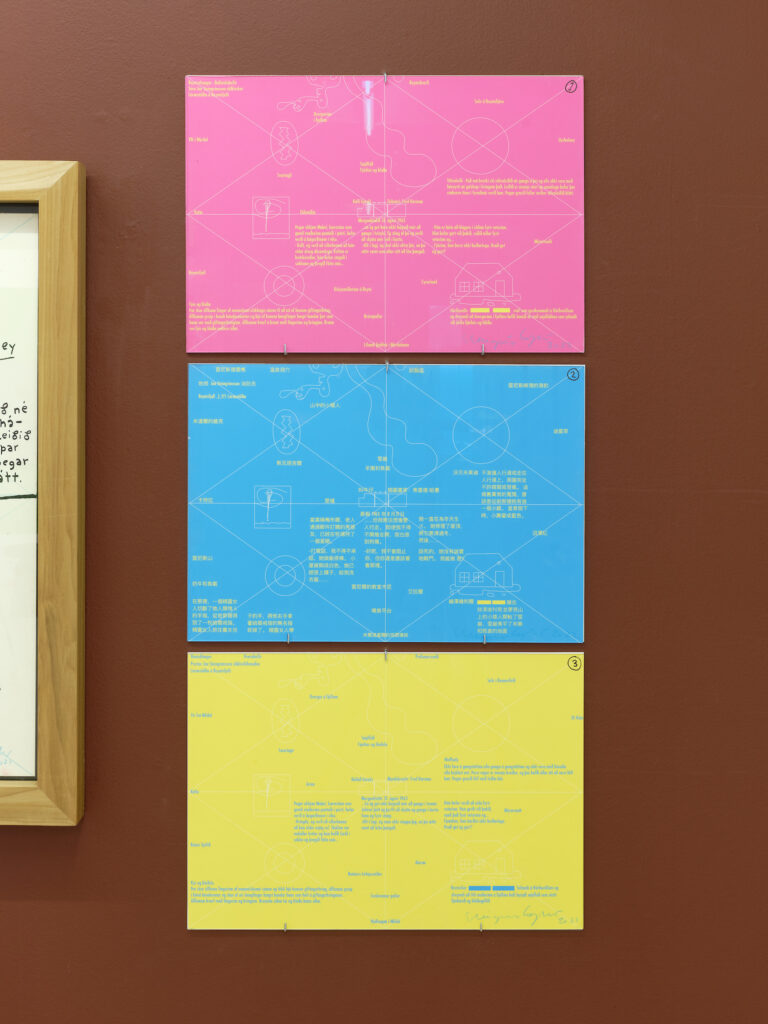
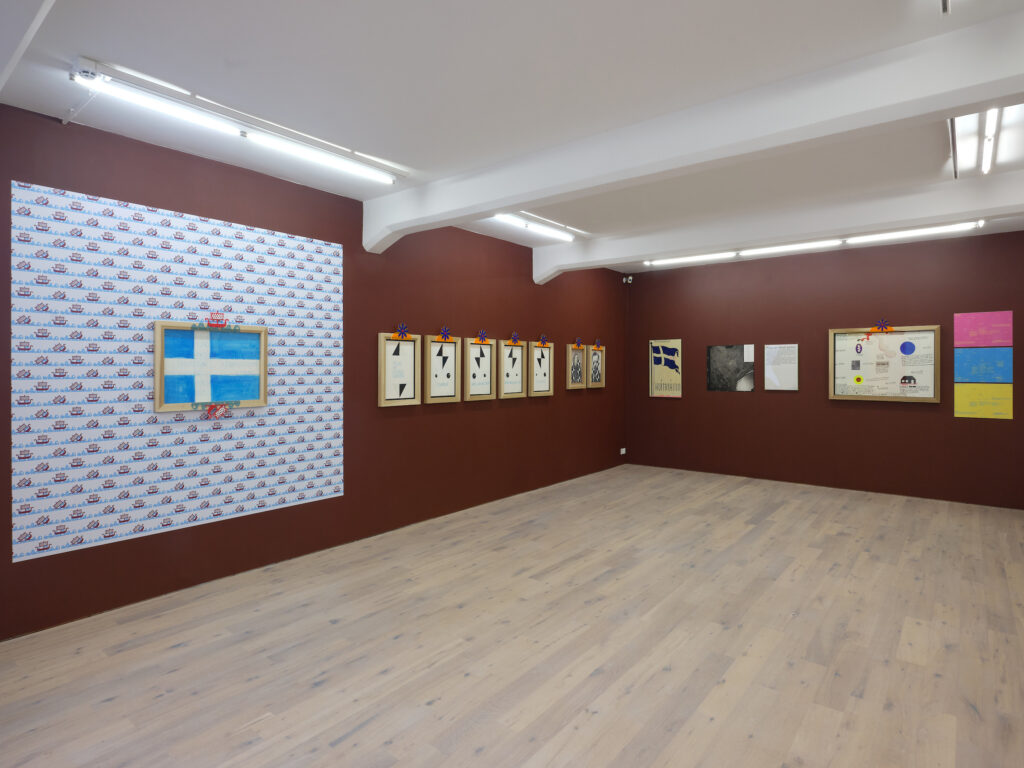
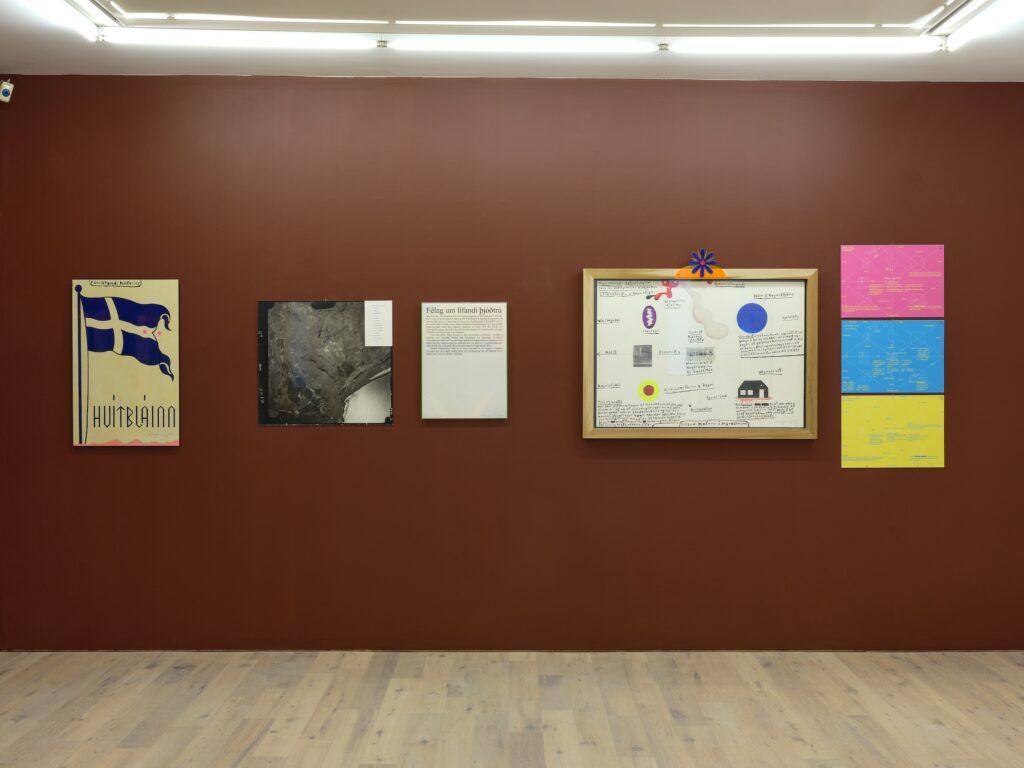
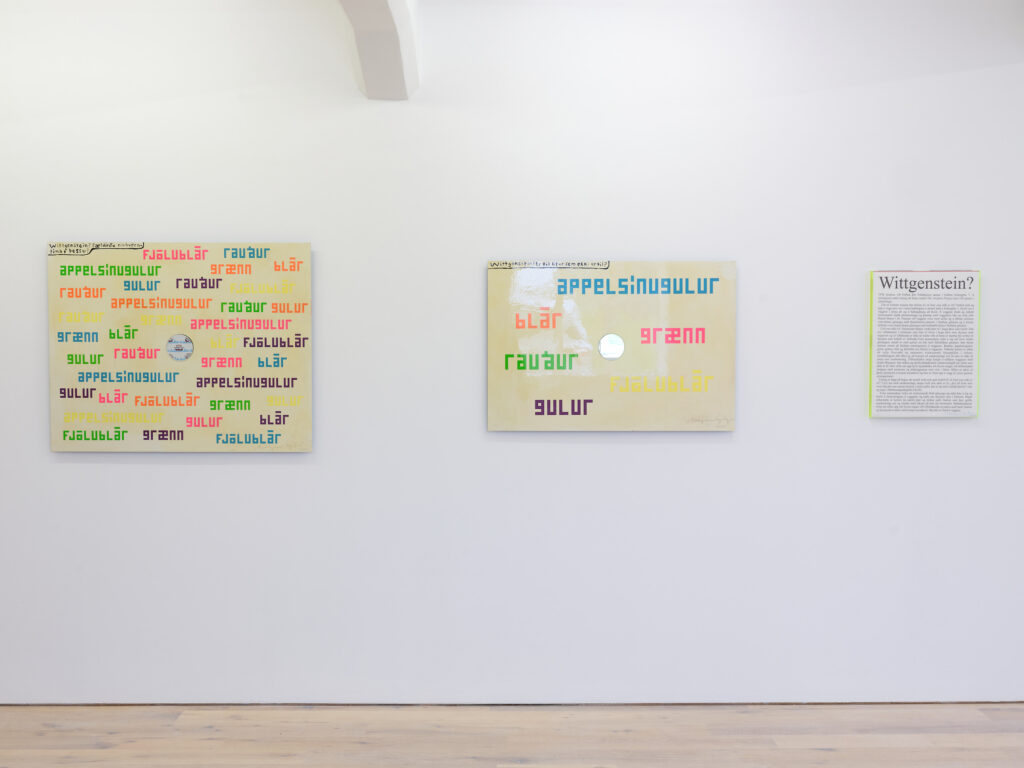
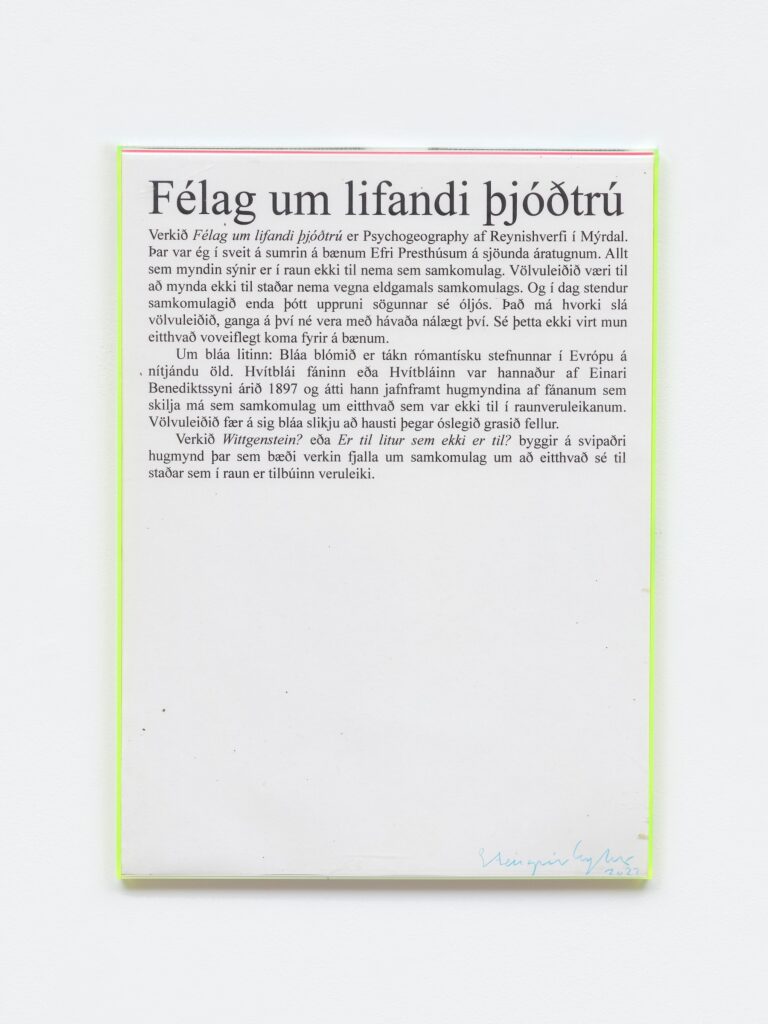
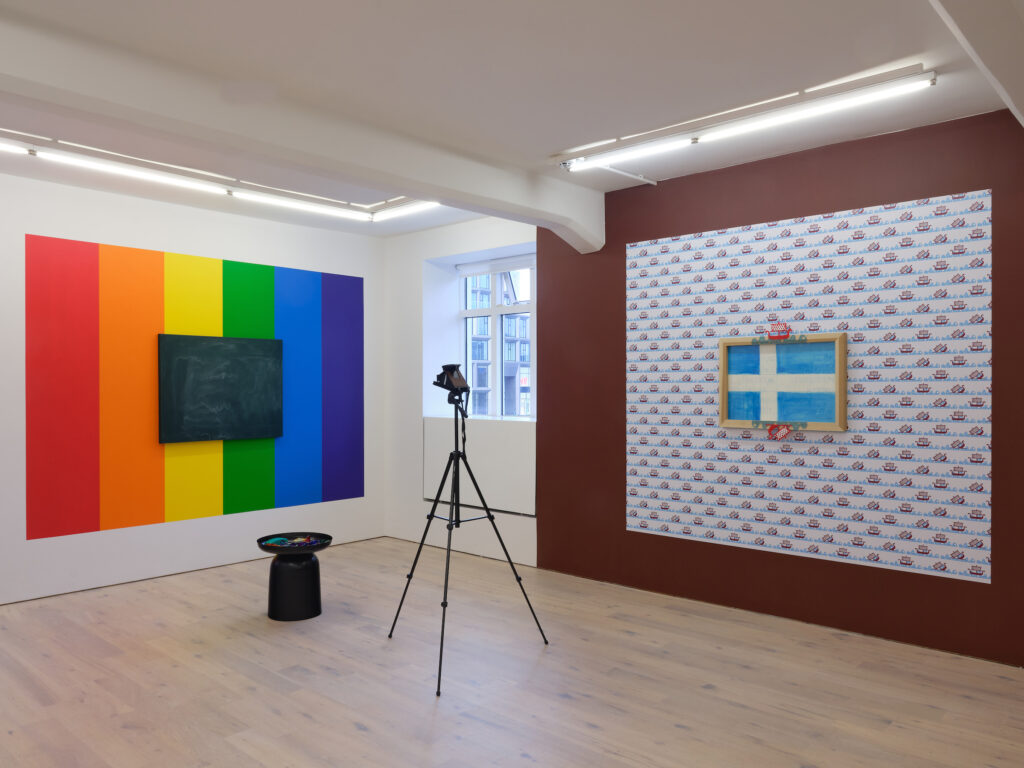
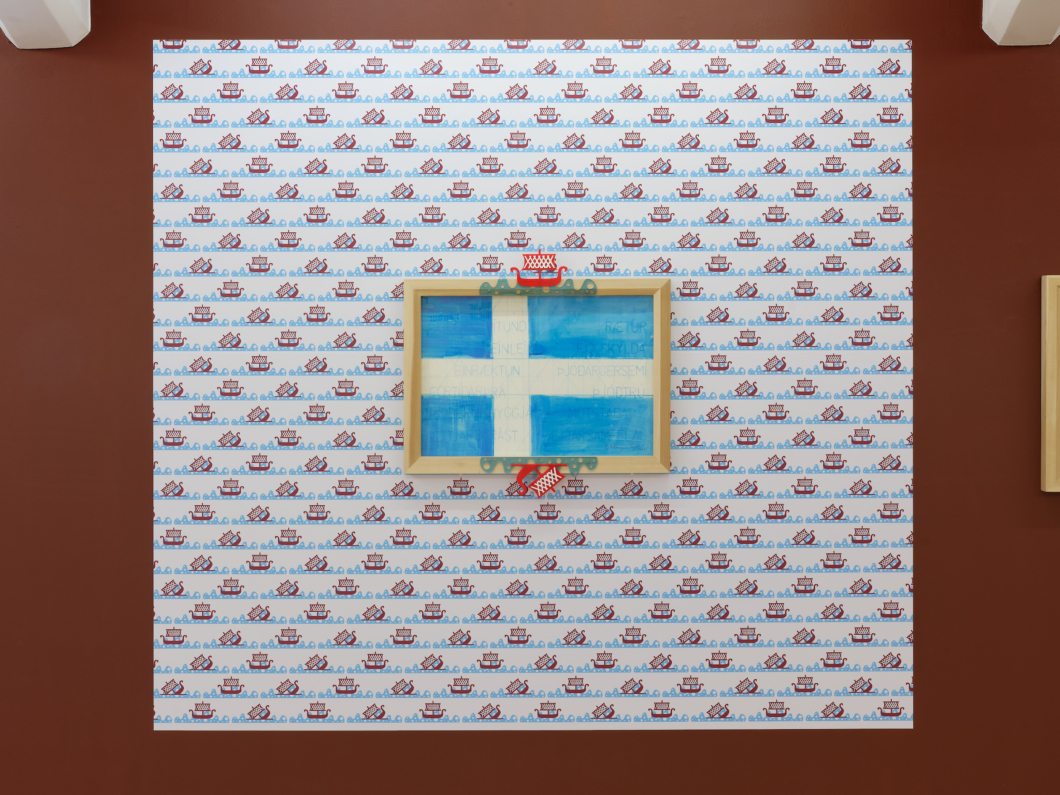
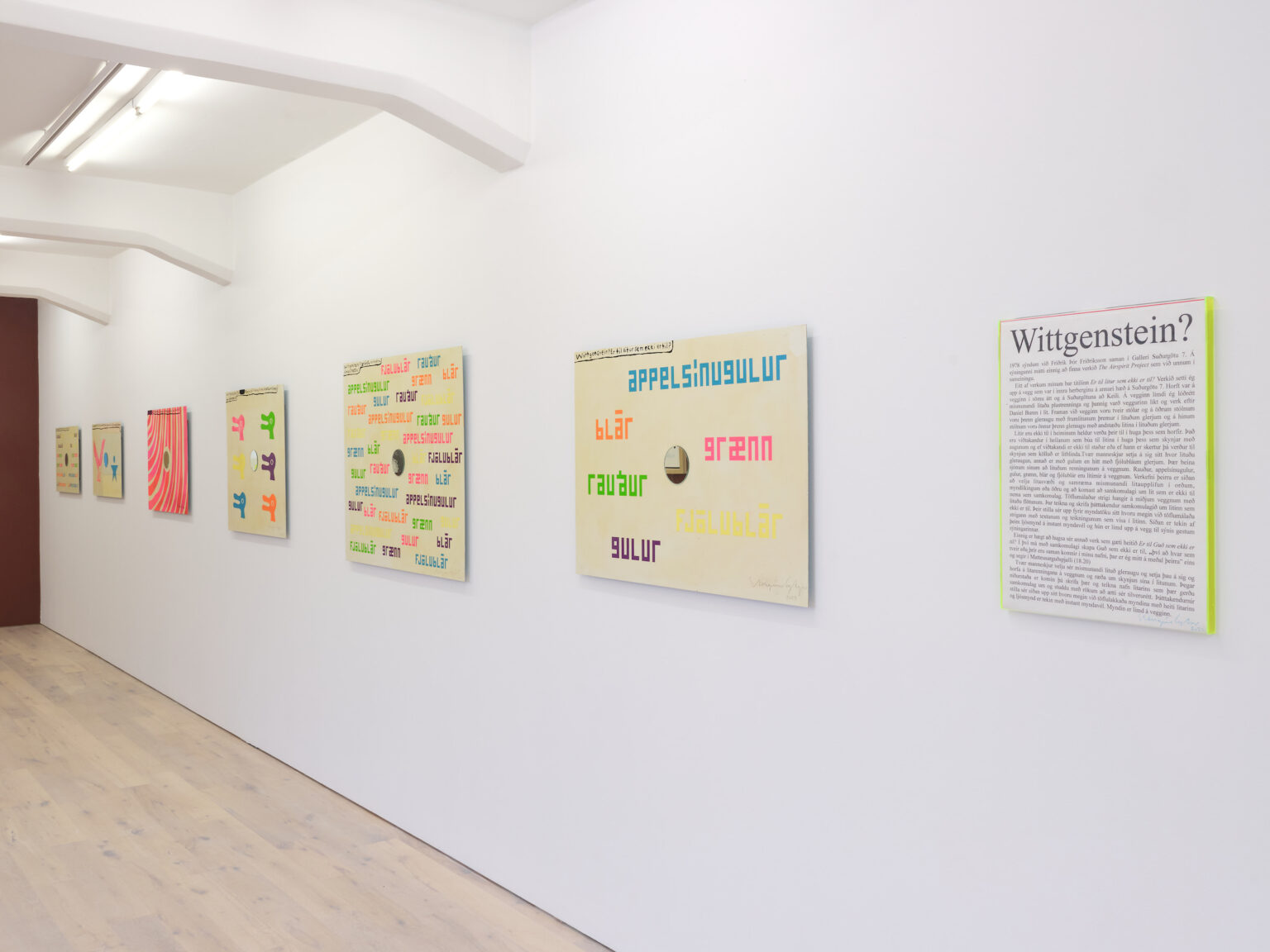
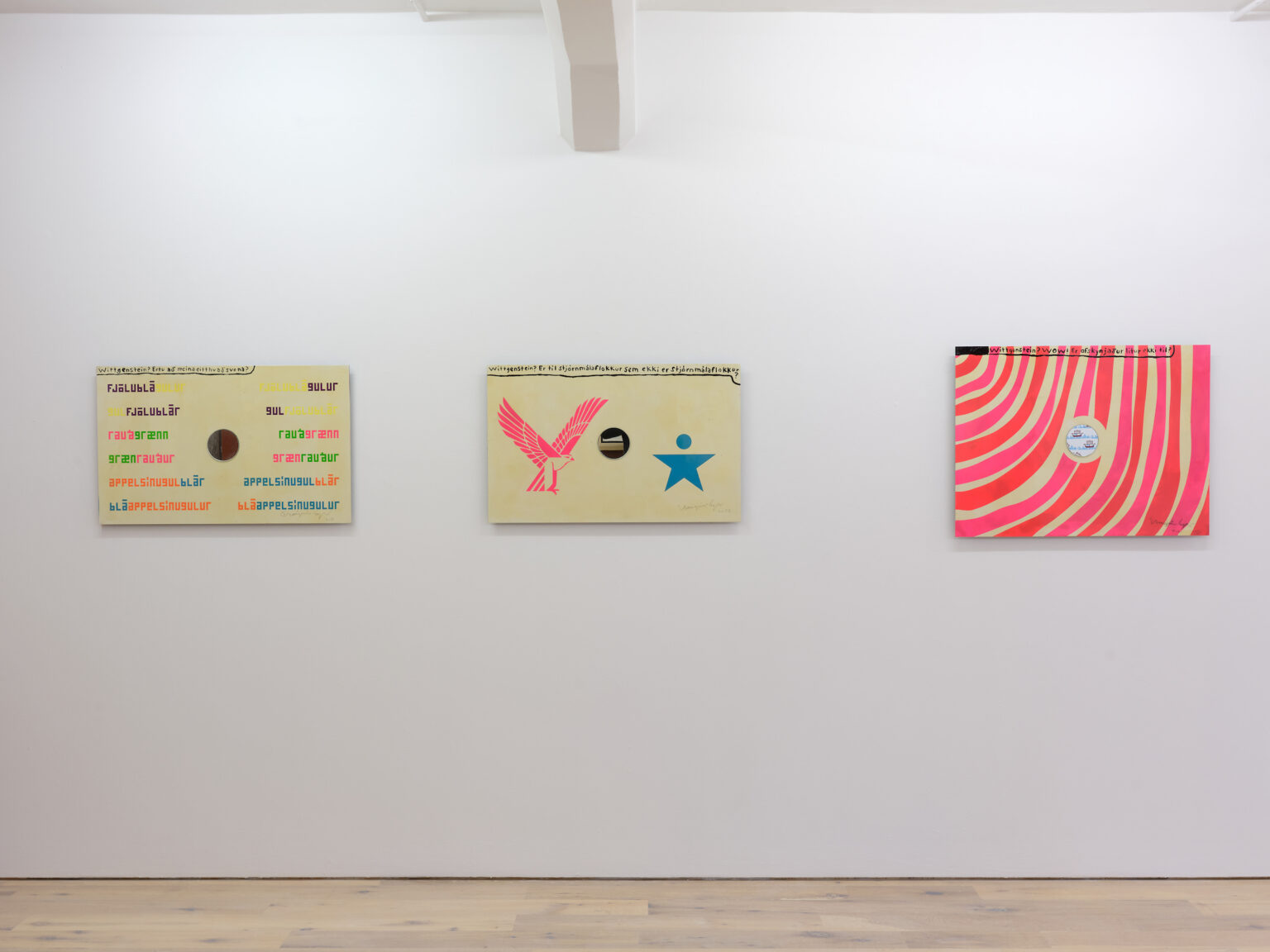
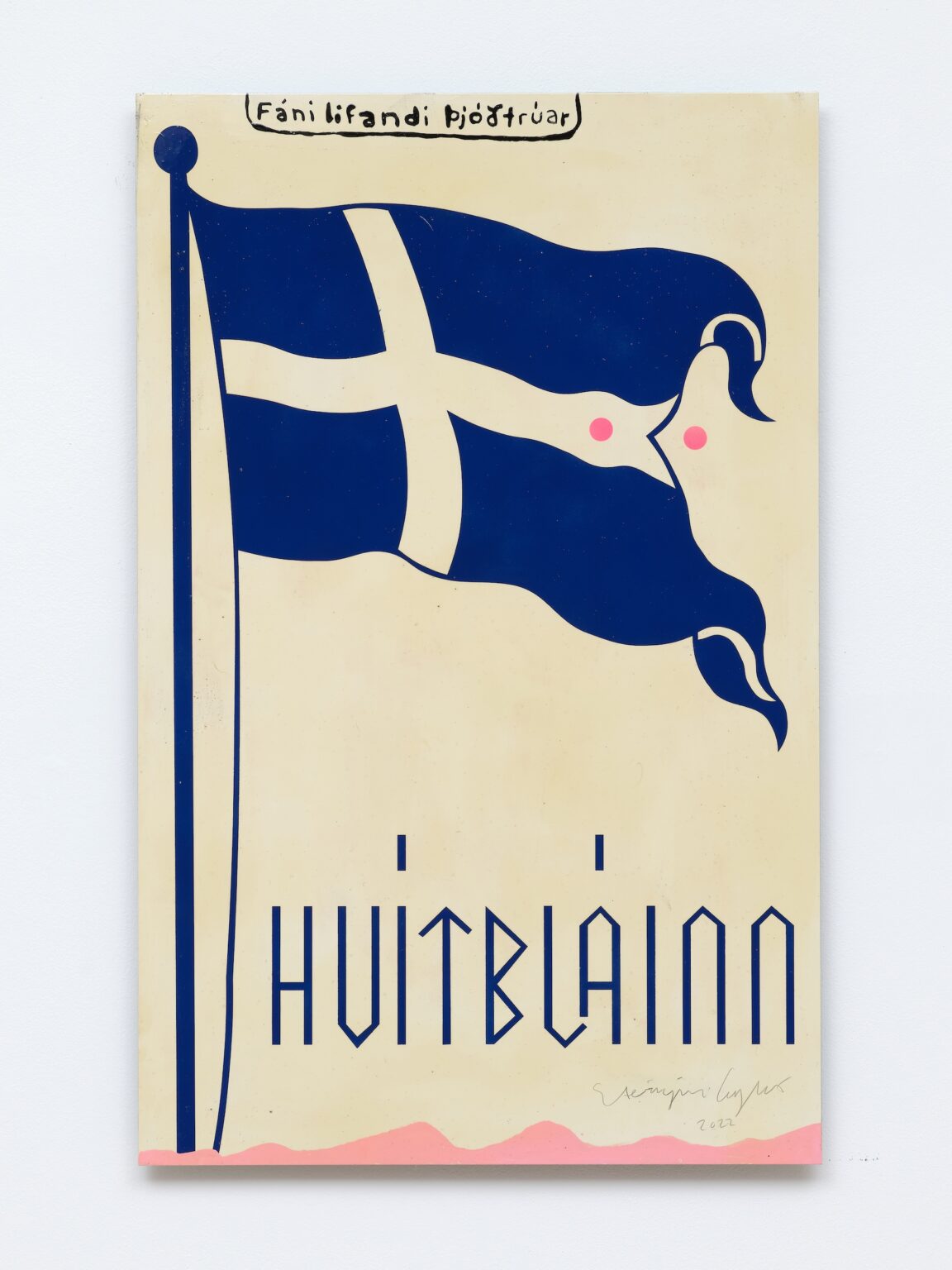
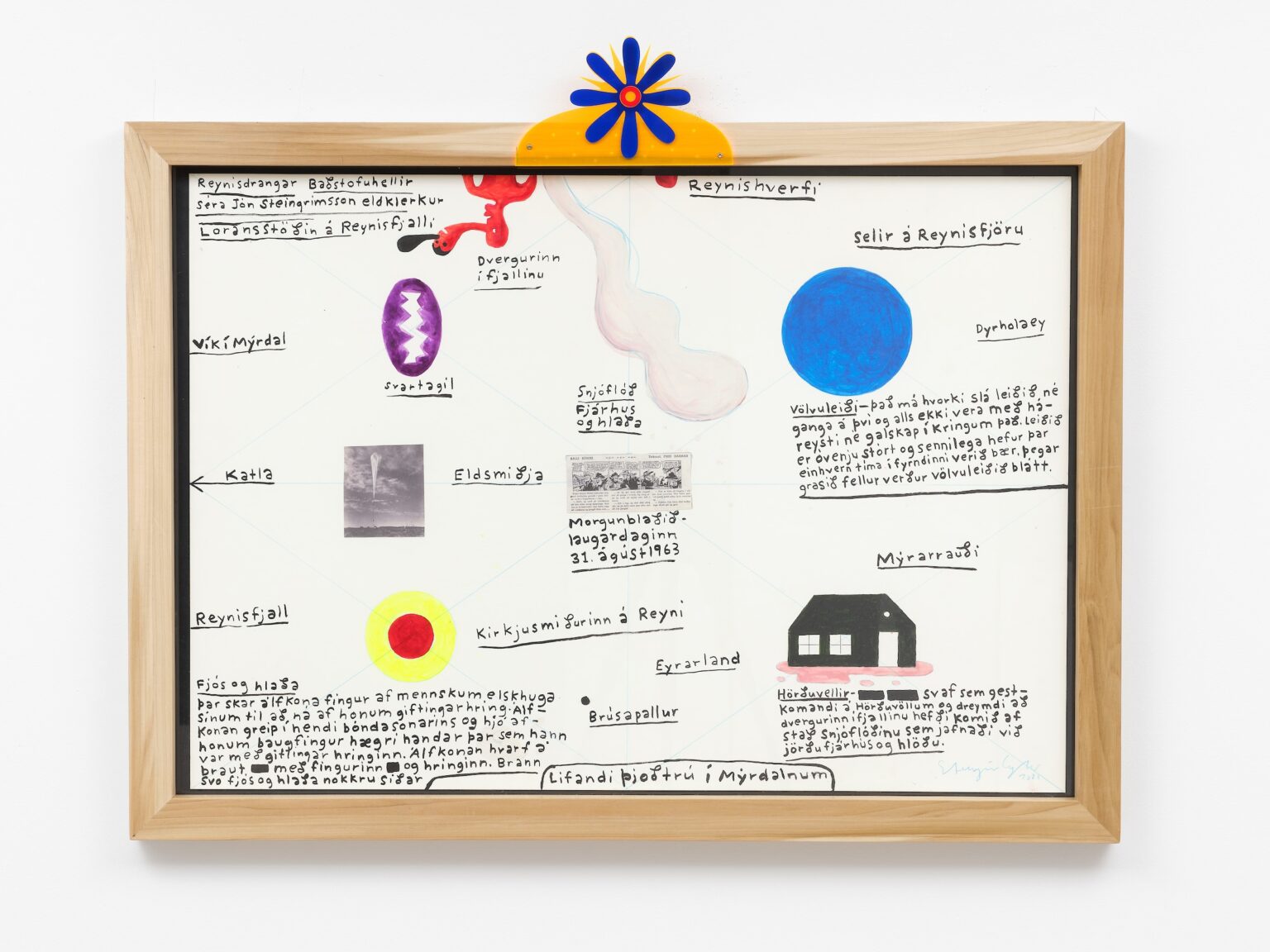
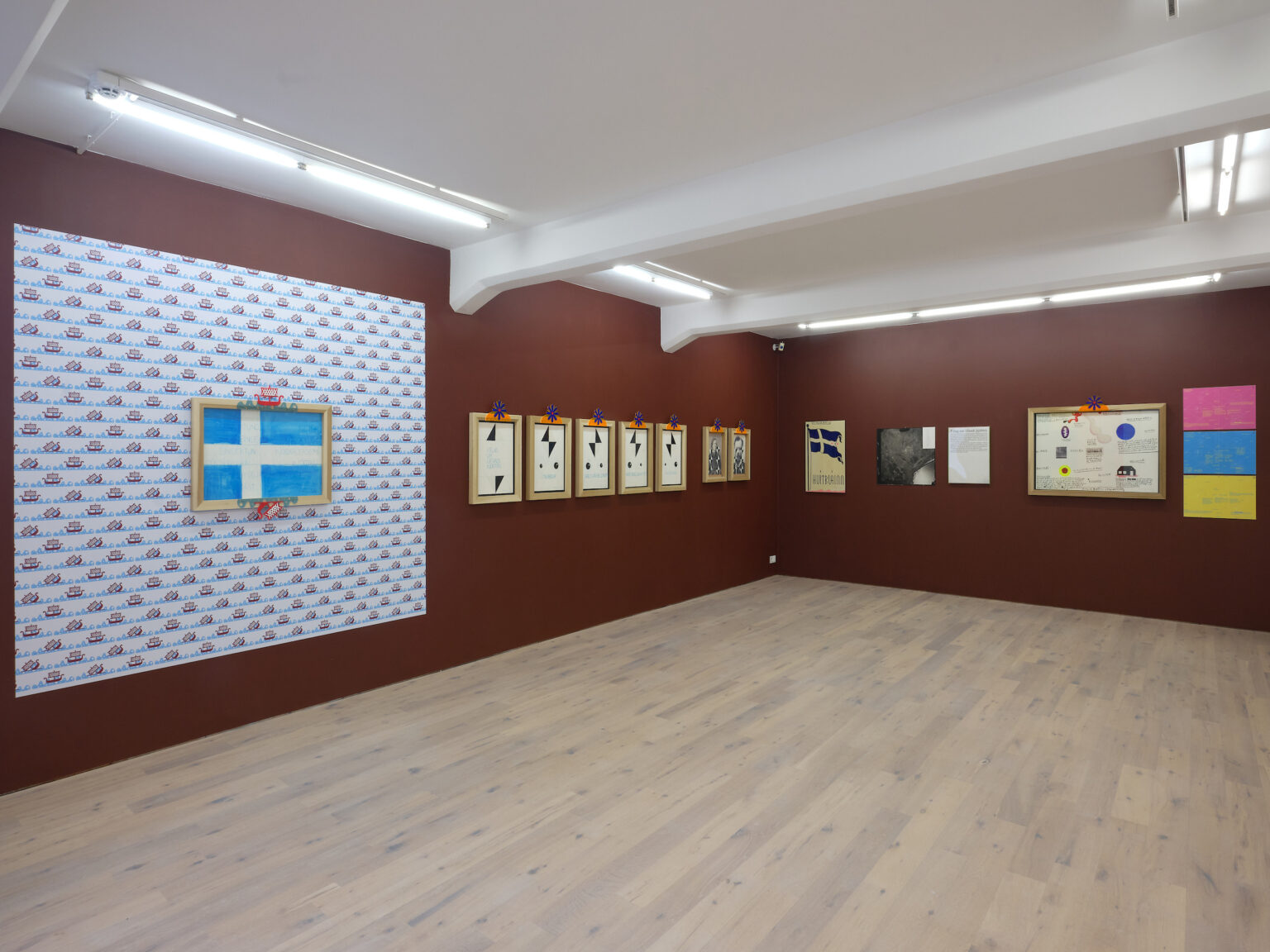
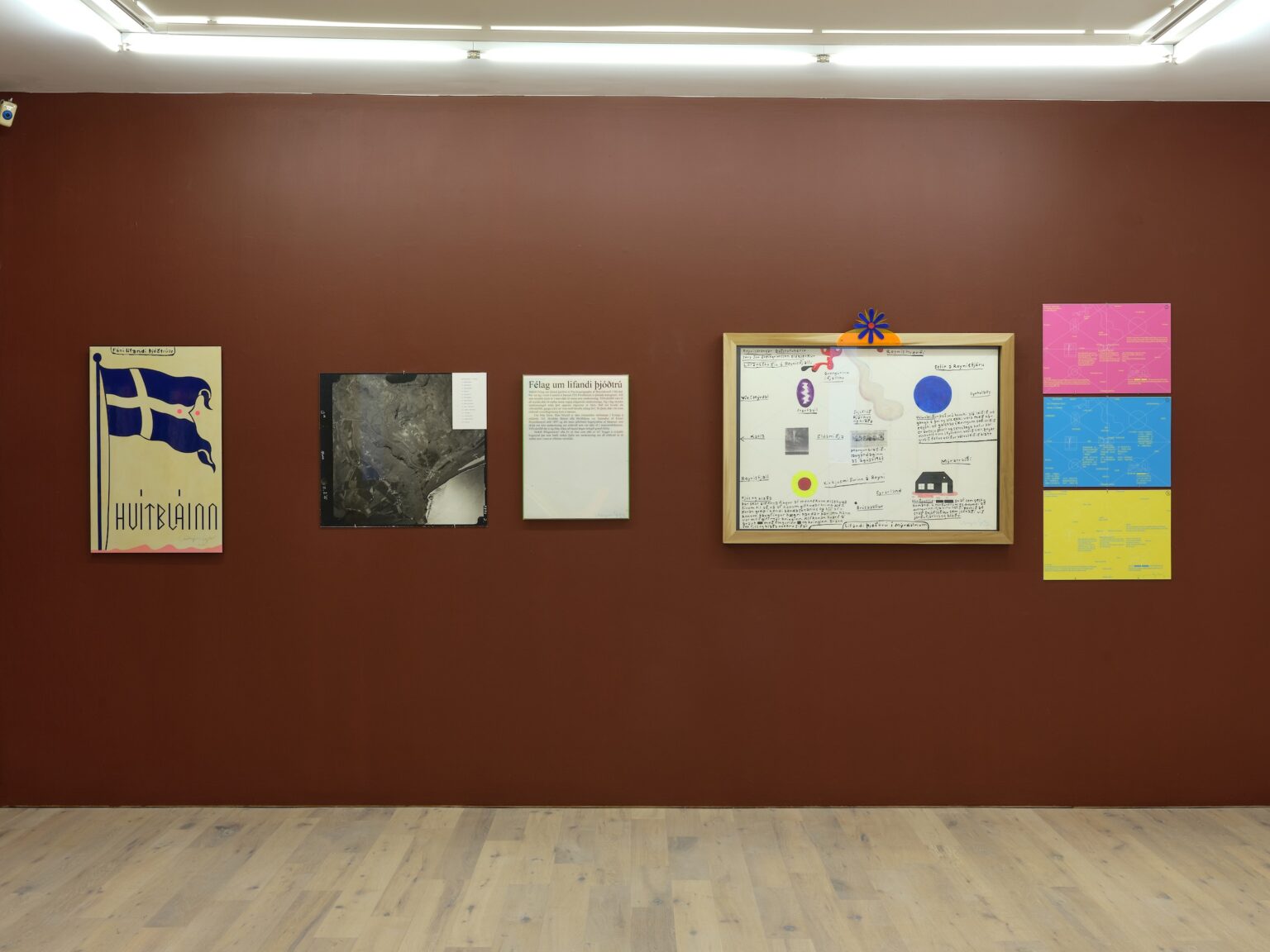
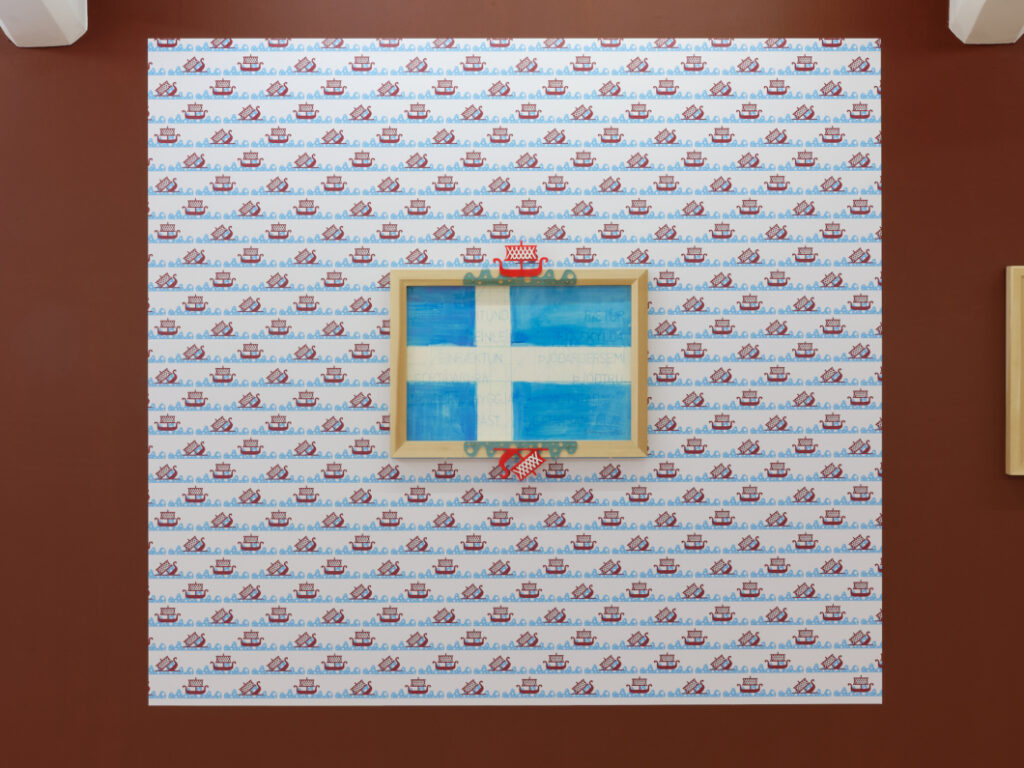
In Eyfjörð’s works in his exhibition Wittgenstein? and The Association of Living Folklore, fragments of texts and images refer on one hand to Icelandic folklore and on the other to the writings of philosopher Ludwig Wittgenstein, more specifically to his work, Bemerkungen über die Farben (Remarks on Colour), which he wrote a year before his passing, in 1950. In the book, Wittgenstein reflects in a fragmented manner on the relationship between our ability to see, the concept of colour and luminosity, language and our capacity to imagine, aspects that he had addressed throughout his career. He examines the “grey” area within which the mind takes over from what the eye perceives, from an image or from our environment, the colours we consider ourselves to be perceiving but are in fact our mental constructs.

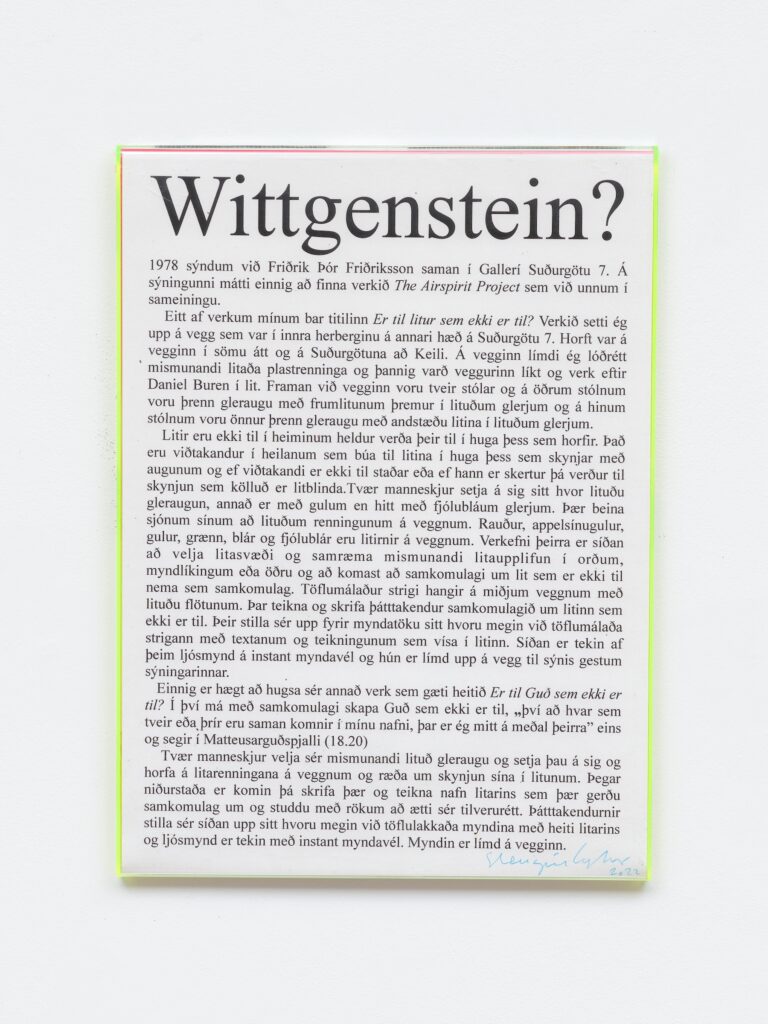
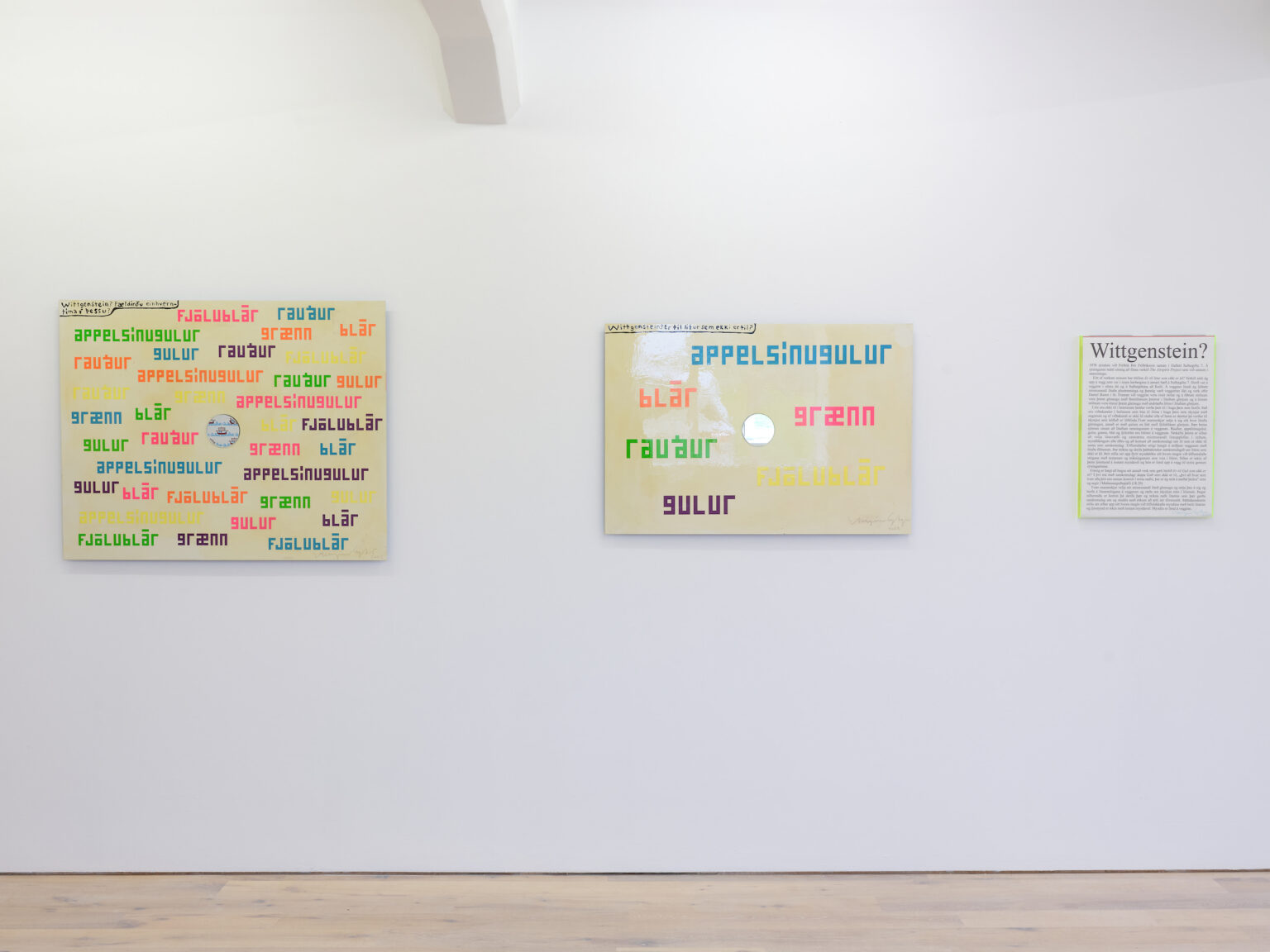
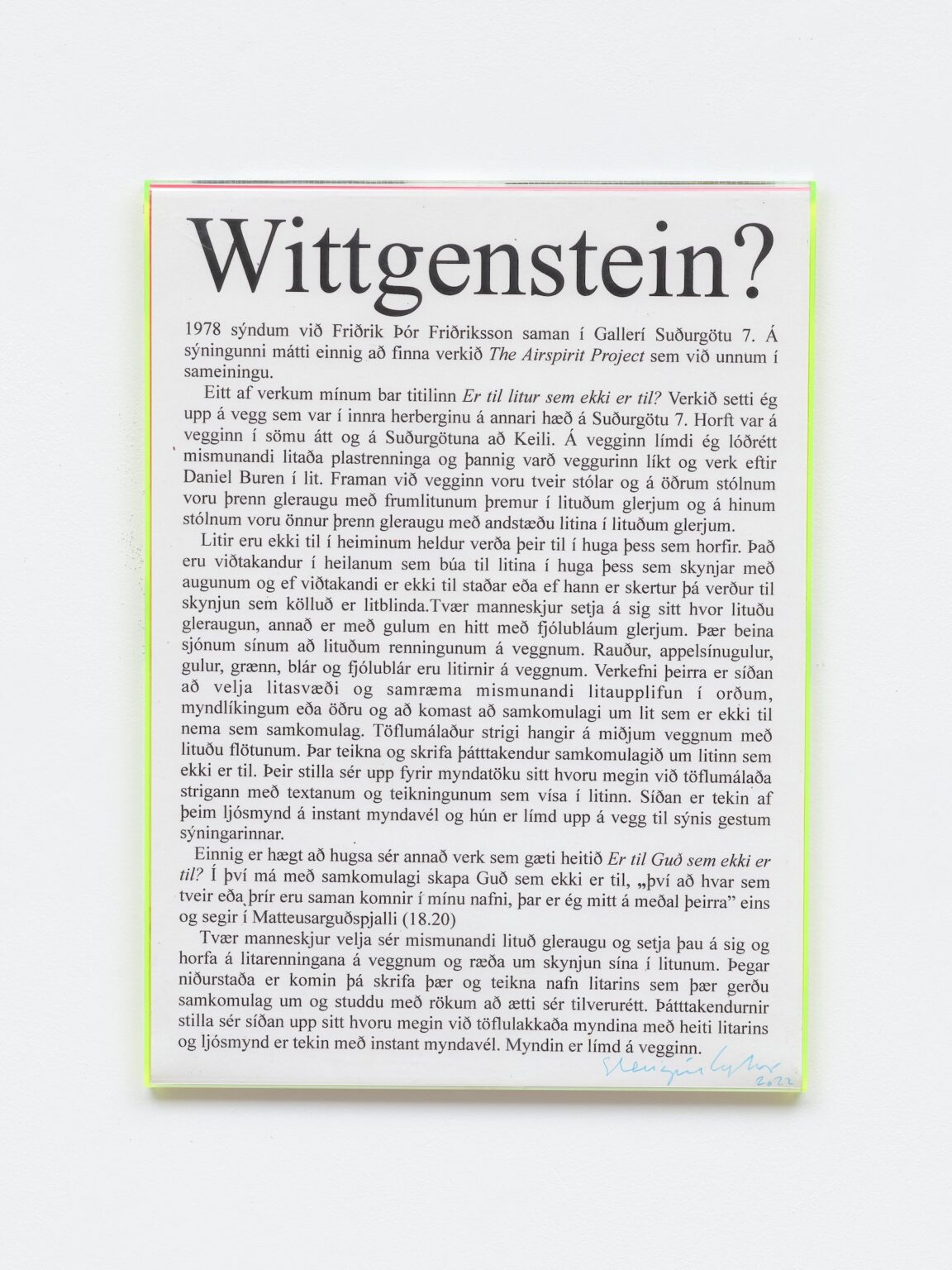
Along the lines of Wittgenstein, Eyfjörð asks, in his own work from 1978: “Is there a color that does not exist?” and connects such questions, past and present, to the common understanding of mankind that what exists can at the same time be a fabrication of our minds. This understanding brings him in relation to the living folklore and the spirit world that we might not see and only a few of us can sense. The work from 1978 was a participatory work, i.e. the experience of the work took place through looking and verbally describing that what one perceived until the dialogue between viewers led to a consensus on a color that does not exist.

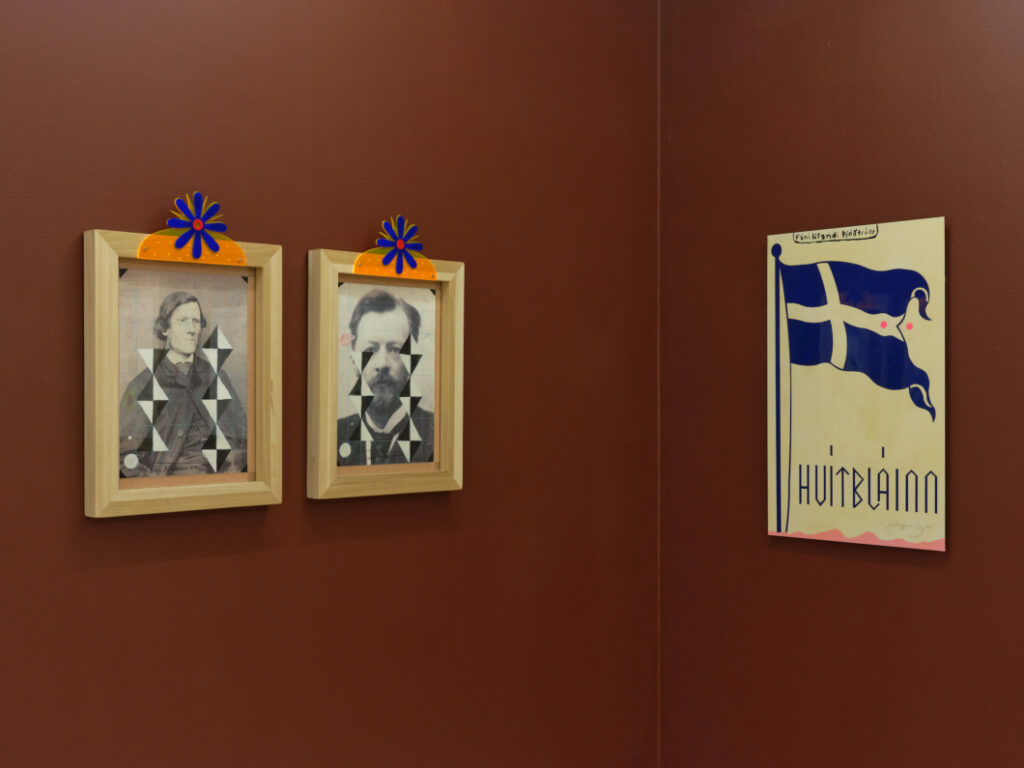
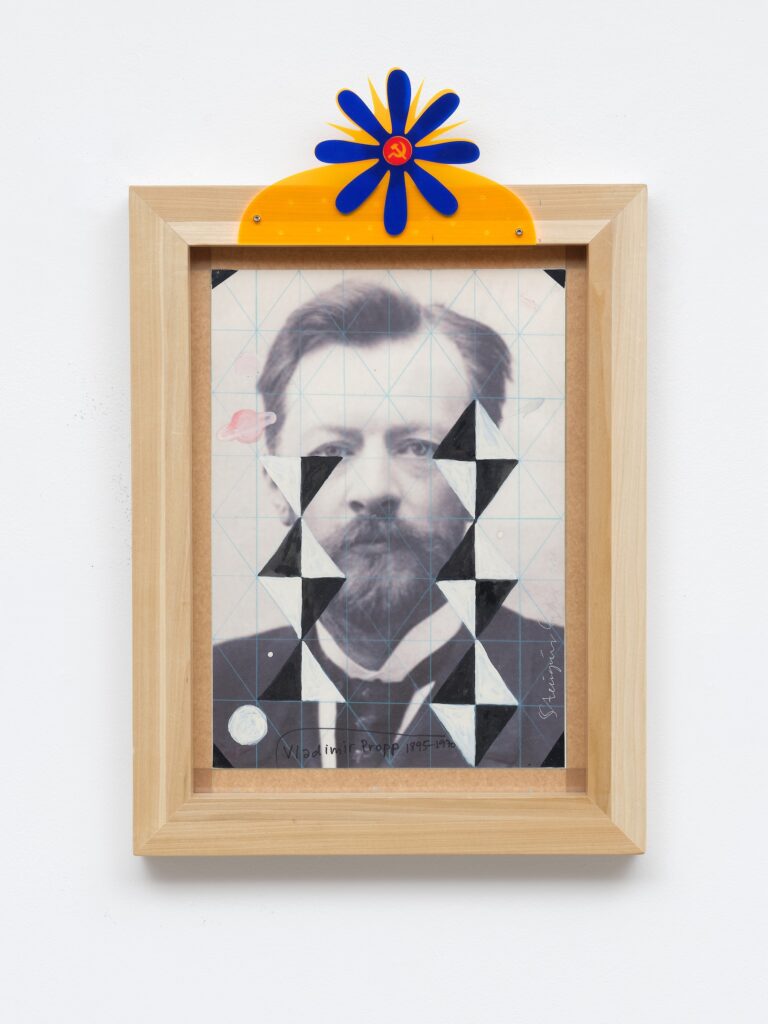
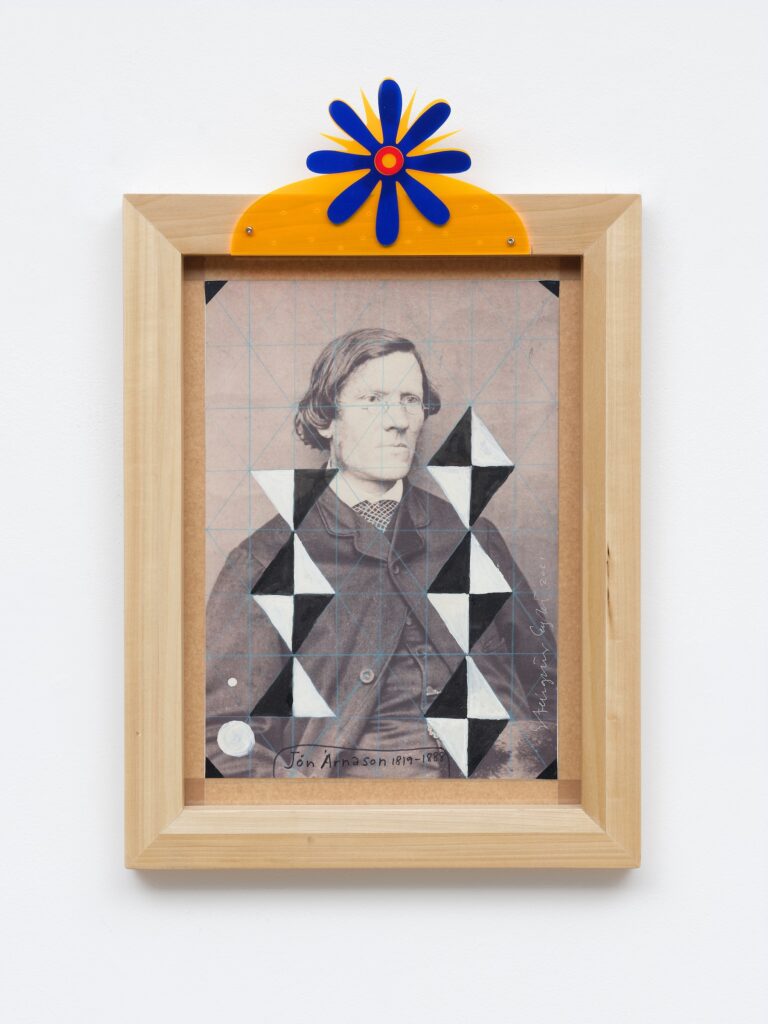
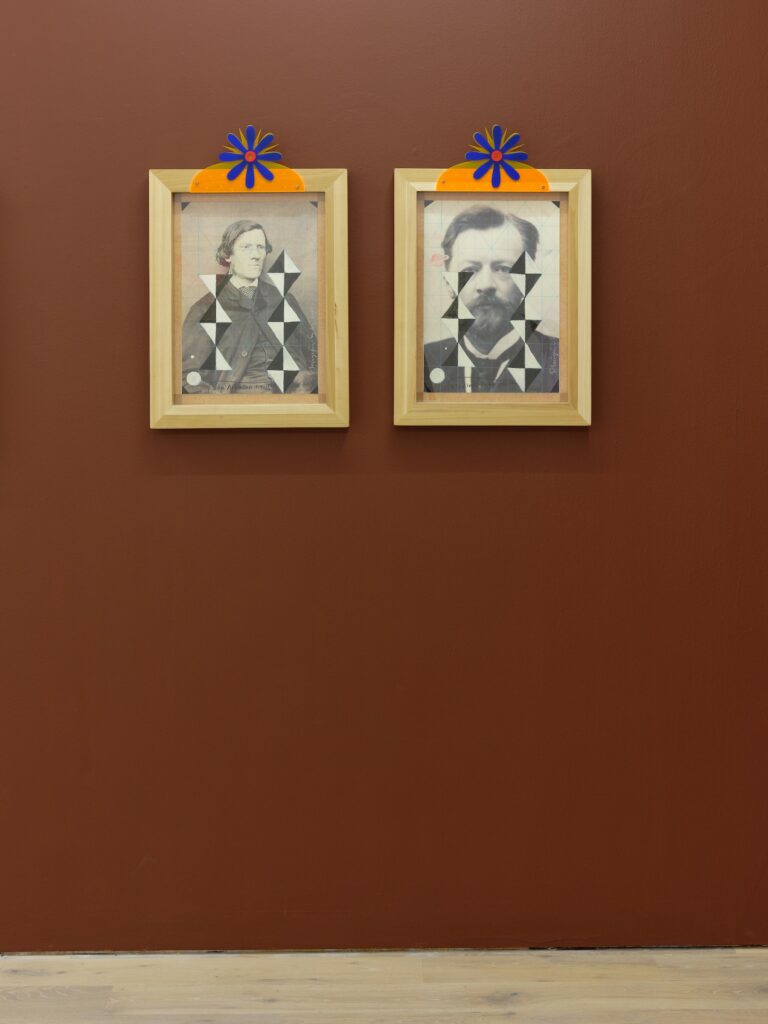
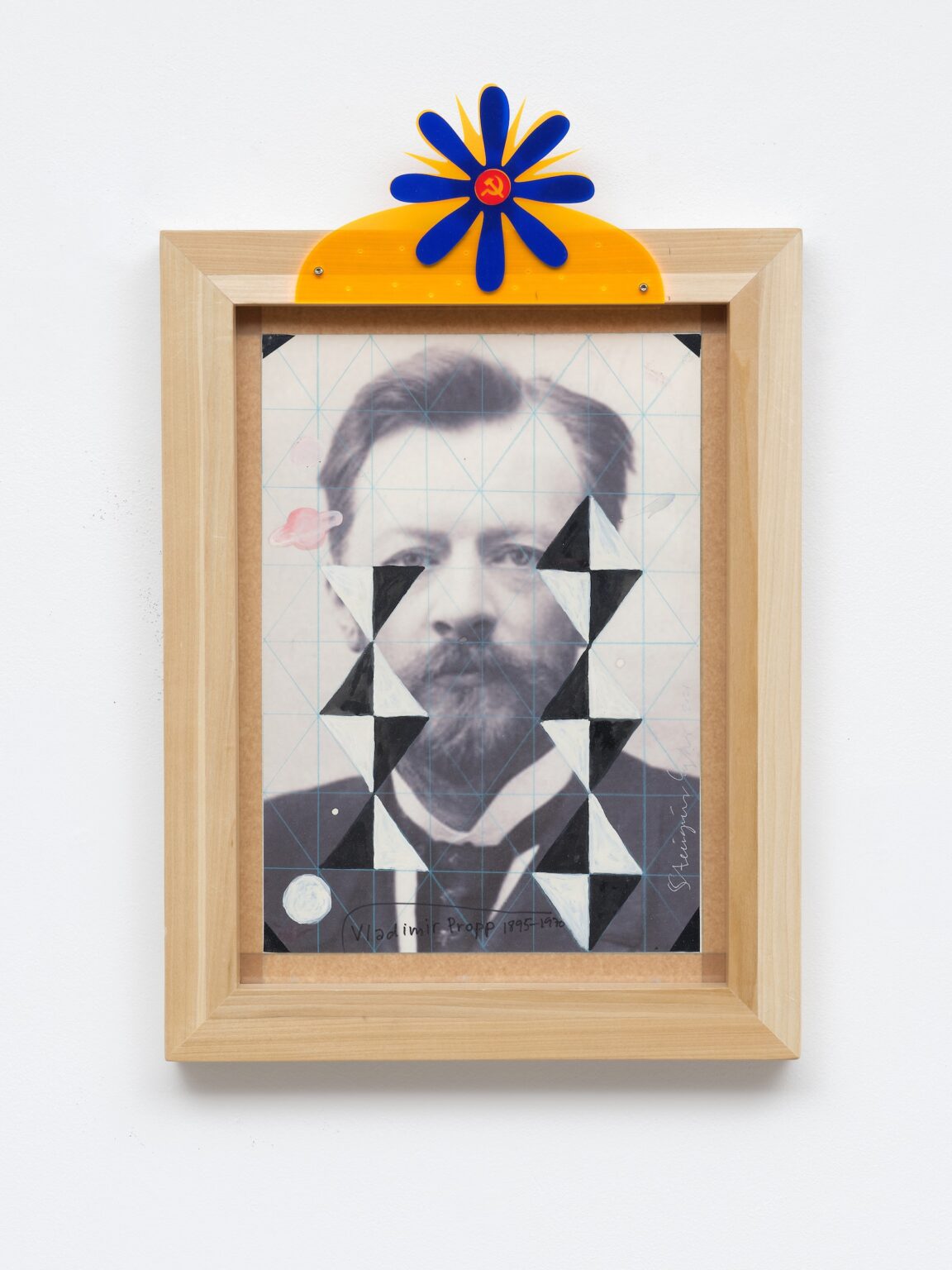
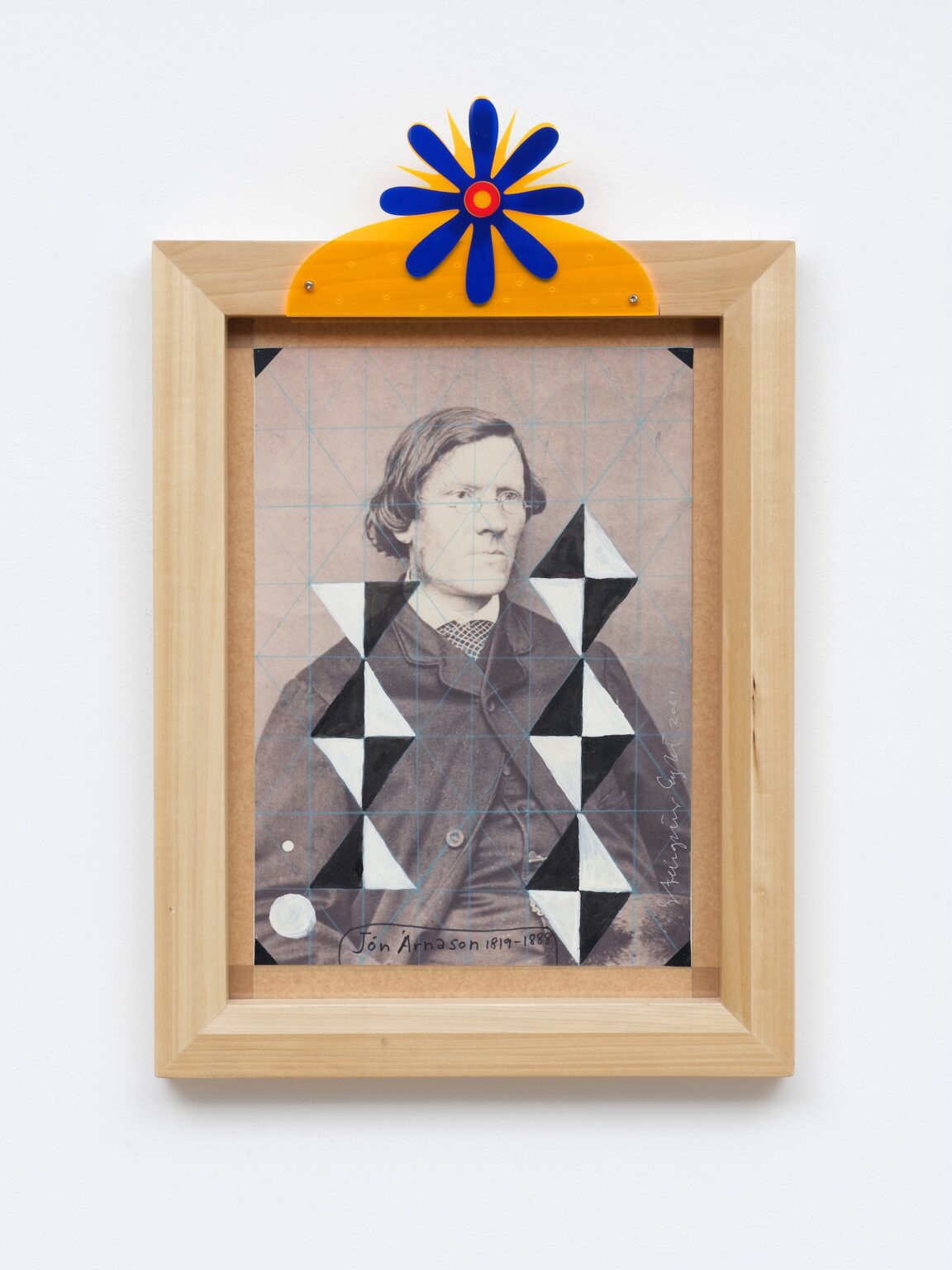
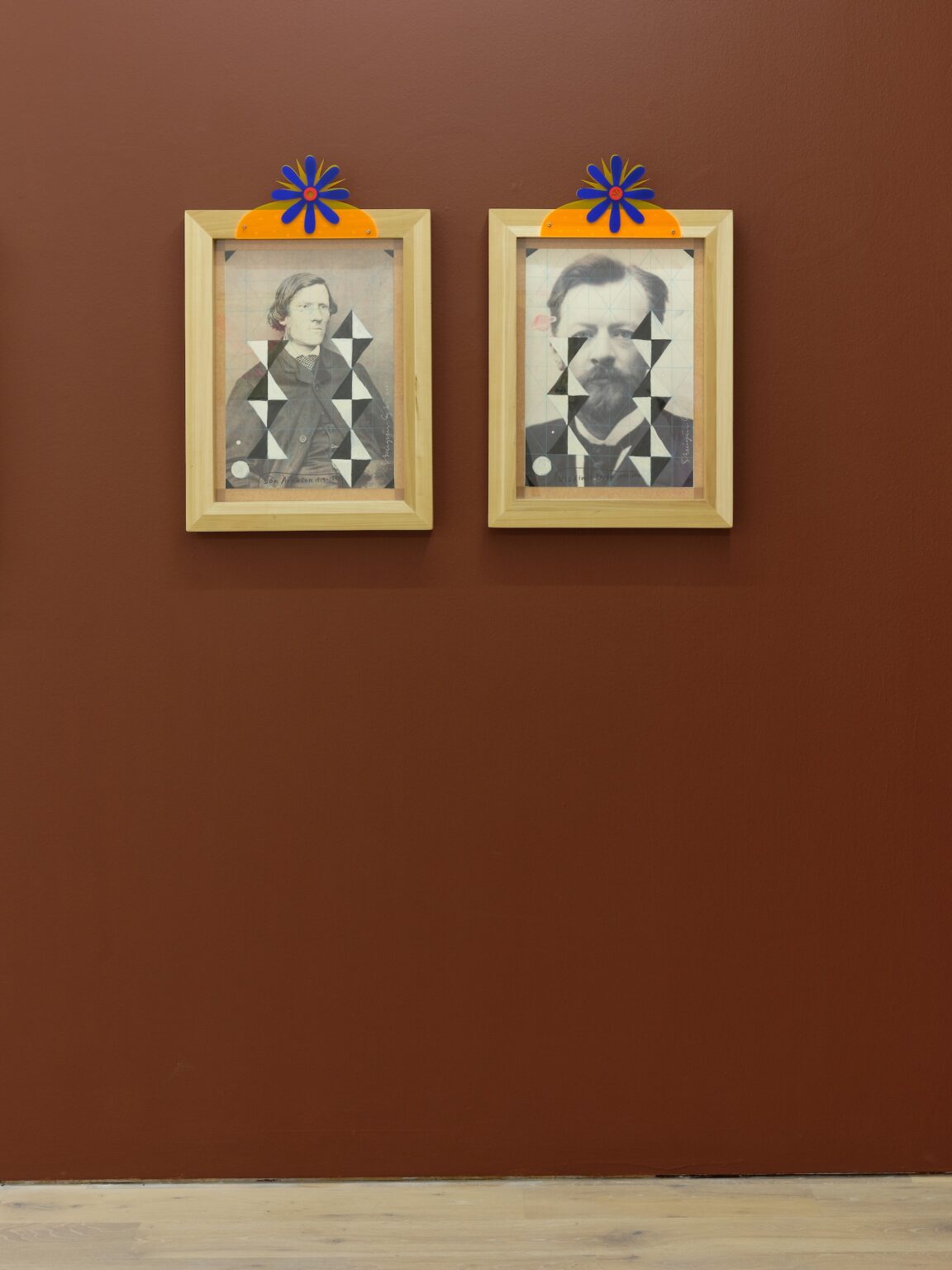
In two photography-based works in the exhibition, we see portraits of Icelandic folklore collector Jón Árnason (1819-1888) and Russian folklorist Vladimir Propp (1895-1970). Árnason, the main folklore collector in Icelandic history, travelled around the island to record and collect folktales. Propp’s definition system and writings on the morphology of folklore had significant influence on many of the major philosophers of the 20th century.

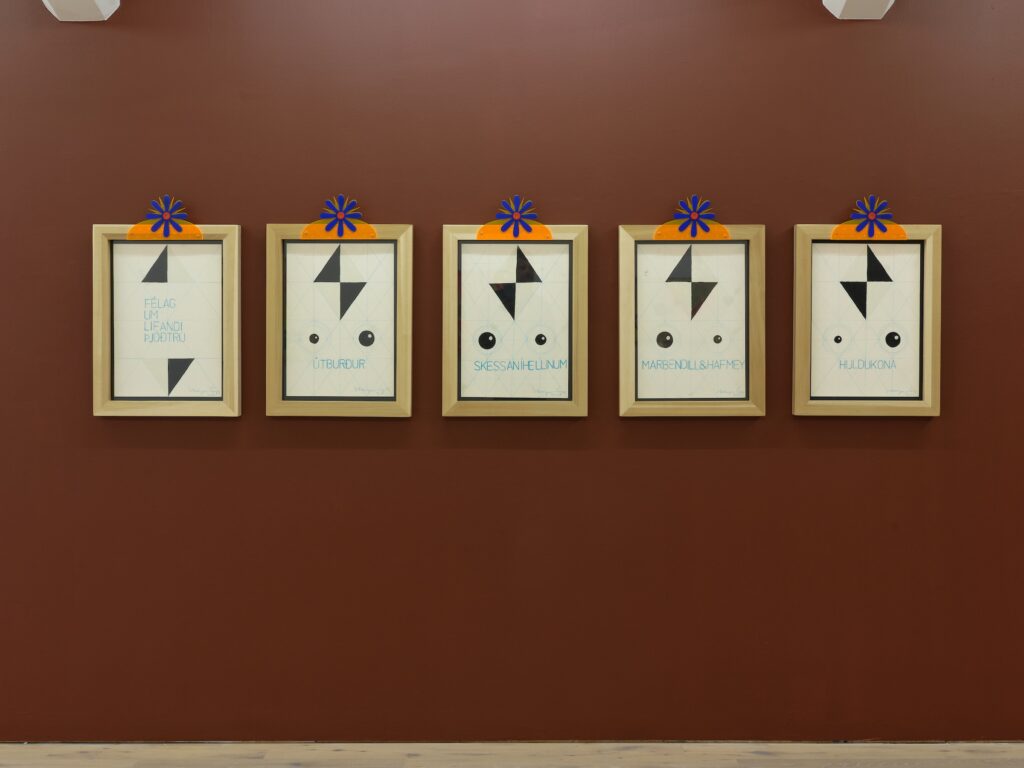
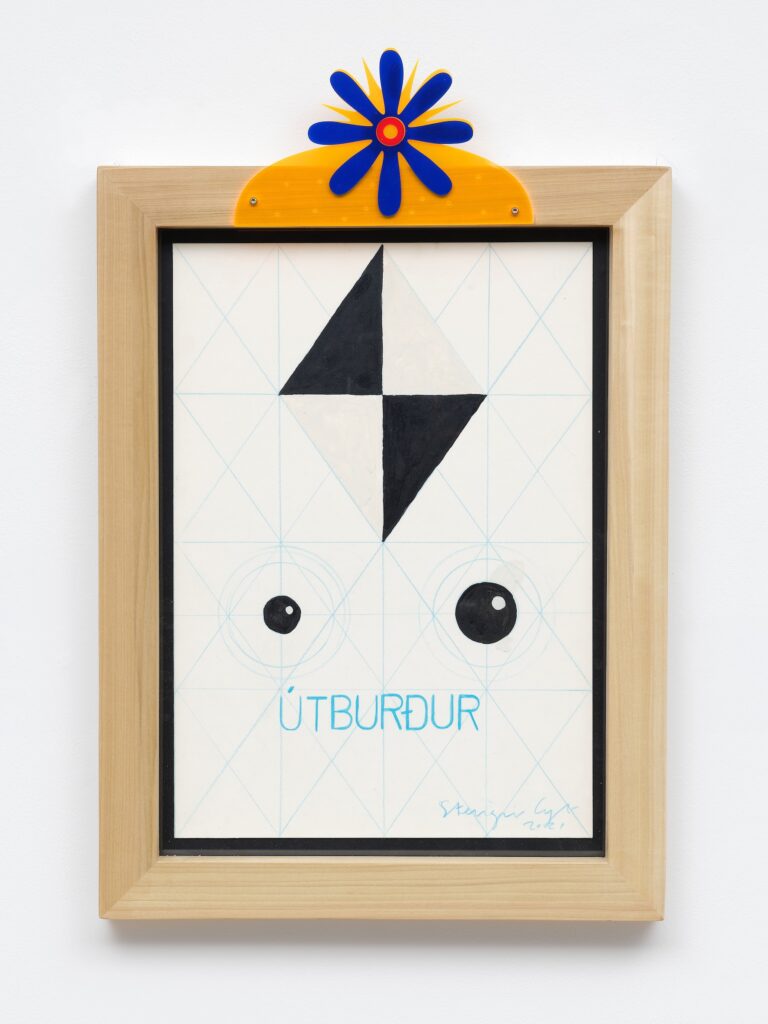
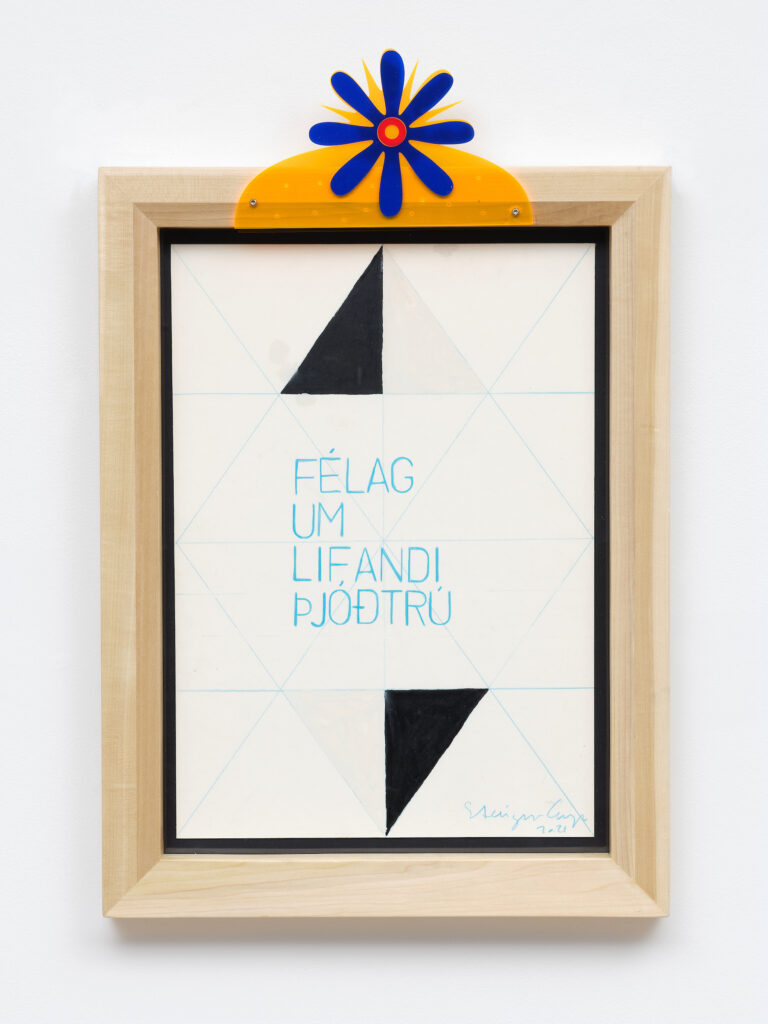
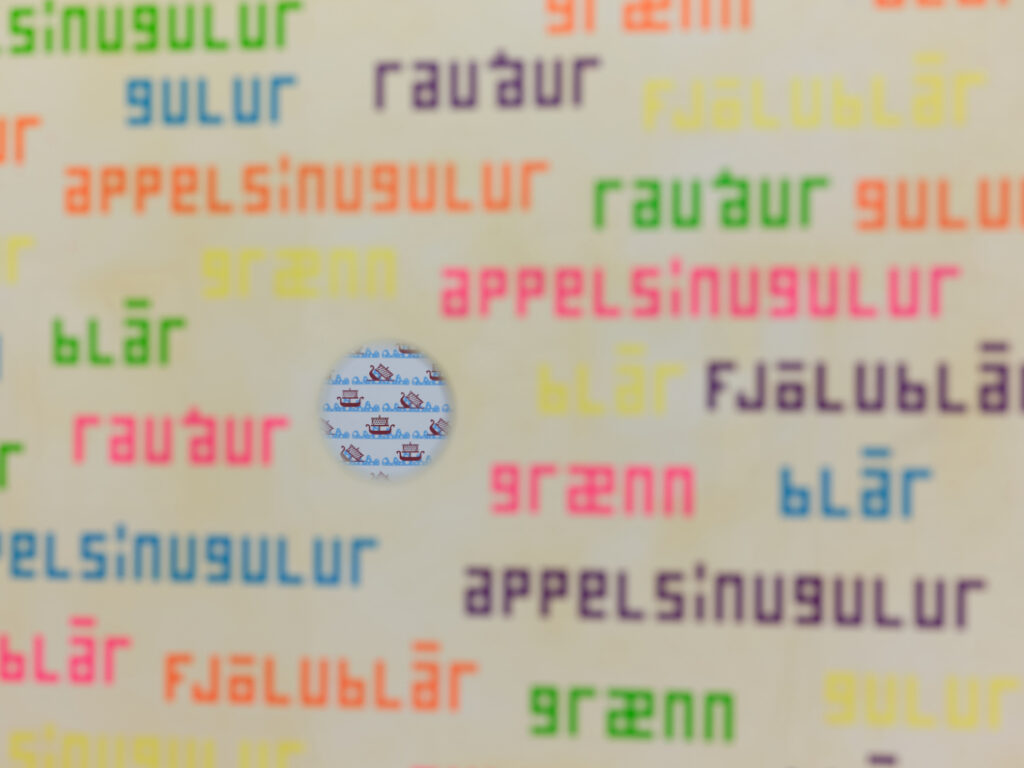
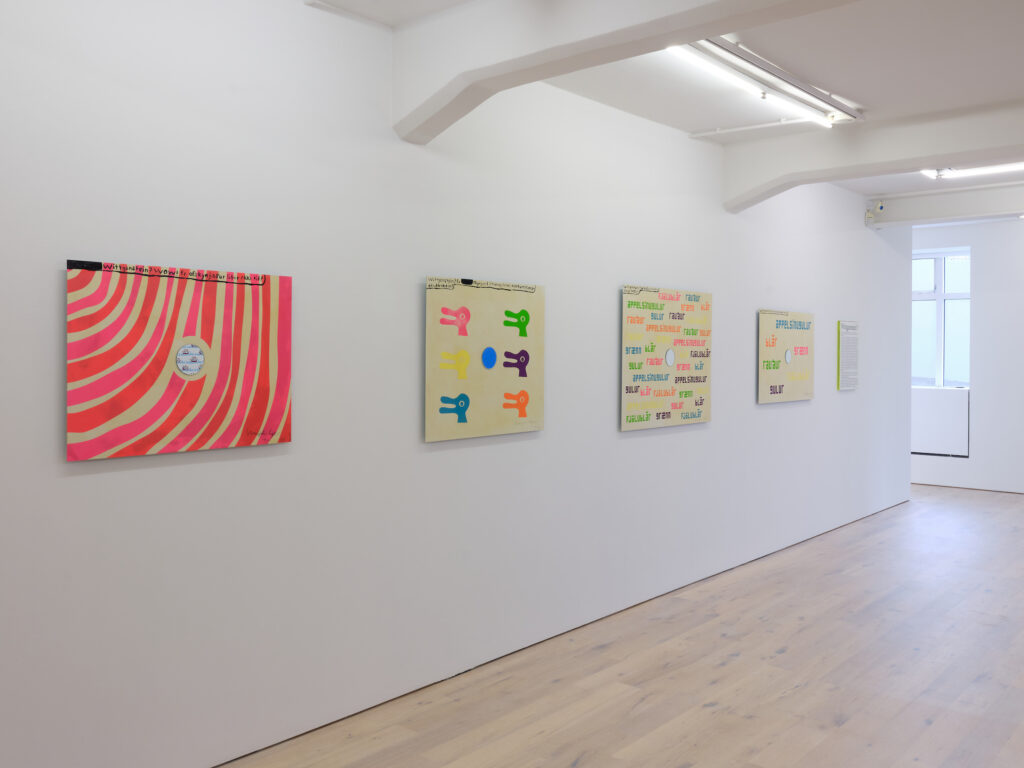
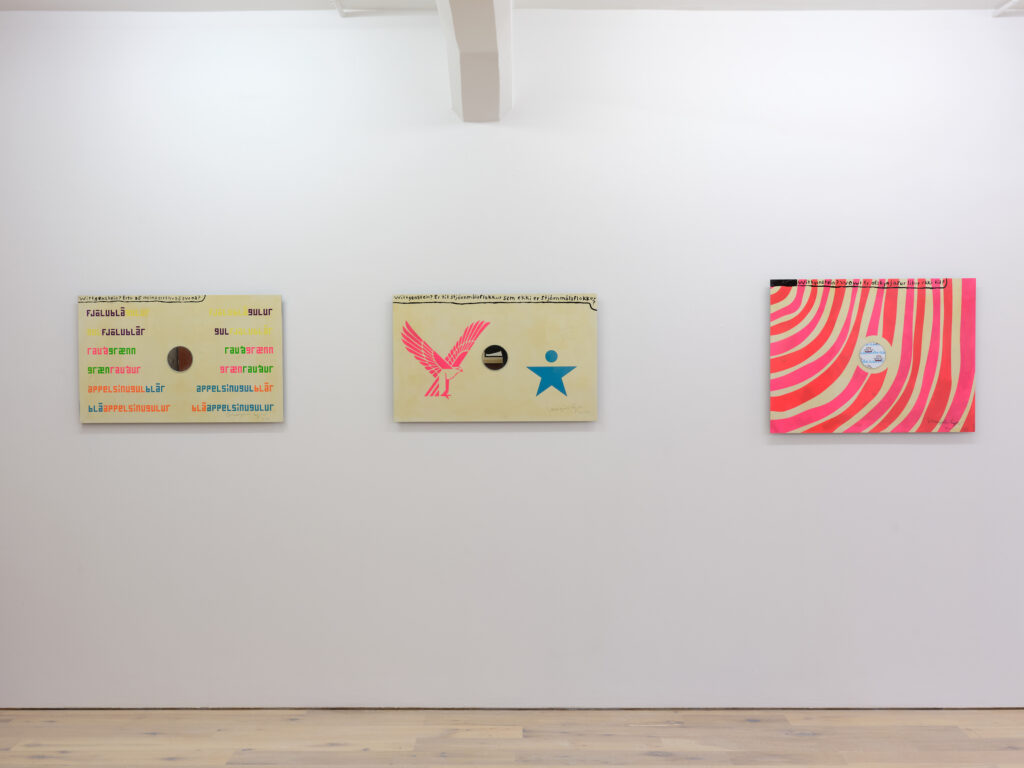
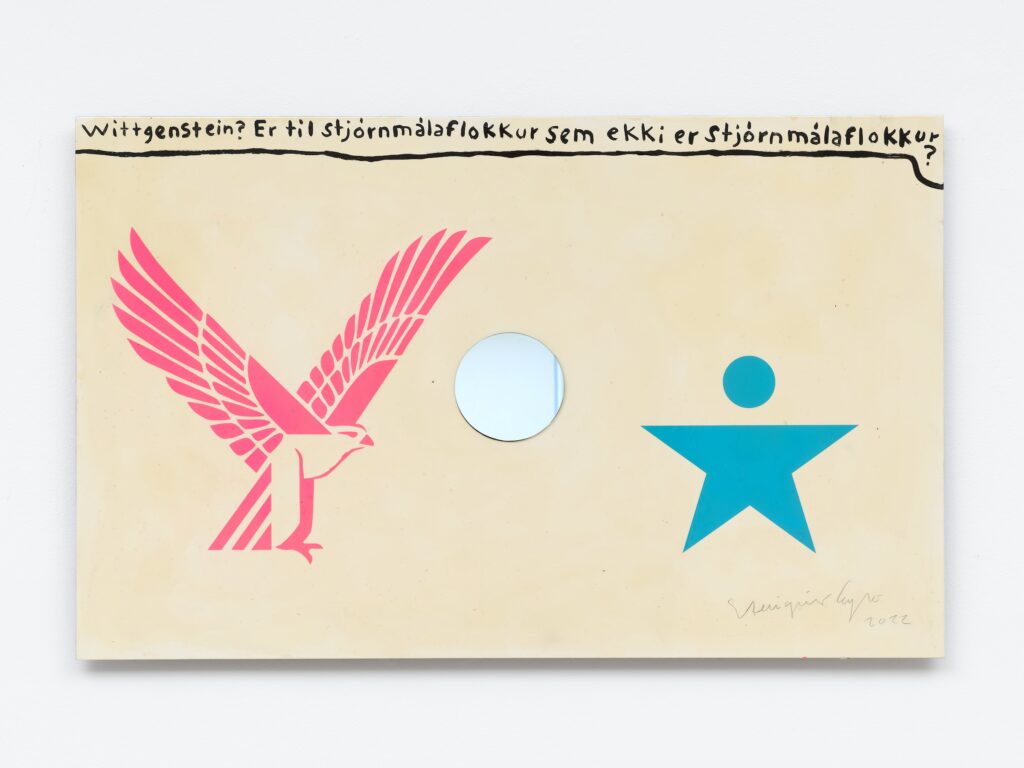
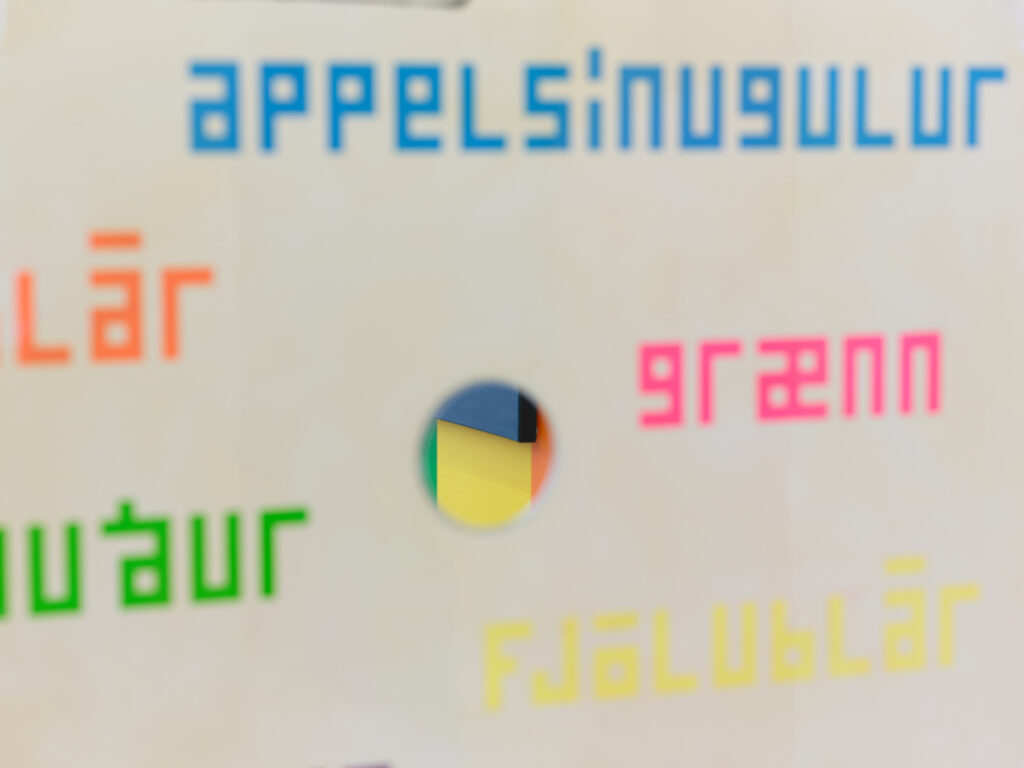
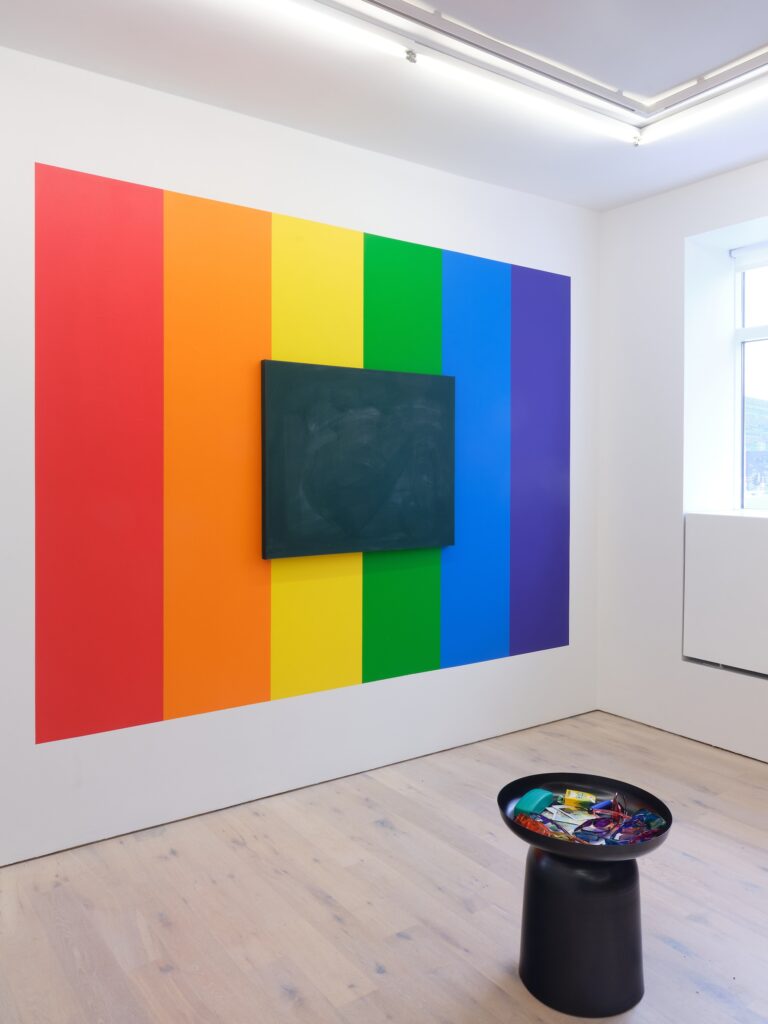
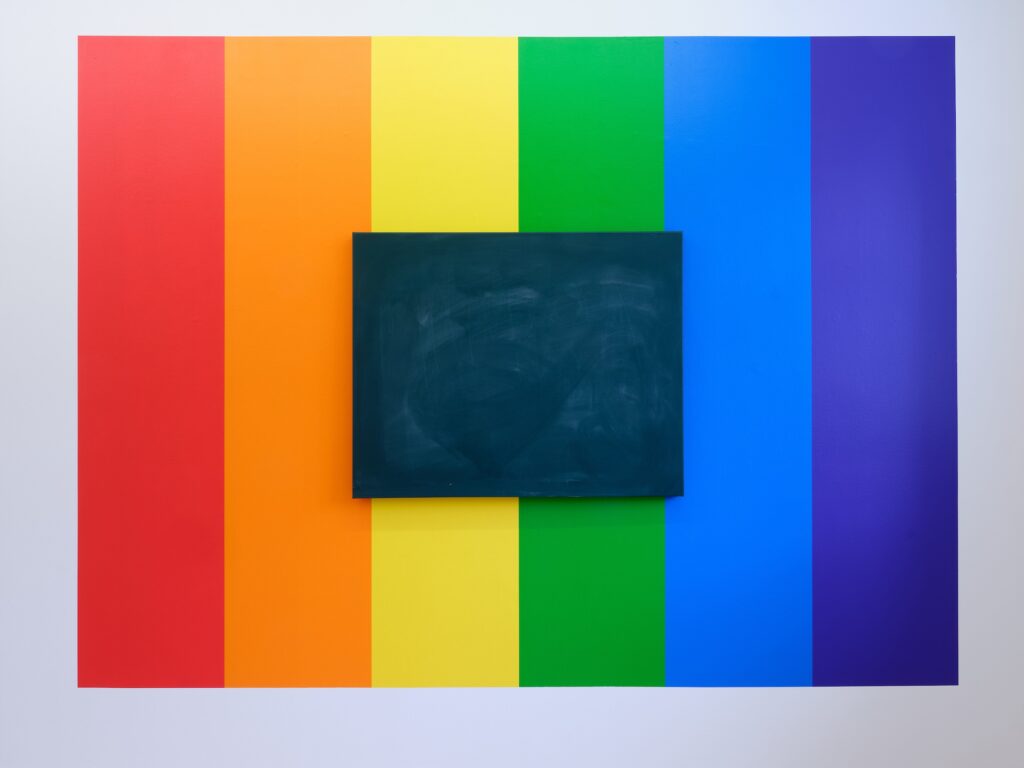
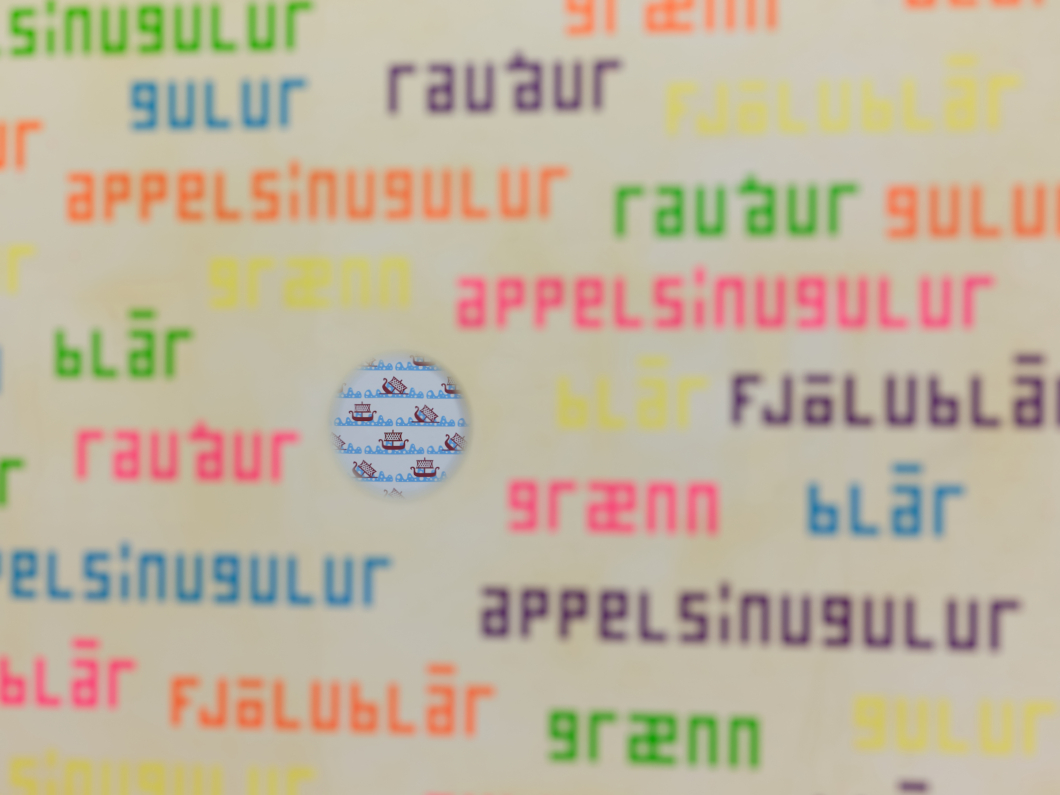
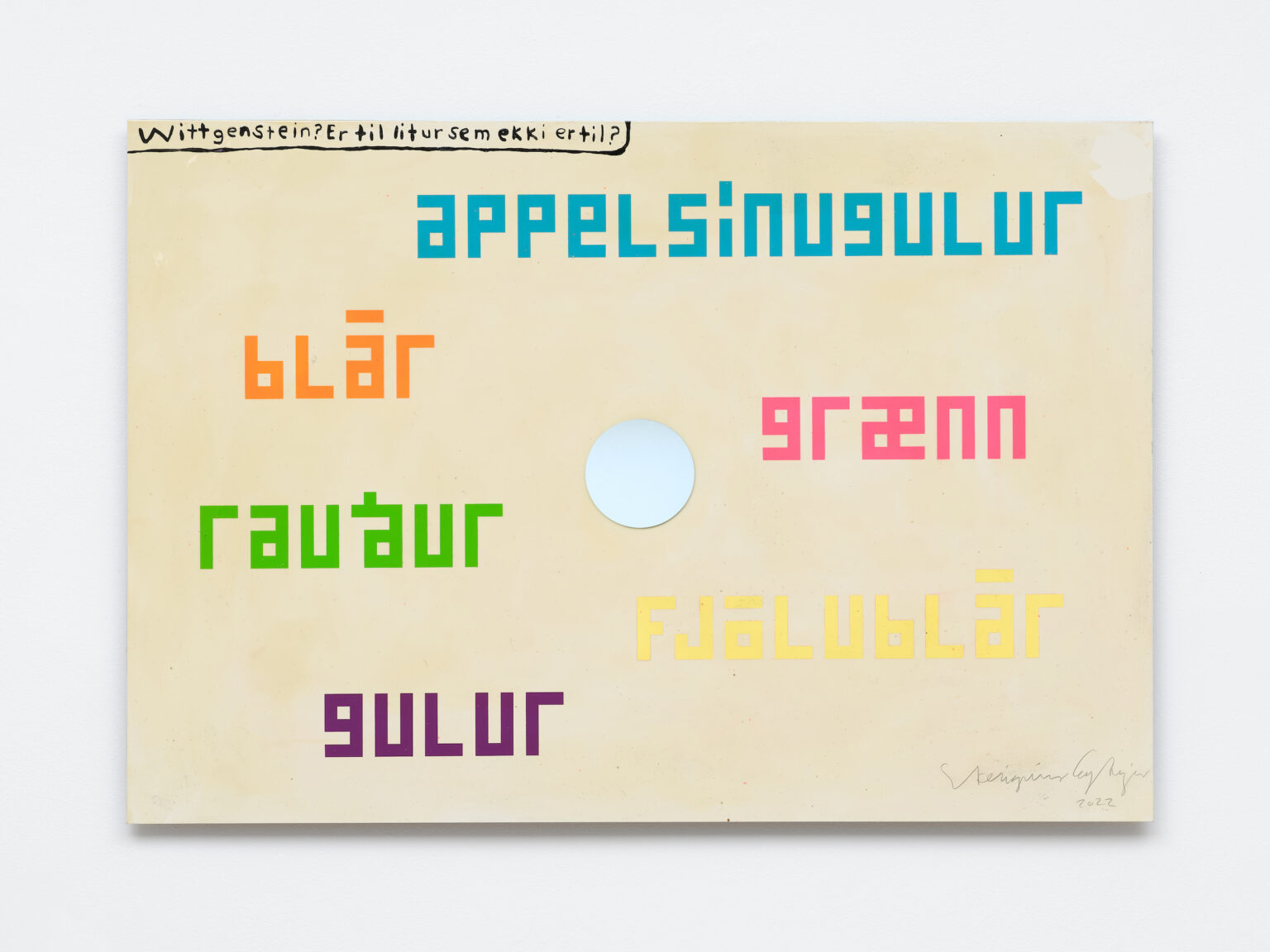
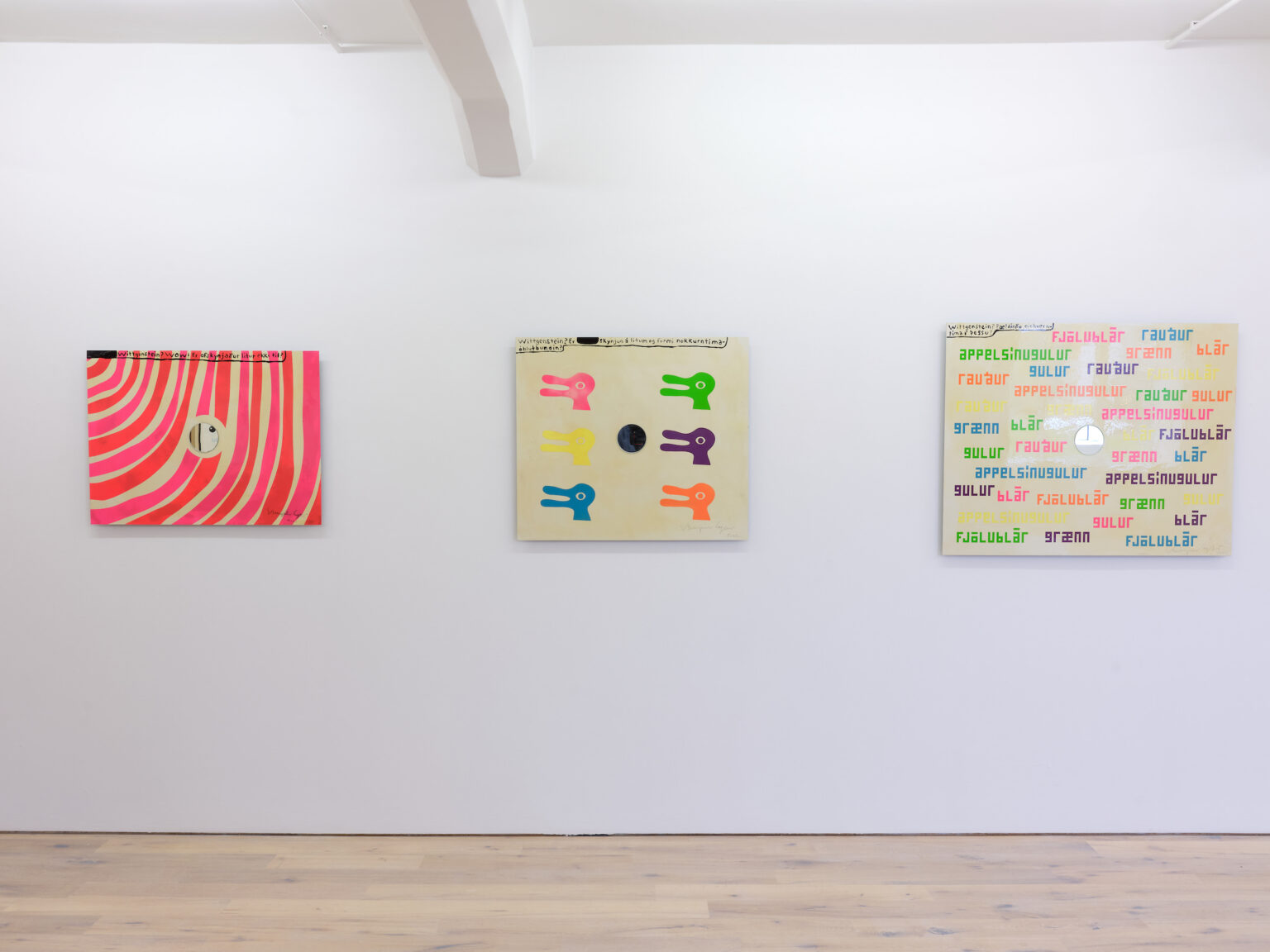
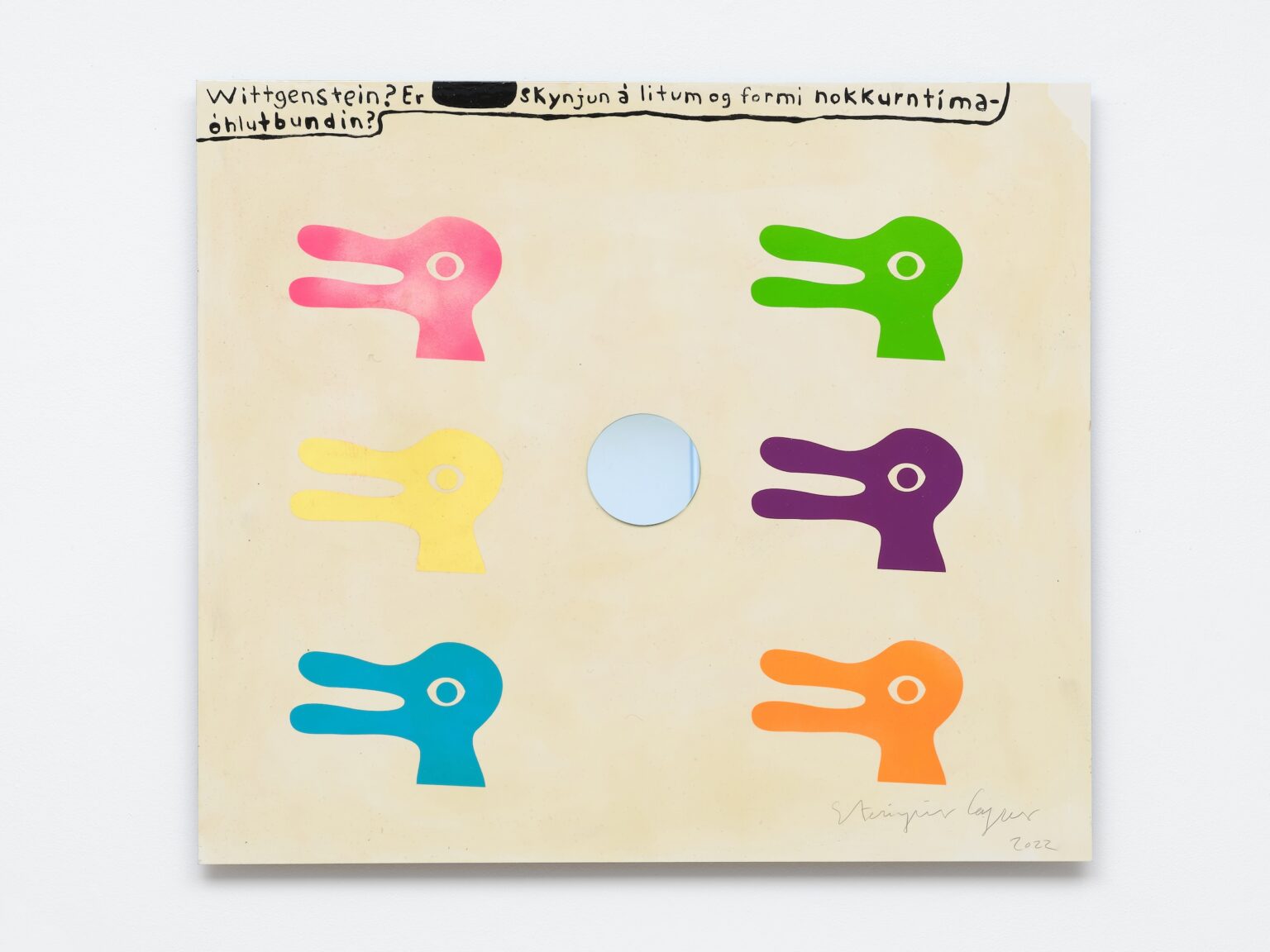
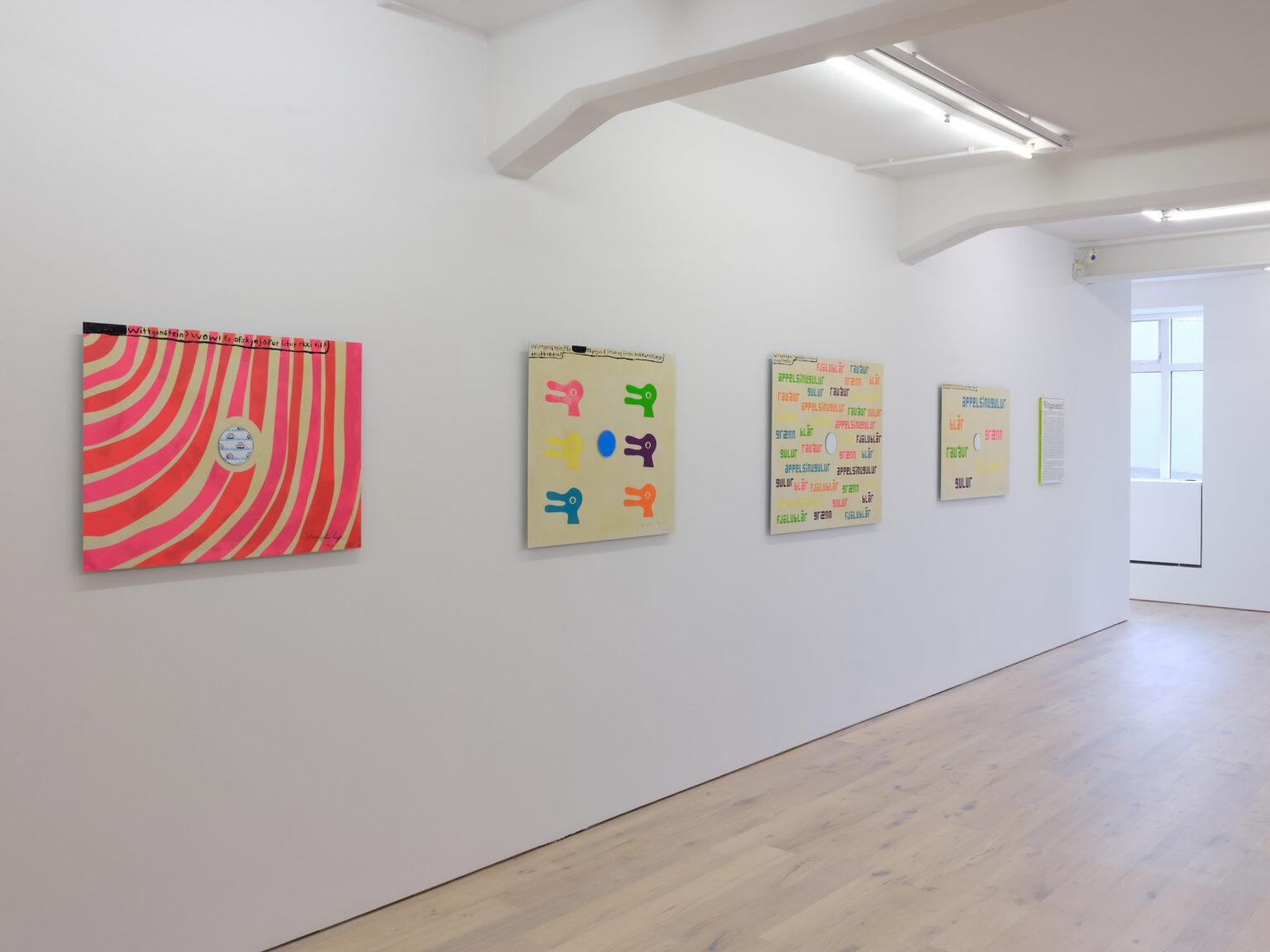
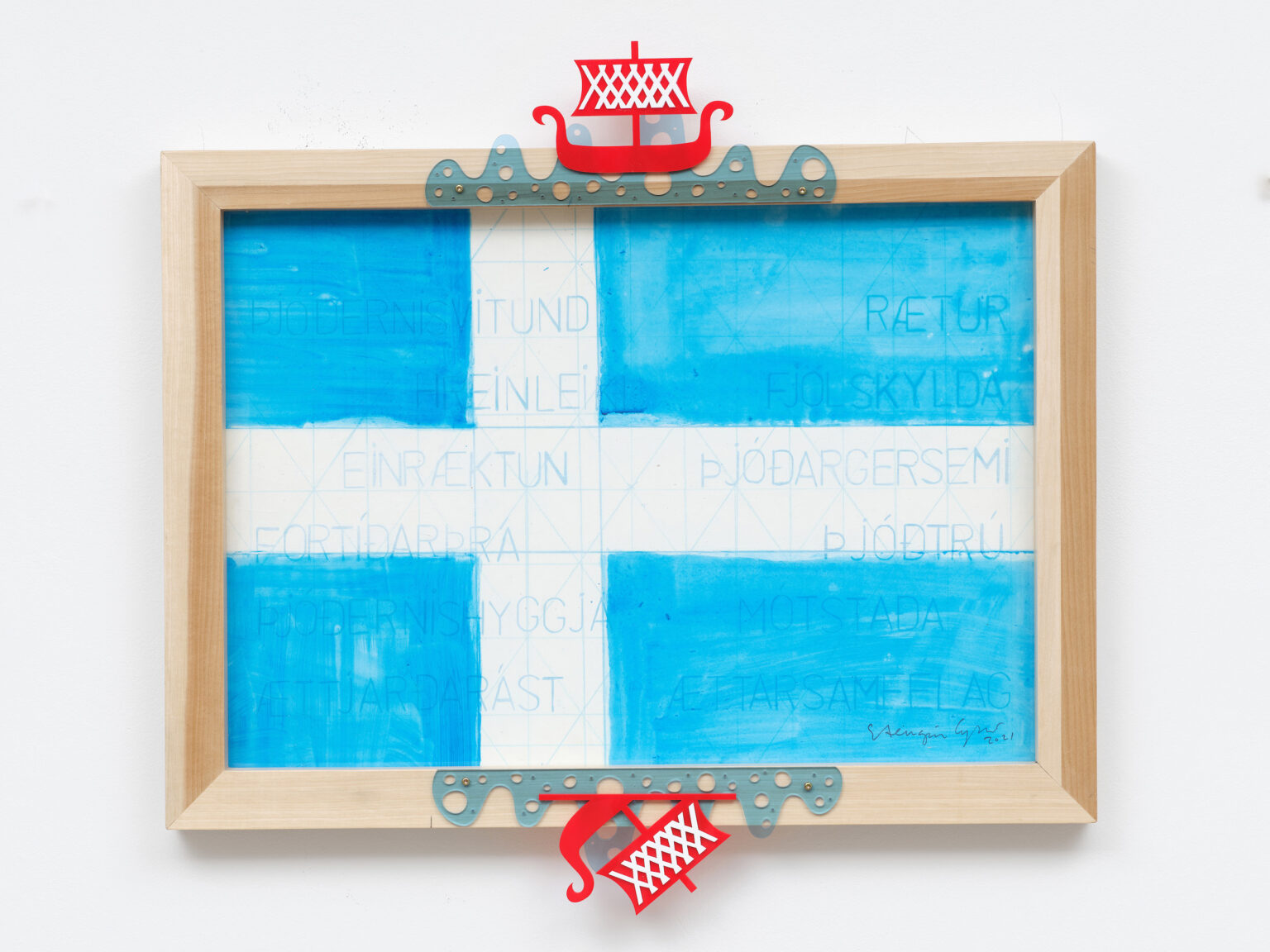
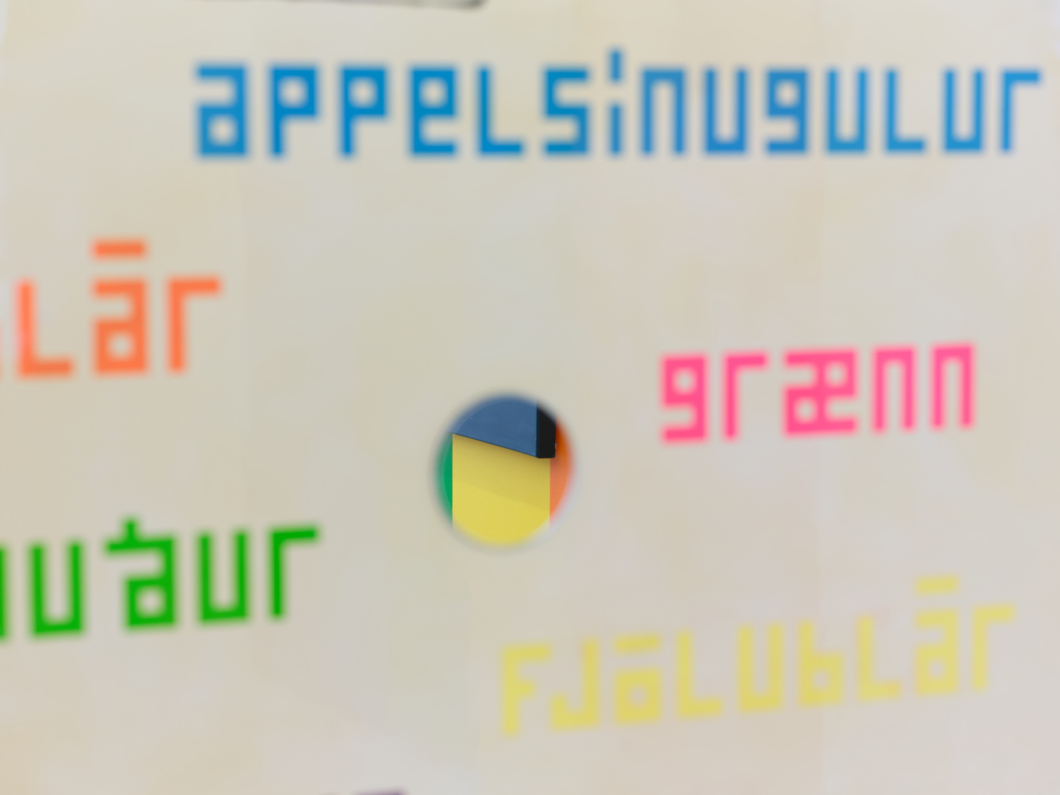
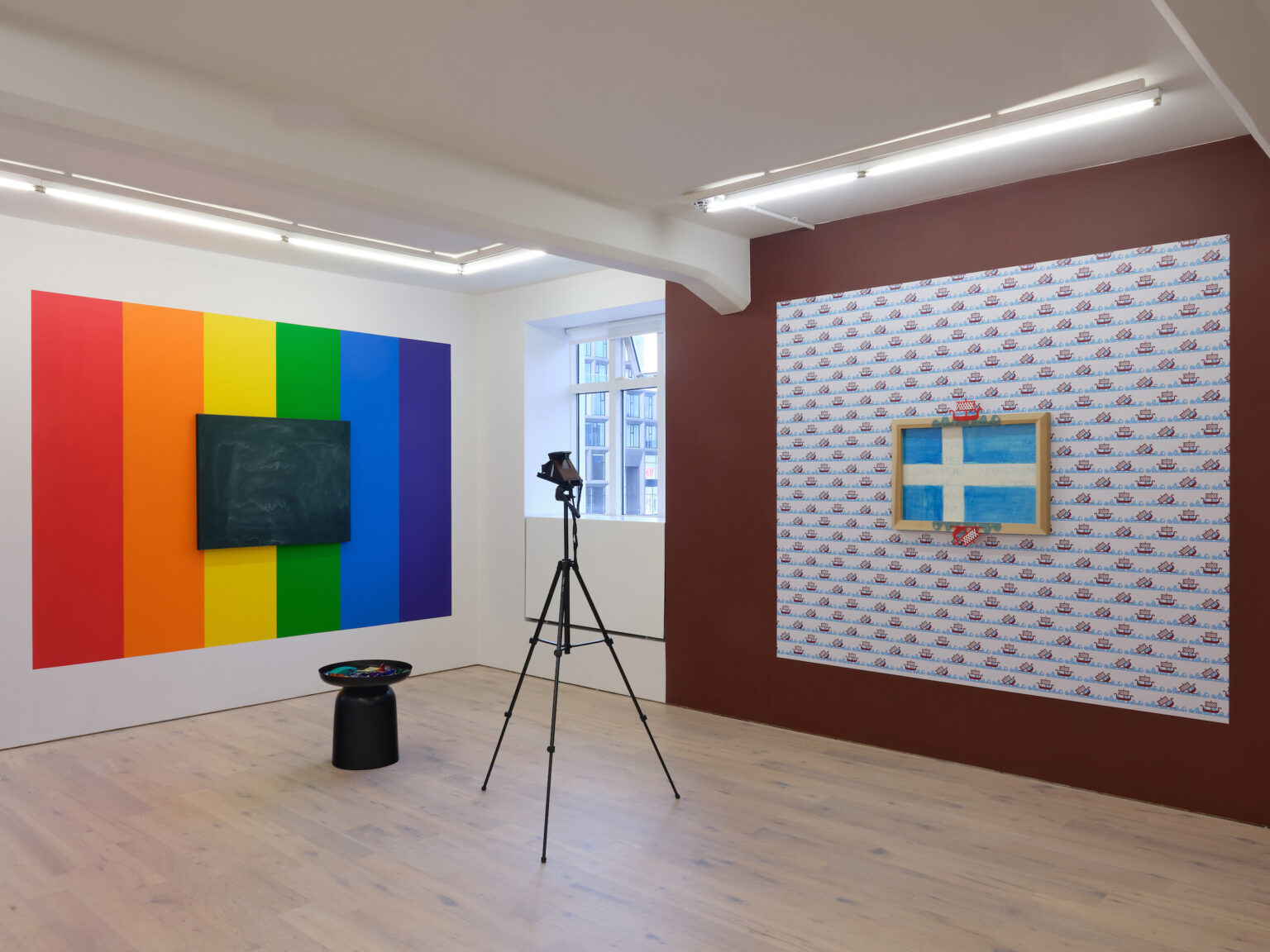
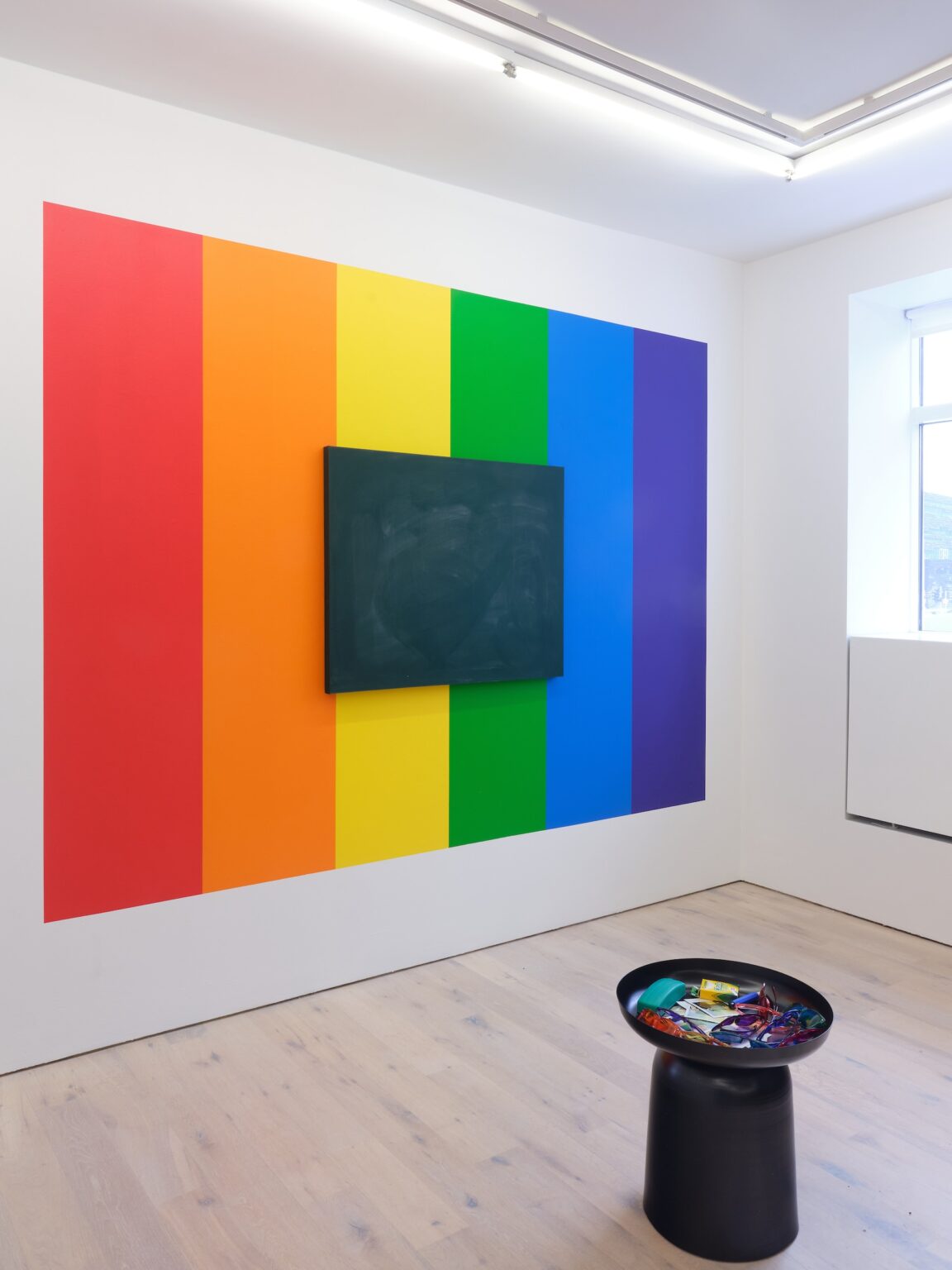
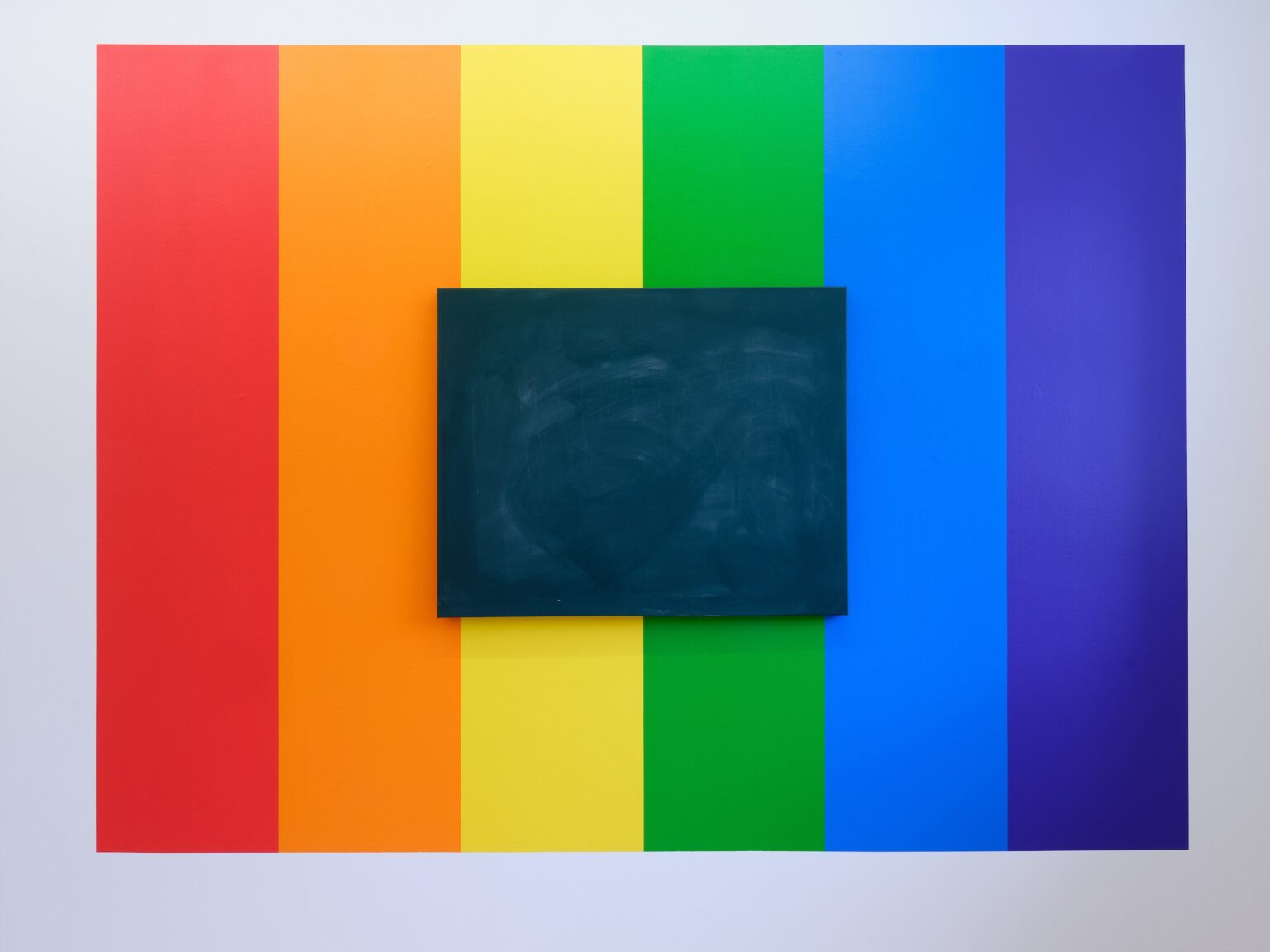
In the works of the exhibition, made in 2021-22, Eyfjörð is in dialogue with Wittgenstein, with Art itself as a phenomenon and with himself, about the fourth dimension, the perception of colour and the imagination as a force increasingly activated by humans through the growing development of visual technology. In many of his colourful works, there is a blindspot in the middle, as representative of the invisible colours and that which cannot be verbally described, and which none of us perceive in the same way.

The blindspot is here the starting point, the center of possibilities and a connecting point of the many threads that have been spun through the centuries in the visual field, in the field of future possibilities of man to expand his perception and a greater understanding of where our imagination, informed by past knowledge, can lead us.

Birta Guðjónsdóttir
Wittgenstein? & The Association of Living Folklore

17.09.2022 - 29.10.2022

Hverfisgallerí

In his art, artist Steingrímur Eyfjörð is in constant dialogue with people, living and passed, with himself and with his own artworks. He speaks to his artworks in the form of text within the frame while creating them and sometimes directs questions to or refers to conversations with his friends through text. The works respond to him and are even self-critical and sometimes self-deprecating. The reverberations of these dialogues then often continue in the unfinished works of this inquisitive artist. The source of this internal conversation is his belief in the unexplored possibilities of creating connections between various contributions to the knowledge society.

In all these conversations, the artist himself sets the tone and contributes vast knowledge, which he has gathered in an exceptionally unbiased spirit, free from all hierarchy and linear formality. In his search for knowledge and with sharp processing of the epistemology of complex systems, Eyfjörð regularly sheds his skin, metamorphoses and leaves behind the weight of preconceived ideas, accepted values and his own expectations and those of others. He simply looks at a blue-coloured object and gives himself permission to think “blue”, then possibly connects the concept to the Indigo of Indian symbolism or the blue-hued distance in Arabic poetry, so that the blue object becomes the Third Eye – universal consciousness, the goddess Kali, The Song of Songs, Parsifal and the the Holy Grail, the Sea and the Cod War, cowboy hats and the green cake, the ogre Grýla, Venus or an invisible sheep.

In Eyfjörð’s works in his exhibition Wittgenstein? and The Association of Living Folklore, fragments of texts and images refer on one hand to Icelandic folklore and on the other to the writings of philosopher Ludwig Wittgenstein, more specifically to his work, Bemerkungen über die Farben (Remarks on Colour), which he wrote a year before his passing, in 1950. In the book, Wittgenstein reflects in a fragmented manner on the relationship between our ability to see, the concept of colour and luminosity, language and our capacity to imagine, aspects that he had addressed throughout his career. He examines the “grey” area within which the mind takes over from what the eye perceives, from an image or from our environment, the colours we consider ourselves to be perceiving but are in fact our mental constructs.

Along the lines of Wittgenstein, Eyfjörð asks, in his own work from 1978: “Is there a color that does not exist?” and connects such questions, past and present, to the common understanding of mankind that what exists can at the same time be a fabrication of our minds. This understanding brings him in relation to the living folklore and the spirit world that we might not see and only a few of us can sense. The work from 1978 was a participatory work, i.e. the experience of the work took place through looking and verbally describing that what one perceived until the dialogue between viewers led to a consensus on a color that does not exist.

In two photography-based works in the exhibition, we see portraits of Icelandic folklore collector Jón Árnason (1819-1888) and Russian folklorist Vladimir Propp (1895-1970). Árnason, the main folklore collector in Icelandic history, travelled around the island to record and collect folktales. Propp’s definition system and writings on the morphology of folklore had significant influence on many of the major philosophers of the 20th century.
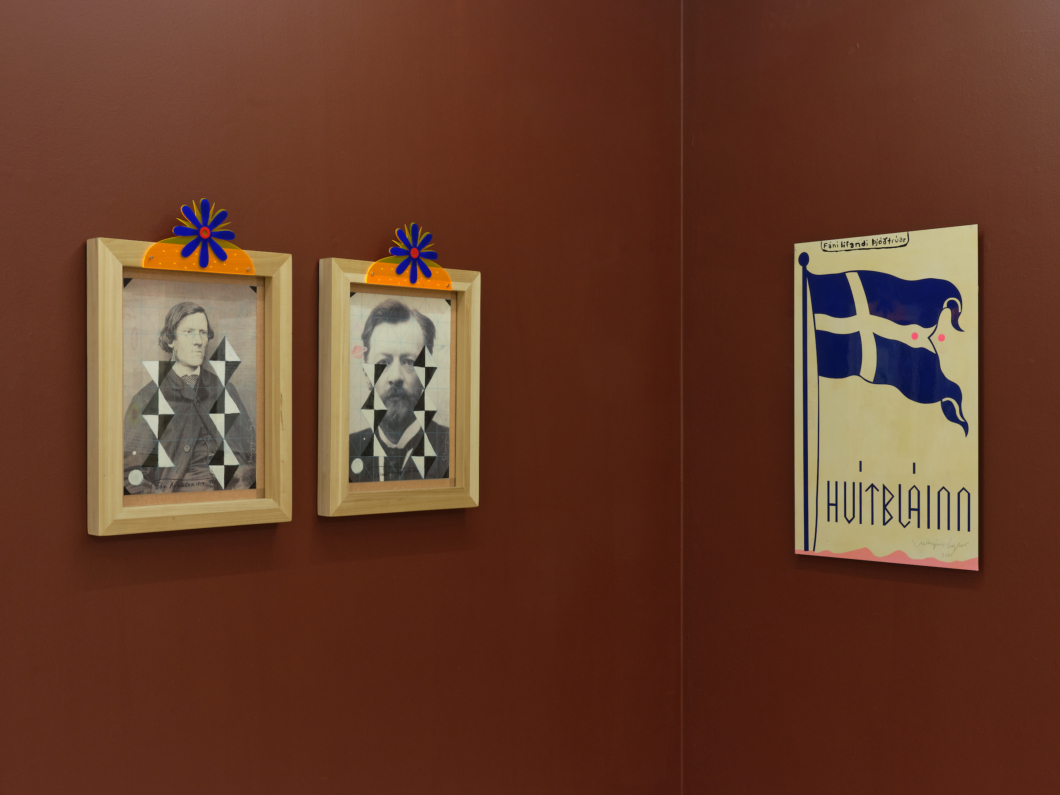
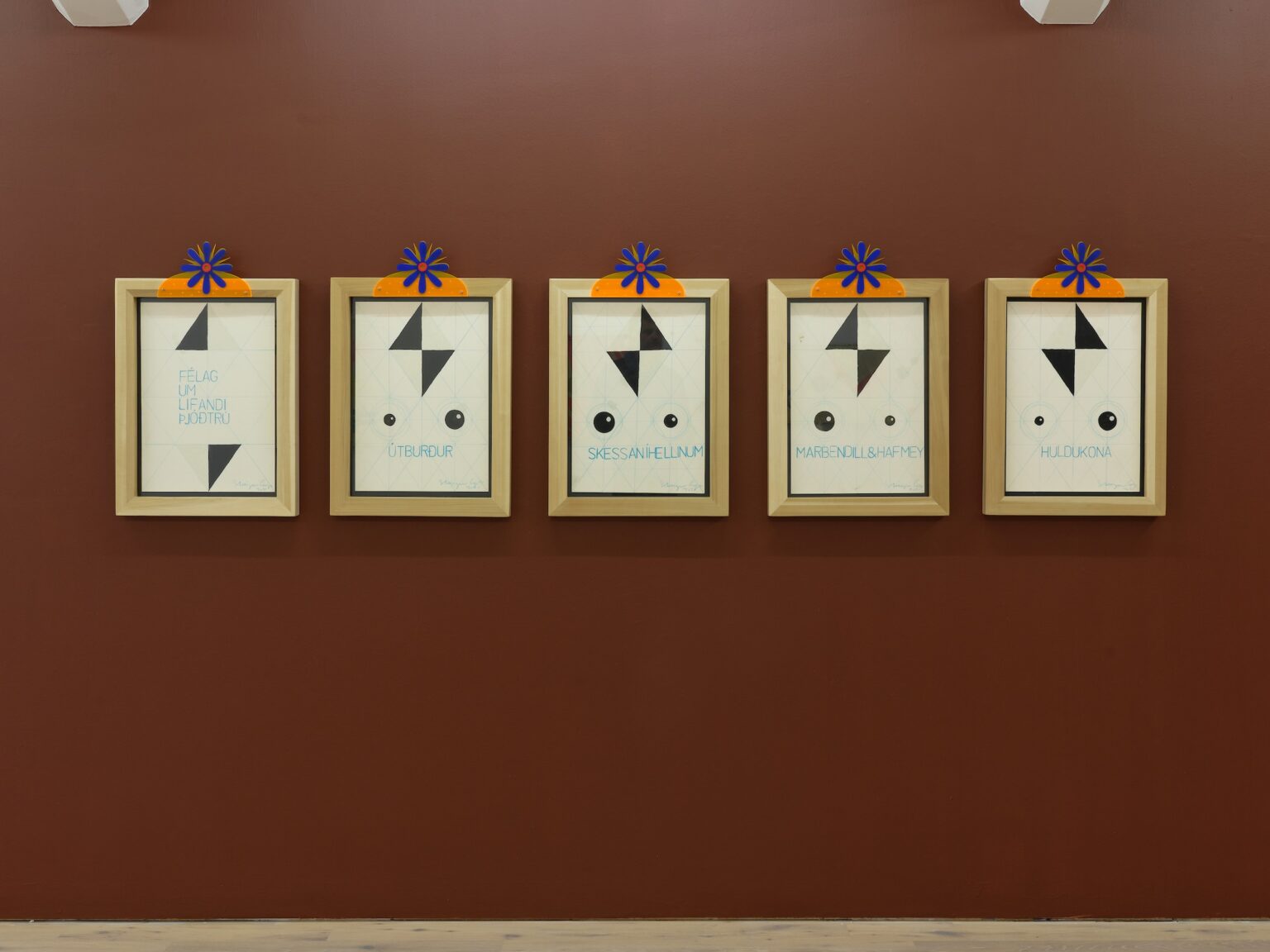
In the works of the exhibition, made in 2021-22, Eyfjörð is in dialogue with Wittgenstein, with Art itself as a phenomenon and with himself, about the fourth dimension, the perception of colour and the imagination as a force increasingly activated by humans through the growing development of visual technology. In many of his colourful works, there is a blindspot in the middle, as representative of the invisible colours and that which cannot be verbally described, and which none of us perceive in the same way.

The blindspot is here the starting point, the center of possibilities and a connecting point of the many threads that have been spun through the centuries in the visual field, in the field of future possibilities of man to expand his perception and a greater understanding of where our imagination, informed by past knowledge, can lead us.

Birta Guðjónsdóttir